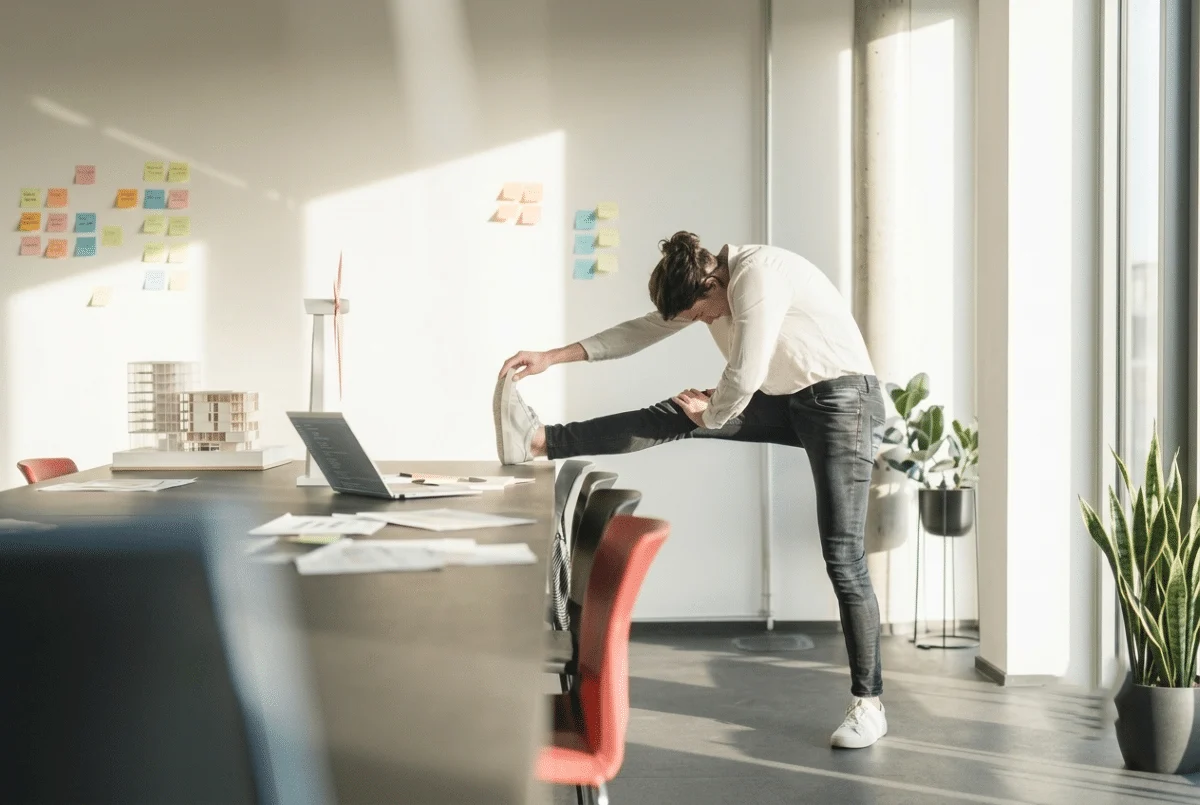
For decades, the standard for corporate wellness was neatly compartmentalized: employees were encouraged to hit the gym before their morning commute or during a lunch hour, then spend the remaining eight hours of the workday firmly anchored to an office chair. However, a seismic shift in occupational health research is challenging this paradigm. Modern organizations are increasingly pivoting away from the “all-or-nothing” exercise model, favoring a philosophy of consistent, daily movement.
As of 2026, the consensus among health professionals is clear: structured exercise, while beneficial, is not a panacea for the physiological damage caused by prolonged sitting. In a landscape defined by sedentary tasks, the new frontier of employee health is "movement integration."
Main Facts: The Shift from Exercise to Activity
The core premise of the modern movement revolution is the distinction between "exercise" and "inactivity." A person who spends 45 minutes on a treadmill in the morning but sits for the next nine hours is now classified by researchers as "sedentary."
Workplace wellness programs are now aggressively targeting these long, motionless stretches. The movement is not intended to replace gym memberships or cardiovascular training; rather, it aims to act as a metabolic counterweight to the rigors of desk-based labor. By integrating "micro-movements"—short, frequent bursts of physical activity—into the workflow, companies are seeing improvements in employee energy levels, cognitive focus, and long-term metabolic health.
Organizations are transforming their physical and cultural environments to support this change. This includes the widespread adoption of standing desks, the normalization of "walking meetings" where participants stroll while discussing projects, and the implementation of scheduled "movement breaks" that encourage staff to step away from their screens every 60 to 90 minutes.
Chronology: The Evolution of Workplace Wellness
The journey toward the movement-integrated office has been a gradual transformation, shaped by decades of occupational health data.
- 1990s–2000s: The Fitness Center Era: During this period, "wellness" was synonymous with gym access. Large corporations built on-site fitness centers, believing that providing equipment was the primary responsibility of the employer.
- 2010–2015: The Ergonomic Focus: As back pain and musculoskeletal disorders became top-tier workers’ compensation issues, the focus shifted to ergonomics. The adjustable chair and the monitor arm became the gold standards for health.
- 2016–2020: The Rise of Wearable Tech: The introduction of consumer-grade activity trackers allowed employees to see, for the first time, exactly how sedentary their workdays were. This data-driven awareness sparked a demand for more active office solutions.
- 2021–2024: The Sedentary Crisis: Post-pandemic remote work environments highlighted the extreme sedentary nature of modern professional life, leading to a surge in health complications related to chronic sitting, such as metabolic syndrome and cardiovascular strain.
- 2025–2026: The Movement Integration Model: Informed by seminal research from institutions like the World Health Organization and the Medicine & Science in Sports & Exercise journal, companies have moved beyond "wellness perks" to "wellness integration." Movement is now viewed as an essential component of professional productivity rather than an optional leisure activity.
Supporting Data: Why Sitting is the New Smoking
The necessity for this change is underpinned by rigorous, evidence-based research. According to the 2025 study by Katzmarzyk et al., published in Medicine & Science in Sports & Exercise, there is a quantifiable "tipping point" for sedentary behavior. The study demonstrated that even among individuals who meet the recommended weekly exercise quotas, prolonged bouts of uninterrupted sitting lead to a significant decline in vascular health and glucose metabolism.
The World Health Organization’s 2025 report, Promoting Movement in the Workplace, provides a framework for organizations to mitigate these risks. Their findings suggest that:
- The 30-Minute Rule: For every 30 minutes of seated work, individuals should engage in at least 2 to 3 minutes of light movement.
- Cognitive Impact: Movement increases cerebral blood flow, which directly correlates to improved creative problem-solving and focus during meetings.
- Absenteeism Reduction: Companies that incentivize movement have reported a 15–20% reduction in long-term absenteeism related to back pain, repetitive strain injuries, and stress-related illnesses.
These data points have moved the conversation from "employee morale" to "operational efficiency." Organizations are recognizing that a sedentary workforce is a sluggish, less creative, and ultimately more expensive workforce.
Official Responses: How Industry Leaders are Adapting
The shift has not gone unnoticed by the corporate world. Major stakeholders—from human resources departments to urban office designers—are responding in real-time.
"The goal isn’t to turn the office into a gymnasium," says Sarah Jenkins, a lead consultant for Corporate Health Solutions. "It’s about friction-less movement. We are designing office layouts where the printer is a deliberate walk away, where breakout rooms are equipped with standing-height tables, and where the culture encourages walking while on a phone call. We are designing out the chair as the default state."
Furthermore, trade organizations like the IDEA Health & Fitness Association are now training wellness coordinators to go beyond gym management. Their recent guidance, detailed in the 2026 Fitness Journal, emphasizes that "wellness is not an event that happens at 5:00 PM; it is a thread that runs through the tapestry of the eight-hour workday."
However, not all organizations have adopted these changes without resistance. Some management teams cite the potential for "distraction" during movement breaks. To counter this, forward-thinking leaders are implementing "result-oriented" metrics, focusing on output rather than the visual confirmation of employees sitting at their desks.
Implications: The Future of Professional Life
The implications of this movement are far-reaching. If the office of the future is designed for mobility, we may see a decline in the traditional cubicle, replaced by modular, nomadic workspaces.
1. The Death of the Fixed Desk
The fixed desk is likely to become a relic. Flexible, activity-based working (ABW) models, where employees choose their workstation based on the task at hand—standing, sitting, or moving—are becoming the new standard.
2. Legal and Regulatory Shifts
As evidence of the harm of sedentary work mounts, legal experts suggest we may eventually see mandatory "movement standards" for workplaces, similar to existing regulations for lighting, ventilation, and ergonomic seating.
3. Cultural Normalization
The most profound change is cultural. For years, the act of standing up or walking around was often perceived as "slacking off." By reframing movement as a professional tool—akin to a laptop or a software suite—companies are removing the stigma of not being "chained to the desk."
4. The Integrated Wellness Industry
The fitness industry itself is pivoting. We are seeing a rise in "corporate mobility specialists" who visit offices to lead 5-minute desk-stretching sessions, and software developers are integrating "movement reminders" into enterprise project management tools.
Conclusion
The transition from a sedentary workplace to an active one is no longer a fringe trend championed by boutique startups; it is a mainstream necessity backed by the global health community. By moving away from the outdated notion that work must be performed in a state of physical stillness, employers are not only improving the health of their workforce but are also unlocking higher levels of engagement, creativity, and resilience.
As we look toward the latter half of the 2020s, the most successful companies will be those that realize the most important asset in the building is the human body—and that, for the sake of both health and performance, it was designed to move.
References
- Katzmarzyk, P. T., Powell, K. E., Jakicic, J. M., Troiano, R. P., Piercy, K., & Tennant, B. (2025). Sedentary behavior, movement throughout the day and workplace health outcomes. Medicine & Science in Sports & Exercise, 57(2), 345–353.
- World Health Organization. (2025). Promoting movement in the workplace: Evidence-based strategies for reducing sedentary behavior. Geneva, Switzerland: World Health Organization.
- Fitness Journal – 2026, Issue 7. "The Architecture of Activity: Redesigning the Modern Office."