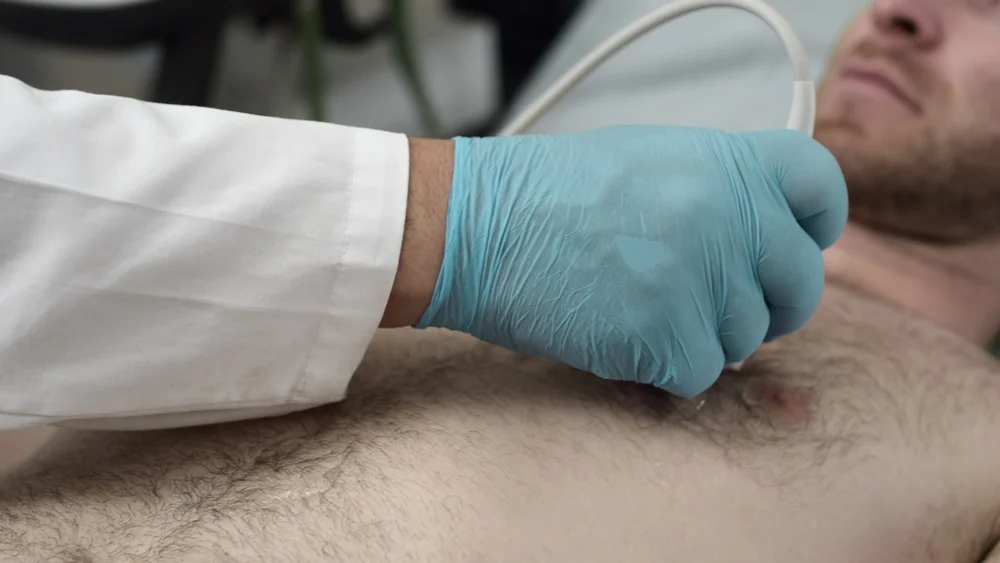
Featured Buzz – January 11, 2026
The landscape of respiratory medicine is undergoing a profound transformation. As diagnostic precision becomes increasingly tethered to technological advancement, clinicians are finding new ways to identify life-threatening conditions earlier, more accurately, and with greater efficiency. Three recent studies—published in eBioMedicine, the Journal of Perinatology, and Nature Communications—illustrate how artificial intelligence (AI) and advanced imaging are being leveraged to solve some of the most persistent challenges in pulmonary health: the early detection of COPD, the management of neonates on mechanical ventilation, and the curbing of inappropriate antibiotic use in the ICU.
1. Leveraging AI to Unmask COPD via Routine ECGs
Chronic Obstructive Pulmonary Disease (COPD) remains a leading cause of morbidity and mortality worldwide, often going undiagnosed until the disease is in advanced stages. Because standard spirometry is not always performed during routine clinical encounters, many patients remain unaware of their condition.
The Methodology
Researchers at the Mount Sinai Health System recently investigated whether the ubiquitous electrocardiogram (ECG)—a standard tool for cardiac screening—could serve as a surrogate for identifying COPD. By harnessing a massive dataset of 208,231 ECGs from 18,225 patients with COPD, matched against 552,771 ECGs from 59,356 control subjects, the team trained a Convolutional Neural Network (CNN). The AI was tasked with identifying subtle patterns in cardiac electrical activity that correlate with the structural and functional changes associated with COPD.
Implications for Screening
The study, published in eBioMedicine, suggests that while an AI-enhanced ECG cannot replace the gold standard of spirometry, it offers a "pragmatic, opportunistic" screening tool. By embedding this model into existing clinical workflows, health systems could identify high-risk individuals during routine visits for other issues.
"Earlier recognition may facilitate timely smoking cessation, targeted therapies, and pulmonary rehabilitation," the authors noted. By identifying patients before they reach symptomatic crises, clinicians may be able to significantly slow disease progression and reduce the overall healthcare burden associated with the condition.
2. Predicting Extubation Success in VLBW Infants
For very low birth weight (VLBW) infants, the transition from mechanical ventilation to spontaneous breathing is a high-stakes clinical milestone. Failed extubation is associated with increased mortality and longer hospital stays, making the ability to predict success critical.
The Diagnostic Shift: Lung Ultrasound (LUS)
A study led by researchers at the University of Chicago and published in the Journal of Perinatology examined whether Lung Ultrasound (LUS) scores could provide the necessary predictive power that standard physical exams lack.
The researchers tracked 45 VLBW infants who were intubated due to respiratory distress syndrome. Across 53 extubation attempts, clinicians performed LUS scans three to six hours prior to the procedure. The study aimed to correlate these scores with the clinical reality of whether the infant required reintubation within seven days.
Supporting Data and Findings
The study yielded two primary insights:
- Predictive Accuracy: The neonatal-adapted LUS score serves as a highly reliable predictor of success when performed on the day of the procedure.
- Medication Management: Contrary to some clinical assumptions, the study found that dexamethasone treatment—often used to reduce inflammation in the airway—did not correlate with lower LUS scores, suggesting that the ultrasound score captures a different physiological metric than what steroids address.
These findings suggest that LUS could soon become a standard "bedside safety check" in Neonatal Intensive Care Units (NICUs), allowing for more data-driven decisions regarding when to liberate an infant from a ventilator.
3. Combating Antibiotic Overuse with AI-Driven Diagnostics
The misuse of antibiotics in critically ill patients is a global health crisis, contributing to the rise of multi-drug resistant organisms. A breakthrough study from the University of California, San Francisco (UCSF), published in Nature Communications, offers a potential solution to the "diagnostic guessing game" that often leads to excessive antibiotic prescriptions.
The Science of the "Smart" Diagnosis
The researchers developed a dual-layered diagnostic strategy to identify lower respiratory tract infections (LRTIs) like pneumonia.
- Biological Input: They utilized the biomarker FABP4, a protein found in lung fluid that regulates inflammation. In cases of bacterial infection, FABP4 expression decreases, providing a clear biological signal that infection is present.
- Technological Input: This biological data was integrated with a generative AI model that analyzed electronic medical records (EMR), specifically focusing on chest X-ray reports and physician clinical notes.
Chronology of the Clinical Trial
The model was tested in an observational study involving critically ill adults. The results were striking: the AI achieved a 96% diagnostic accuracy, significantly outperforming the ICU clinicians who were managing the patients.
When researchers reviewed the clinical outcomes, they concluded that had the model been used in real-time, it could have prevented over 80% of inappropriate antibiotic prescriptions. The authors highlighted that the model is designed for accessibility, functioning within a HIPAA-compliant GPT-4 interface.
Official Response and Future Directions
The UCSF team is currently moving toward validating the model for widespread clinical adoption. "This study suggests that integrating a host biomarker with large language model analysis can improve LRTI diagnosis in critically ill adults," the researchers stated. Their next goal is to apply this same methodology to the early detection of sepsis, which could revolutionize how intensive care units manage systemic infections.
Synthesis: A New Era for Pulmonology
The convergence of these three studies highlights a shift from reactive to predictive medicine. In the case of COPD, the Mount Sinai study proves that we can extract hidden diagnostic value from existing cardiac data. In the NICU, the University of Chicago’s work proves that bedside imaging can offer objective safety metrics for our most vulnerable patients. Finally, the UCSF study provides a roadmap for how AI can act as a "second opinion" to reduce systemic antibiotic reliance.
Implications for the Clinical Workflow
While these technologies are promising, they do not replace the clinician. Instead, they act as a force multiplier.
- Early Intervention: For COPD, the ECG-AI model creates a wider net for early detection.
- Safety Precision: For neonates, LUS scores provide a quantitative basis for high-risk weaning decisions.
- Stewardship: For ICU physicians, the AI-biomarker model serves as a safeguard against unnecessary, and potentially harmful, antibiotic therapy.
As we move through 2026, the adoption of these tools will likely depend on the ease of integration into existing EMR systems. The success of the UCSF model—demonstrating that even a standard GPT-4 interface can handle complex clinical data—suggests that the barrier to entry for such advanced diagnostics is lowering.
Concluding Thoughts
The integration of artificial intelligence and advanced imaging into respiratory care is not just an academic exercise; it is a pragmatic necessity. As these tools move from the pages of medical journals to the bedside, the primary benefit will be a shift in the standard of care: from "wait and see" to "detect and act." Whether it is identifying lung disease in a routine ECG or preventing an unnecessary course of antibiotics in the ICU, the goal remains the same: improving patient outcomes through the intelligent application of data.
For further reading, please refer to the primary research papers:
- COPD Screening via ECG: eBioMedicine (DOI: 10.1016/j.ebiom.2025.106066)
- LUS for VLBW Infants: Journal of Perinatology (DOI: 10.1038/s41372-025-02525-5)
- AI-Driven LRTI Diagnosis: Nature Communications (DOI: 10.1038/s41467-025-66218-5)