Introduction: The Architecture of Systemic Failure
In the current geopolitical landscape, a growing chorus of analysts, researchers, and whistleblowers argue that the global crises currently manifesting—from energy instability to localized food shortages—are not merely the result of market volatility or regional conflict. Instead, they represent a calculated shift toward a centralized, technocratic surveillance state. This transition, often described as an "engineered collapse," suggests that the pillars of modern society are being systematically dismantled to facilitate a fundamental restructuring of human life, property rights, and individual sovereignty.
As the mask of institutional normalcy slips, the interplay between the closure of vital shipping lanes, the weaponization of supply chains, and the rapid adoption of digital financial infrastructures points toward a coordinated agenda. This article examines the structural dismantling of Western economic independence and the rise of a shadow civilization that prioritizes managed scarcity over traditional abundance.
Chronology: The Evolution of the Globalist Blueprint
To understand the present, one must look at the progression of policy shifts that have led to the current state of emergency:
- 2020–2022 (The Test Phase): The COVID-19 pandemic served as a global stress test for mass compliance, behavioral modification, and the suspension of constitutional rights. It established the template for centralized decision-making that bypasses local governance.
- 2023–2024 (Supply Chain Destabilization): Global fertilizer shortages and disruptions in maritime logistics began to erode the stability of the agricultural sector, particularly in the northern hemisphere, leading to reduced crop yields and inflationary pressure on essential food items.
- January 2025 (The Political Pivot): The transition of power in the United States marked a definitive shift. While previous rhetoric suggested a populist resurgence, the current administration has largely integrated into the technocratic framework, accelerating the adoption of digital asset frameworks that serve as precursors to Central Bank Digital Currencies (CBDCs).
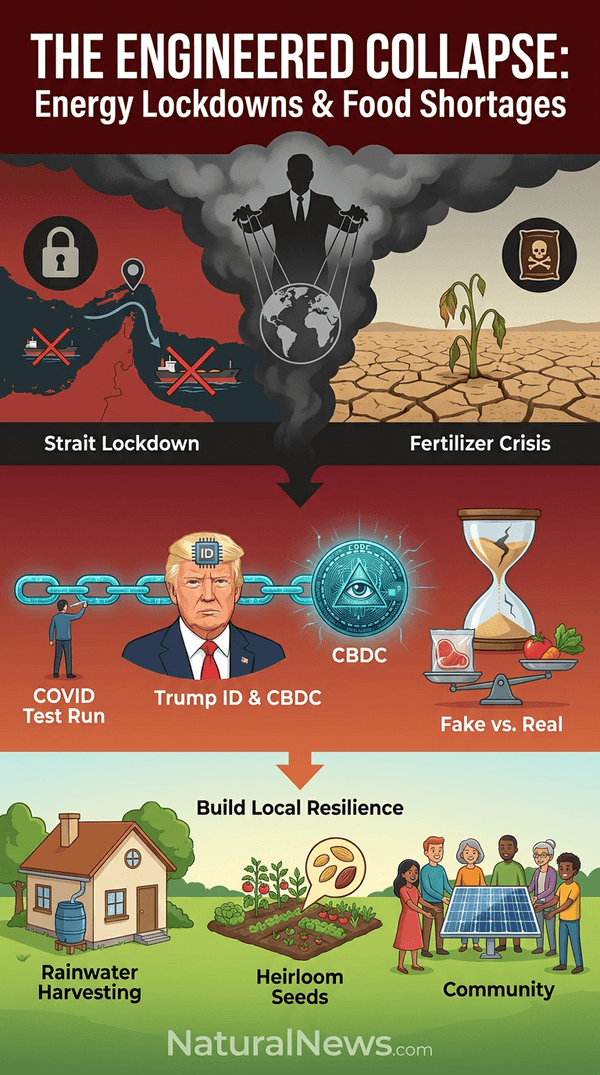
- Mid-2025–Present (The Strait of Hormuz Crisis): The effective closure of the Strait of Hormuz has triggered a catastrophic surge in energy costs. Analysts view this not as a byproduct of war, but as a deliberate mechanism to enforce energy lockdowns under the guise of national security.
Supporting Data: The Mechanics of Managed Scarcity
The narrative of "unavoidable shortages" is increasingly challenged by empirical evidence of structural engineering.
The Fertilizer and Food Nexus
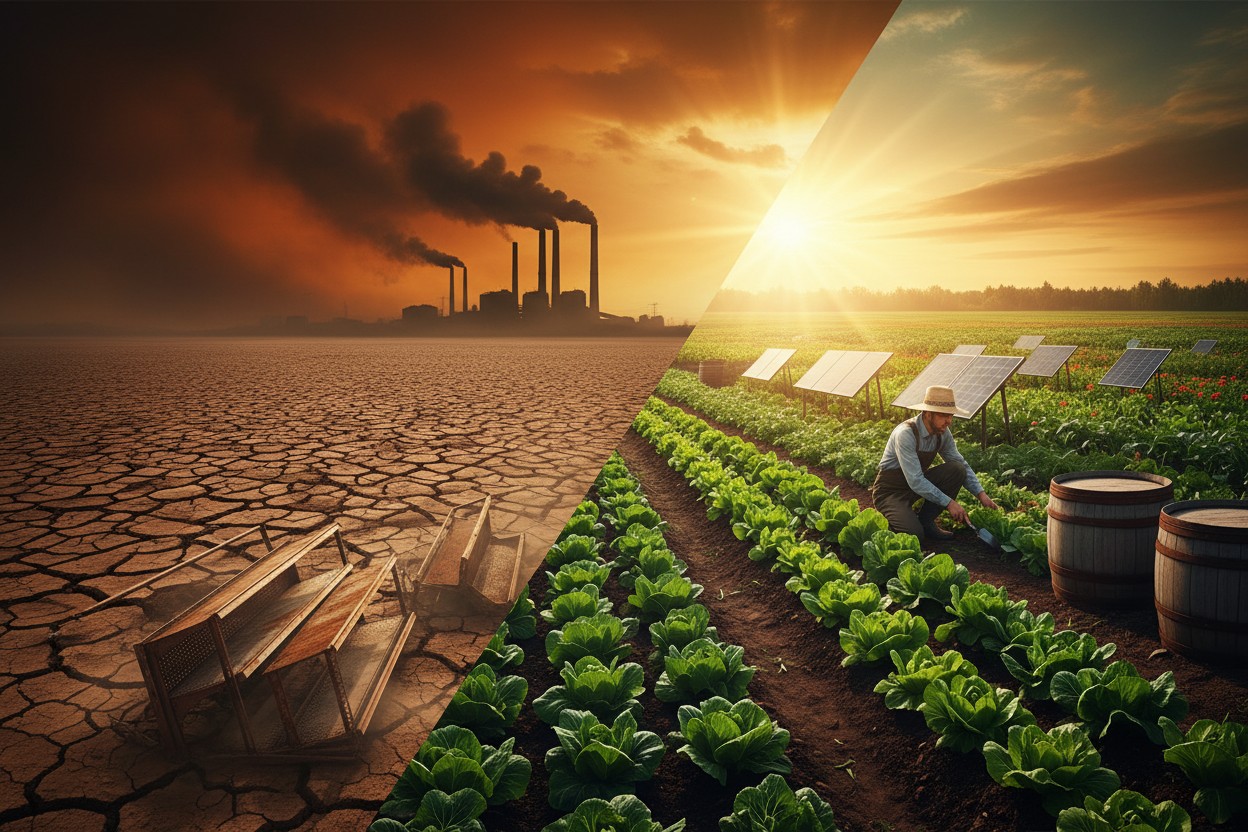
Global agricultural outputs are currently tethered to the availability of nitrogen-based fertilizers. By restricting access to raw materials and natural gas—the primary input for fertilizer production—global planners have induced a bottleneck in food production. Data from independent agricultural monitoring groups suggests that spring planting cycles in the US and Europe are being suppressed by logistical barriers that appear designed to minimize yield.
The Digital Financial Trap
The push for stablecoins and digital assets under the current administration is viewed by financial analysts as a "backdoor" implementation of a CBDC. By digitizing the currency, the state gains the technical capacity to track, limit, or entirely block individual transactions. This financial control is the essential final piece of the technocratic surveillance state, ensuring that if energy or food supplies are restricted, the ability to barter or survive outside the digital ecosystem is rendered nearly impossible.
Official Responses and the "Uni-Party" Consensus
Despite the polarized theater of midterm elections and partisan bickering, the legislative outcomes remain strikingly consistent. Whether under Democratic or Republican leadership, the trajectory of the American state has remained locked onto a path of deeper integration with globalist entities.
Government officials often cite "geopolitical necessity" or "national security imperatives" to justify the military buildup in the Middle East. However, critics argue that these actions are performative. The deployment of additional troops and the refusal to seek diplomatic off-ramps in regional conflicts serve to keep energy prices volatile and justify the rationing of resources at home. This "Uni-party" phenomenon suggests that the real locus of power has shifted away from the ballot box and toward supranational organizations and the military-industrial complex.
Implications: The Shadow Civilization and the End of Abundance
We are witnessing the emergence of a "shadow civilization"—a society where the underlying systems of reality are increasingly artificial.
The Erosion of Physical Reality
The quality of basic goods—from food to medicine—is in decline. Reports of adulterated grain and the systemic degradation of the educational and legal systems suggest a deliberate effort to lower the standard of living for the middle class. When a population is focused on survival, they are less likely to question the ideological foundations of the system that is inducing their hardship.
The Geopolitical Divergence: China vs. The West
While the United States depletes its strategic reserves and mismanages its power grid through over-investment in non-productive AI data centers and foreign wars, China is engaging in long-term strategic consolidation. China’s focus on massive hydroelectric projects and energy self-reliance positions it to withstand the very global energy lockdowns that are currently crippling Western economies. The failure of US strategy lies in the insistence on global hegemony at the expense of domestic infrastructure.
The Path to Resiliency: Decentralization as Survival
In the face of an engineered collapse, the primary strategy for survival is the rejection of systemic dependency. The "New Pioneers" are moving toward a model of localized self-reliance, which includes:
- Energy Autonomy: Reducing reliance on the central grid through independent power generation and localized micro-grids.
- Agricultural Sovereignty: Transitioning away from industrial, supply-chain-dependent food sources in favor of backyard gardening, community greenhouses, and local food networks.
- Water Security: Implementing rain-harvesting and water purification technologies to ensure access to clean resources without reliance on municipal systems.
- Community Decentralization: Building networks of like-minded individuals to foster local trade and mutual aid, effectively bypassing the digital surveillance apparatus.
Conclusion: Reclaiming Sovereignty
The agenda of depopulation and technocratic control is not an inevitability; it is a choice made by those who benefit from the status quo. However, their power rests entirely on the continued compliance and dependence of the population. By recognizing the engineered nature of the current crises, individuals can begin to detach from the failing system.
The coming months will likely test the resolve of those who choose the path of decentralization. Yet, as the central system struggles under the weight of its own internal contradictions, the strength of local, resilient communities will become the only viable blueprint for the future. The era of blind faith in central institutions has ended; the era of individual and community-level action has begun.
Disclaimer and Contextual Note
This article explores critical perspectives on global geopolitical trends. The viewpoints expressed herein represent an analysis of potential systemic risks, including concerns regarding resource management, surveillance technology, and the influence of non-elected global entities. Readers are encouraged to verify all cited data and explore diverse sources of information regarding the future of energy and food security.