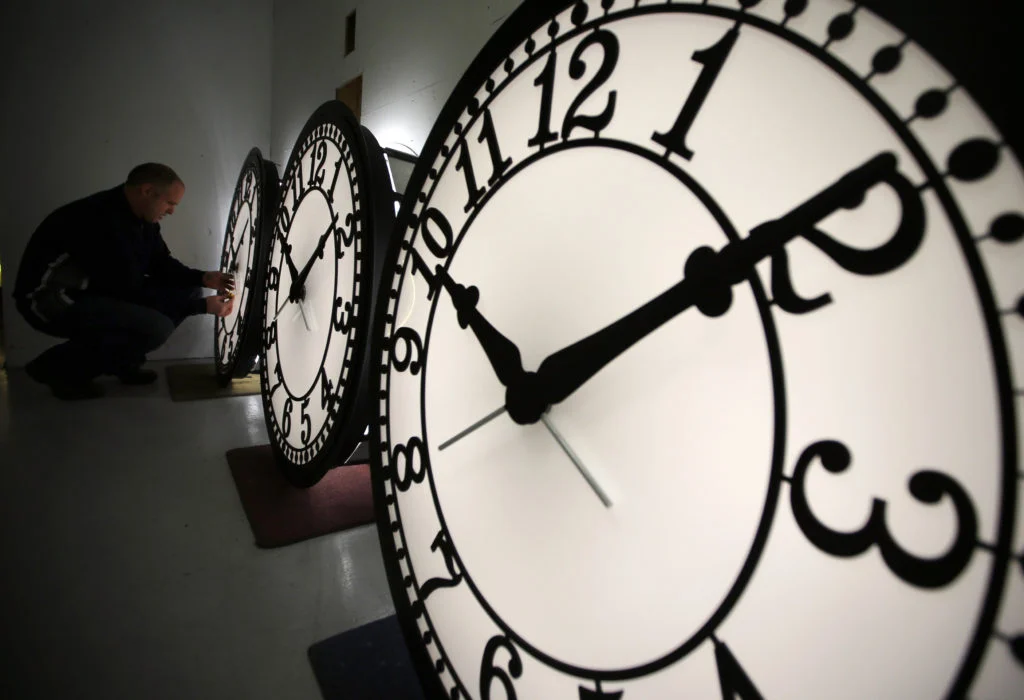
NEW YORK — The rhythmic, biannual ritual of adjusting clocks—a practice that has governed American life for over a century—stands on the precipice of obsolescence. As of July 16, 2026, a surge of legislative momentum in Congress suggests that the United States may soon permanently adopt daylight saving time (DST), effectively ending the traditional "spring forward, fall back" cycle. Yet, as lawmakers weigh the benefits of extended evening sunlight against the warnings of chronobiologists and historians, the nation finds itself caught between the desire for convenience and the hard realities of geography and human biology.
The Core Proposal: Permanence in a Polarized Era
The current legislative push, which recently saw the House of Representatives pass a bill with overwhelming bipartisan support, seeks to codify daylight saving time as the year-round standard. Proponents argue that the current system is an archaic relic that disrupts sleep patterns, decreases workplace productivity, and serves as an unnecessary annual annoyance.
With the landscape of the American workforce fundamentally altered by the post-pandemic rise of remote and hybrid employment, the argument for a static clock has gained new urgency. Advocates, including the American Medical Association (AMA) and the American Academy of Sleep Medicine (AASM), contend that the twice-yearly shift is not merely an inconvenience but a public health hazard. Their research suggests that the abrupt disruption of circadian rhythms during the "spring forward" transition leads to spikes in cardiovascular events, workplace accidents, and diminished cognitive performance.
However, the path to enactment remains treacherous. While President Donald Trump has expressed public support for the measure, the legislation faces a significant bottleneck in the Senate. A cohort of skeptical lawmakers, primarily within the Republican party, remains unconvinced that abandoning the biannual switch will lead to the promised land of better sleep and brighter evenings.
A Chronology of the Clock Wars
The American struggle with timekeeping is not a new phenomenon; it is a cycle of trial and error that stretches back to the early 20th century.
- 1918: Following the lead of European nations during World War I, the United States first implemented daylight saving time to conserve fuel and energy.
- 1942–1945: During World War II, the U.S. observed "War Time," a year-round permanent daylight saving time, to support the war effort.
- 1966: The Uniform Time Act was passed, standardizing the start and end dates for DST across the country, though it allowed states to opt out.
- 1973–1975: In response to the 1973 energy crisis, Congress implemented a trial of permanent daylight saving time. It was initially popular, but public enthusiasm plummeted as the winter months set in.
- October 1975: Following widespread outcry regarding the safety of schoolchildren commuting in total darkness during winter mornings, Congress repealed the act and reverted to the seasonal change.
- 2026: The current legislative push emerges, fueled by modern concerns over sleep science and a changing labor market.
The 1970s experiment serves as the primary cautionary tale for modern proponents. As Kevin Birth, a professor of anthropology at Queens College who specializes in the cultural concepts of time, notes, the lived experience of "permanent" DST was starkly different from the theory. "I had to get up for school and it was like it was midnight," Birth recalled of his childhood in Syracuse, New York. "It was just pitch black and it remained pitch black into the school day."
The Science of Circadian Rhythms
Modern sleep science adds a layer of nuance that did not exist during the 1970s debate. The American Academy of Sleep Medicine has long advocated for the adoption of permanent standard time, rather than permanent daylight saving time. Their reasoning is rooted in the "internal clock" theory: our bodies are naturally aligned with solar time, where the sun is at its highest point at midday.
By keeping the clock shifted forward, humans are essentially forced to live out of sync with their biological rhythms. In the winter, this would mean that the sun would not rise until mid-morning in many regions, causing people to wake up in the dark and begin their days during a period of low natural light. Critics of the current bill argue that while we might enjoy an extra hour of light in the evening, the morning "social jetlag" caused by permanent DST would exacerbate, rather than alleviate, sleep deprivation.
Official Responses and Political Roadblocks
The political divide over this issue is less about party lines and more about regional geography. Senators from states located at the western edges of their time zones, such as South Dakota’s Mike Rounds, have been vocal in their opposition.
"You’d be sending kids to school in the dark," Sen. Rounds argued, pointing to the reality that in parts of the Great Plains, the sun would not rise until well after 9:30 a.m. under a permanent DST regime.
Conversely, proponents such as Sen. Tom Cotton have voiced concerns about the psychological toll of dark, dismal winters. "It would make winter a dark and dismal time for millions of Americans," Cotton stated during debate last year. The tension lies in a fundamental trade-off: Americans desire more light for their evening leisure activities, but they are generally unwilling to sacrifice the safety and comfort of morning light during the winter months.
Implications: Can the System Adapt?
If the U.S. is to successfully transition to a single, year-round time system, experts suggest that simply moving the clock is insufficient. A wholesale restructuring of the nation’s time zones might be required to mitigate the extreme variations in sunrise and sunset times.
Currently, the four primary time zones in the continental U.S. are vast, spanning hundreds of miles from east to west. Because the sun traverses the sky at a consistent speed, a person on the eastern edge of the Eastern Time Zone experiences sunrise nearly an hour earlier than someone on the western edge of the same zone. If we move to a permanent, non-shifting clock, the discrepancies between these regions will become even more pronounced.
Beyond the geography of time, there is the issue of societal adaptation. Should the law pass, schools, businesses, and government institutions would likely be forced to adjust their operating hours. If the sun doesn’t rise until 9:00 a.m. in the winter, school districts would almost certainly need to move start times to 10:00 a.m. or later. While some districts have already begun this shift to accommodate the sleep needs of adolescents, such a systemic change would ripple through the economy, affecting everything from bus schedules to parental work hours.
Conclusion: Is This Time the Charm?
The allure of ending the biannual clock change is powerful. In an era of fragmentation, the prospect of a permanent, stable time standard is a rare point of potential consensus. Yet, the history of the 1970s and the geography of the American continent present formidable hurdles.
The upcoming legislative sessions will be a test of whether modern technology and shifting social norms can overcome the physical constraints of the Earth’s rotation. As policymakers debate, the American public remains largely frustrated with the status quo, yet deeply wary of the consequences of a permanent change. Whether we are destined to move forward into a new era of timekeeping or fall back into the familiar habits of the past remains to be seen. What is clear, however, is that the debate over the clock is, at its heart, a debate over how we want to live our lives—in the light of the morning or the glow of the evening.