







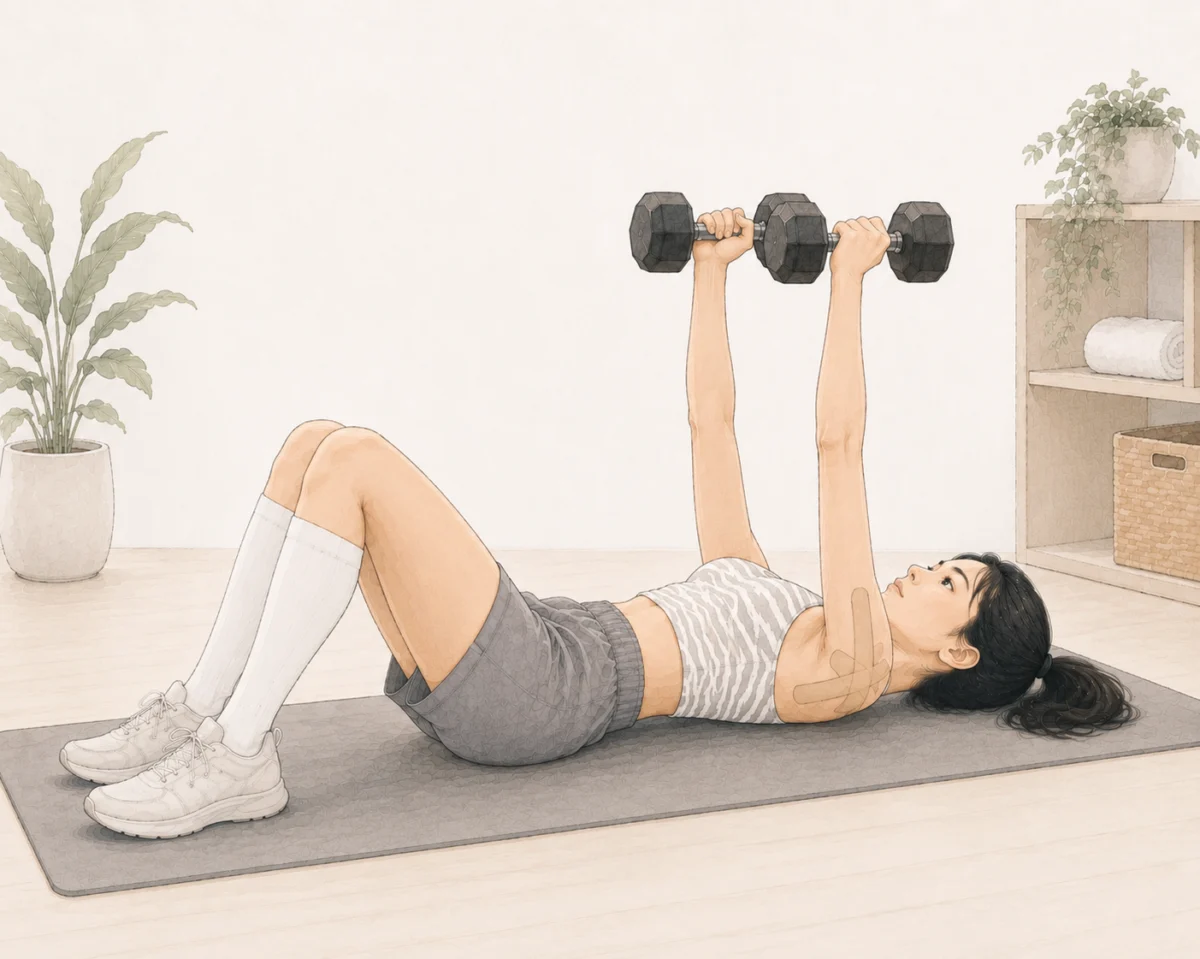
For individuals living with hypermobility, the advice to "just get stronger" is a double-edged sword. While it is physiologically accurate that strengthening muscles can mitigate the joint instability caused by lax connective tissues, the standard "no pain, no gain" fitness culture often leads to injury, fatigue, and profound frustration for the bendy community.
Research indicates that hypermobile individuals may generate up to 30% less muscular force at baseline compared to their peers. Because their joints lack the inherent structural support of dense ligaments and fascia, they rely almost exclusively on muscular engagement for stability. When traditional strength training is applied without nuance, it often triggers flares rather than gains. Navigating this landscape requires a delicate application of the "Goldilocks Principle"—finding that precise, "just right" middle ground between over-exertion and stagnation.
The Physiological Reality: Why Hypermobility Requires a Unique Approach
Understanding the Structural Deficit
In a typical musculoskeletal system, ligaments and joint capsules act as the primary stabilizers, providing passive tension that keeps bones in place. For those with Ehlers-Danlos Syndrome (EDS) or Hypermobility Spectrum Disorders (HSD), these tissues are often more compliant or lax. Consequently, the burden of stability shifts entirely to the muscular system.
When a hypermobile person attempts to perform high-volume, high-intensity workouts designed for the general population, they often encounter "tissue failure." Their muscles, already working overtime to hold their frame together, become fatigued quickly. Once the muscles reach exhaustion, the joints are left unprotected, leading to subluxations, strains, and systemic inflammation.
Proprioceptive Challenges
Beyond physical strength, hypermobility is frequently associated with deficits in proprioception—the body’s ability to sense its position in space. A hypermobile brain may struggle to receive accurate feedback from the limbs, leading to compensatory movement patterns. When a person performs an exercise while compensating, they are essentially training their nervous system to rely on secondary, inefficient muscles, reinforcing poor movement quality rather than building strength.
Chronology of an Informed Training Strategy
Adopting a strength training routine as a hypermobile individual is not a linear sprint; it is a long-term, iterative process of nervous system regulation and tissue adaptation.
- The Assessment Phase (Baseline Setting): Before lifting a single weight, one must collaborate with a physical therapist familiar with hypermobility. This involves identifying which muscle groups are inhibited and which are overactive due to compensation.
- The Connection Phase (Proprioceptive Training): Initial sessions should focus on "finding" the muscle. This involves low-resistance, slow-tempo movements that emphasize the mind-muscle connection.
- The Stability Phase (Resisting Gravity): Transitioning from movement-based exercises to isometric holds (like planks or wall sits). This teaches the body how to resist movement under load without the risk of over-extending joints.
- The Load Phase (Progressive Overload): Once stability is established, small, incremental increases in weight are introduced. This is the stage where "Goldilocks" becomes critical—balancing stimulus against the body’s recovery capacity.
Supporting Data: What the Science Says
Recent research has begun to formalize what clinicians have observed in practice. A 2026 study published in the Journal of Musculoskeletal & Neuronal Interactions confirmed that the force-length relationship of muscles in individuals with HSD and EDS is fundamentally different from the norm, explaining why standard exercise prescription often fails.
Furthermore, studies on proprioceptive precision (Clayton et al., 2015) underscore why visual and sensory feedback—such as using mirrors or compression garments—is not merely "extra" for the hypermobile athlete, but a functional requirement for safe movement. When the body cannot "feel" where its joints are, external feedback provides the necessary data to prevent over-stretching.
The Goldilocks Variables: Calibrating Your Workout
To build a sustainable program, one must manipulate five core variables. For the hypermobile person, the mantra is "start small, move slow."
1. Frequency and Volume
Standard gym programming often suggests 3–4 days a week with multiple sets. For the bendy body, this is often a recipe for a crash. Start with one session per week. If, after 48 hours, there is no significant pain or systemic fatigue, consider adding a second day. Volume should be kept low—1 set of 3–5 repetitions is a legitimate starting point.
2. Intensity and Tempo
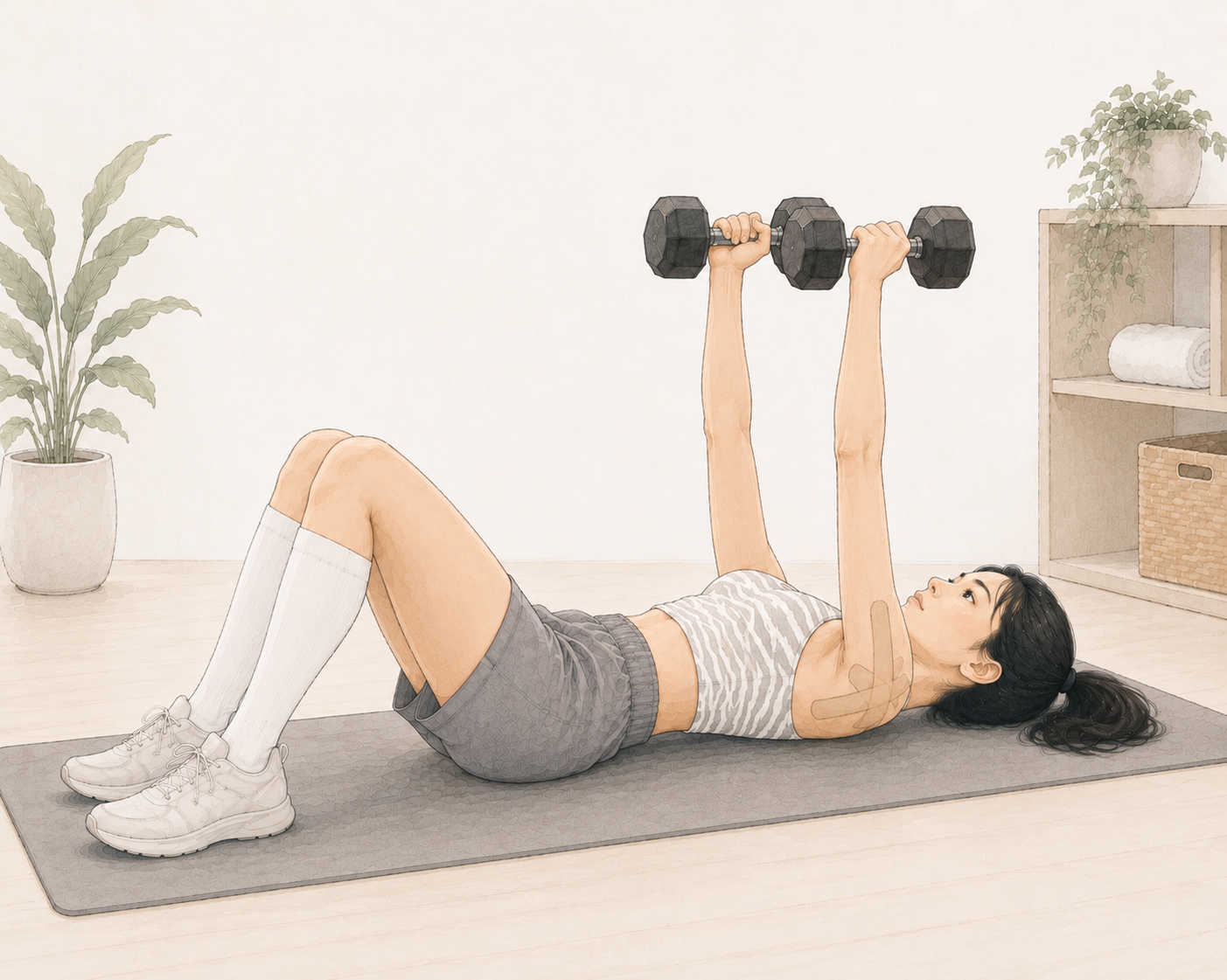
Intensity should be "easy" for the first several weeks. The goal is to build neuromuscular pathways, not to hit a personal record. Tempo is equally vital. A slow, controlled tempo—such as a 2-second concentric phase and a 4-second eccentric phase—ensures that the target muscle is doing the work, rather than the momentum of the joint.
3. Positioning
Because many hypermobile individuals experience dysautonomia (such as POTS), upright exercises can trigger heart rate spikes and lightheadedness. Performing exercises in a seated or supine position allows the body to focus on muscular recruitment without the added stress of blood pressure regulation.
Official Recommendations and Clinical Implications
Physical therapists specialized in hypermobility emphasize that the goal of training is motor control, not just hypertrophy.
- Ask the Right Questions: When working with a trainer or therapist, the most important question is: "Where should I be feeling this?" If you cannot feel the target muscle contracting, or if you feel the sensation deep inside a joint, stop. You are likely hanging on your ligaments.
- The "Half-Capacity" Rule: If you are unsure of your starting point, calculate what you think you can handle, then do exactly half of that. This creates a buffer for the nervous system to adapt to the new stimulus without triggering a protective pain response.
- Recovery as Training: In the context of hypermobility, recovery is not the absence of training; it is part of the training. Adequate sleep, hydration, and pacing are the tools that allow the tissues to repair. If you experience a "crash" that lasts for days, the intensity was too high.
Conclusion: A Sustainable Future
Strength training with hypermobility is entirely possible, but it requires shedding the ego of traditional "fitness" models. It is about listening to the body’s whispers before they turn into screams. By centering safety, prioritizing proprioceptive feedback, and adhering strictly to the Goldilocks Principle of "just right" loading, hypermobile individuals can build the muscular armor they need to live more active, stable, and pain-free lives.
Always remember that hypermobility exists on a vast spectrum. What works for one person may be detrimental to another. The most successful athletes in this community are those who view their exercise routine as a lifelong partnership with their own biology, rather than a battle to be won.
Disclaimer
This article is for educational purposes only and does not constitute medical advice. Hypermobility is a complex condition; always consult with a physical therapist or medical professional before beginning any new exercise regimen, especially if you have symptoms of joint instability, POTS, or post-exertional malaise (PEM).
Selected References
- Akaras, E., et al. (2025). "The effects of joint hypermobility on strength, proprioception, and functional performance." Scientific Reports.
- Golden, D. W., et al. (2026). "In-Vivo Force-Length Relationship of the Medial Gastrocnemius Muscle in Hypermobile Ehlers-Danlos Syndrome." Journal of Musculoskeletal & Neuronal Interactions.
- Liaghat, B., et al. (2020). "Heavy Shoulder Strengthening Exercise in People with Hypermobility Spectrum Disorder: A Feasibility Study." Pilot and Feasibility Studies.
- Rombaut, L., et al. (2012). "Muscle Mass, Muscle Strength, and Functional Performance in Women with the Hypermobility Type of Ehlers-Danlos Syndrome." Arthritis Care & Research.