








Main Facts: The New Standard for Ryan Garcia
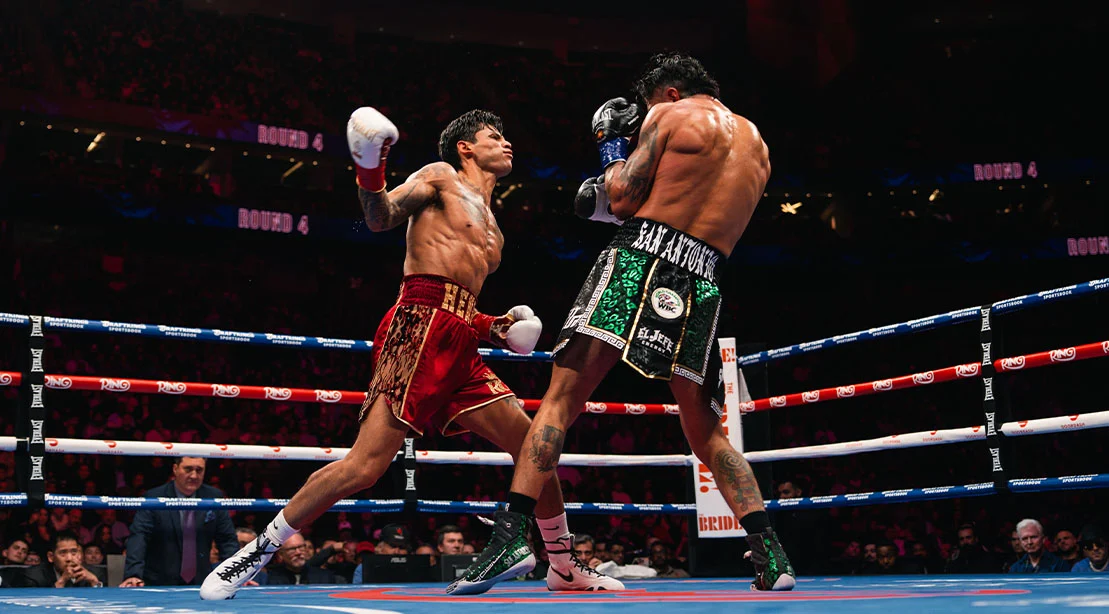
Ryan Garcia (24-2-1) is no longer the mercurial, raw talent who relied solely on blistering hand speed to dismantle opponents. At 27 years old, the WBC welterweight champion has entered a phase of his career defined by strategic intelligence and physical optimization. As he prepares to defend his title against Conor Benn on September 12, the narrative surrounding Garcia has shifted from "prodigy" to "complete fighter."
The most striking development in Garcia’s current campaign is his departure from the traditional, grueling "rebuild" phase that often plagues boxers coming off a layoff. By utilizing the momentum from his February victory over Mario Barrios, Garcia has bypassed the weeks of stagnation that typically follow a championship fight. Instead of oscillating between extremes of peak fitness and inactivity, Garcia has embraced a philosophy of sustainable high-performance, proving that for an elite athlete, the goal is not to do more—it is to know exactly how much is enough.
Chronology: From Suspension to Supremacy
To understand the man Garcia is today, one must look at the timeline of his recent history. The 2024–2025 period served as a crucible for the young star. Following a high-profile suspension that sidelined him from professional competition, Garcia faced the kind of public and private scrutiny that has derailed many careers before they truly began.
- 2024–2025: A period of professional hiatus and personal recalibration. During this time, Garcia prioritized mental health and structural physical recovery, moving away from the "go-go-go" mentality that characterized his early twenties.
- February 2026: Garcia returned to the ring with a renewed sense of purpose, capturing the WBC welterweight title in a decisive performance against Mario Barrios.
- September 2026: The upcoming defense against Conor Benn. Rather than taking an extended victory lap, Garcia maintained his momentum, keeping his body within a "fighting window" that allowed for a smoother, less stressful transition into this current camp.
Supporting Data: The Science of the "Garcia Method"
Garcia’s current training regimen is a testament to the shift from volume to efficiency. His day-to-day routine is a complex, data-driven cycle designed to sharpen a version of himself that he believes is approaching its absolute peak.
A typical day for the champion is an exhaustive, yet balanced, marathon:
- Morning Strength & Conditioning: A 90-to-120-minute session focusing on functional strength rather than bodybuilding.
- Cardiovascular Foundation: A five-to-seven-mile run, serving as the engine for his late-round endurance.
- Boxing Technical Work: A 90-to-120-minute session, prioritizing precision over raw power.
- Anaerobic Threshold Training: Sprint intervals to simulate the "red zone" of a championship fight.
What differentiates this camp from previous ones is the integration of high-tech recovery. Garcia, who once viewed rest as a sign of weakness, now utilizes a comprehensive toolkit including red-light therapy, cryotherapy, sauna protocols, and professional physical therapy. By distinguishing between "good pain"—the type that signals adaptation—and "bad pain"—the warning signs of injury—Garcia has reduced his downtime and increased the density of his training.
Official Responses: The Mindset of a Champion
In an exclusive interview with Muscle and Fitness, Garcia offered a candid look at the mental landscape of a champion. When asked about the pressures of defending a belt, he dismissed the notion that success breeds comfort.
"Now that I have it, I’m even more inclined to be hungrier, more ferocious, and more defensive of not losing my title," Garcia stated. His approach to the "noise" of the boxing world is equally disciplined. "Let the noise be the noise. Just address something if it really irritates you, but most of the time, stay busy. It’s not going to help if you dwell on it."
Regarding the upcoming fight with Conor Benn, Garcia maintained a respectful but confident distance. He acknowledged Benn’s hunger, noting, "He’s going to be a guy that’s going to try real hard. We’ll be ready for anything he has to bring." However, he closed with a prediction that left no room for ambiguity: "I’m going to beat him very easy. Well, make it look easy."
Implications: A New Era for the Welterweight Division
The implications of this "New Garcia" are significant for the welterweight division. For years, opponents looked for ways to exploit Garcia’s emotional peaks and valleys or his reliance on pure speed. By adding a layer of structural durability—developed through targeted weight training and a deep focus on core stability—Garcia has become a more dangerous, multi-dimensional threat.
His evolution in the gym, specifically his focus on "ab routines" like bicycles and scissors, has translated into better punching mechanics. By strengthening the kinetic chain from the floor up to his hands, he has turned his speed into a force-multiplier. He is no longer just "fast"; he is "efficiently powerful."
Furthermore, his nutritional flexibility serves as an indicator of his maturity. By mastering his body’s relationship with protein, carbohydrates, and healthy fats, he has liberated himself from the "starvation diets" that drain fighters before they even reach the scale. As he says, "Once you understand food, it doesn’t control you at all."
The Ryan Garcia-Inspired Speed, Power & Conditioning Workout
To emulate the champion, one must balance explosiveness with sustainable endurance. This 50-minute routine is designed to be performed twice weekly.
Phase 1: The Warmup (6 Minutes)
- Shadowboxing: 2 rounds of 3 minutes. Focus on footwork and light, rhythmic snapping of punches.
Phase 2: Strength & Explosiveness (3 Rounds, 90s Rest)
- Medicine Ball Slams: 15 reps (for core power).
- Explosive Push-ups: 12 reps (for punch speed).
- Jump Squats: 15 reps (for leg drive).
Phase 3: Fight Conditioning (6 Rounds)
- Heavy Bag Work: 3 minutes of high-intensity combinations. Focus on speed and precision, keeping shoulders relaxed.
- Active Recovery: 30 seconds of jump rope between rounds.
- Note: After round 6, take a 2-minute break, then perform 30 seconds of high-intensity battle ropes and 30 seconds of burpees.
Phase 4: The Core Finisher (3 Rounds)
- Bicycle Crunches: 20 reps.
- Scissor Kicks: 20 reps.
- Plank Holds: 60 seconds.
Phase 5: Optional Sprint Finisher
- 4–6 Rounds of 100-meter Sprints: Maintain 85% effort. If mechanics slip, stop immediately.
Conclusion: The Peak of the Mountain
As the boxing world turns its eyes toward September 12, the consensus is shifting. Ryan Garcia is no longer merely a highlight-reel fighter. He is a man who has mastered his environment, his nutrition, his recovery, and his own psychology. When he enters the ring against Conor Benn, he will not be looking to prove he can hit hard; he will be looking to prove that he is the most complete athlete in the division.
As Garcia himself put it, "They’re going to be like, ‘Damn, he’s gotten to his prime.’" For the fans and the critics alike, the wait to see this "complete" version of Garcia is nearly over. The transformation is complete, and the stage is set.