












The history of football is not merely a record of athletic competition; it is a tapestry woven across two millennia, reflecting the socio-cultural evolution of human civilization. From ancient ritualistic games involving leather spheres to the high-tech, multi-billion-dollar global spectacle we witness today, the "Beautiful Game" has undergone a radical transformation. This article, presented in collaboration with Xoilac, explores the milestones, regulatory shifts, and commercial explosions that have defined the world’s most popular sport.
The Genesis: Pre-Modern Ancestors of Football
Long before the codification of rules in the 19th century, various civilizations practiced ball-kicking games. While these iterations lacked the structure of modern football, they established the fundamental human desire to compete through the control of an object with the feet.
Cuju: The Ancient Prototype
Officially recognized by FIFA as the earliest form of football, Cuju emerged in China during the Han Dynasty (approx. 200 BC). Players aimed to kick a leather ball stuffed with feathers through a circular hole in a piece of silk suspended between two bamboo poles. Originally used as military training to improve physical fitness, it eventually evolved into a popular entertainment in the imperial court.
Episkyros and Harpastum
In the Western world, the ancient Greeks played Episkyros, while the Romans developed Harpastum. These games involved two teams competing to control a ball and advance it past a designated boundary. Harpastum was particularly brutal and was used by the Roman military as a conditioning exercise, spreading the concept of competitive ball-handling across the European continent.

The Chaos of "Mob Football"
During the Middle Ages in England (beginning in the 9th century), "Mob Football" became a societal fixture. Entire villages would compete against each other to move an object into the opponent’s territory. With no limits on player numbers and virtually no rules, these matches often lasted for days and resulted in significant injuries and property damage. Monarchs, including King Edward II, eventually issued royal edicts to ban the sport, arguing that it distracted soldiers from archery practice—a vital skill for national defense.
The Great Codification: England and the Birth of Modern Rules
The turning point for the sport occurred in 19th-century England, where a desperate need for standardized rules gave birth to the game we recognize today.
The Cambridge Rules (1848)
In 1848, students at Cambridge University drafted the first common set of rules to end the confusion caused by schools playing by different variations. This document was the first to explicitly ban the use of hands, effectively separating football from rugby and laying the groundwork for the modern game.
The Football Association (1863)
On October 26, 1863, representatives from 12 London clubs met at the Freemasons’ Tavern to form The Football Association (FA). This was the world’s first professional sports governing body. The FA established a unified code, permanently outlawing the use of hands, and officially distinguished the sport from rugby. Thus, 1863 is globally recognized as the birth year of "Association Football."

The 17 Laws
The FA published the original 17 Laws of the Game, covering essential elements such as offside, corner kicks, and pitch dimensions. Remarkable in their foresight, the core structure of these 17 laws remains largely intact within the modern regulations overseen by the International Football Association Board (IFAB) today—a testament to the vision of the FA’s founders.
The Global Expansion: FIFA and the World Stage
As the game crossed borders, the need for international governance became paramount, leading to the formation of the Fédération Internationale de Football Association (FIFA).
The Foundation of FIFA (1904)
On May 21, 1904, FIFA was founded in Paris by seven European nations. England, initially skeptical, joined shortly thereafter. FIFA’s primary mission was to oversee international competition and standardize rules across national borders. Today, with 211 member nations, FIFA is more expansive than the United Nations, proving the sport’s unparalleled ability to unify the world.
The Inaugural World Cup (1930)
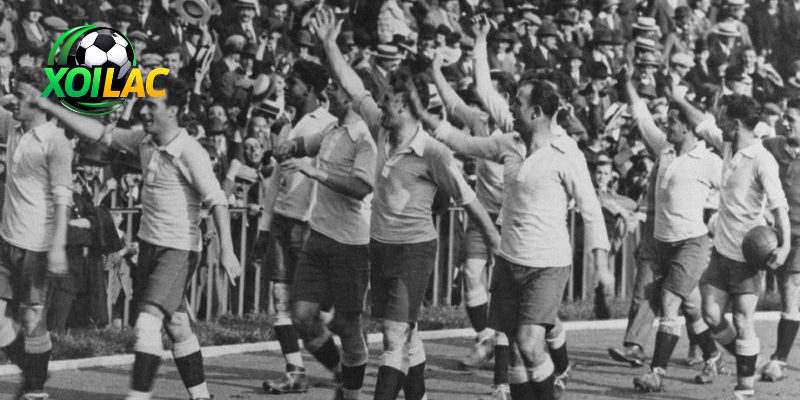
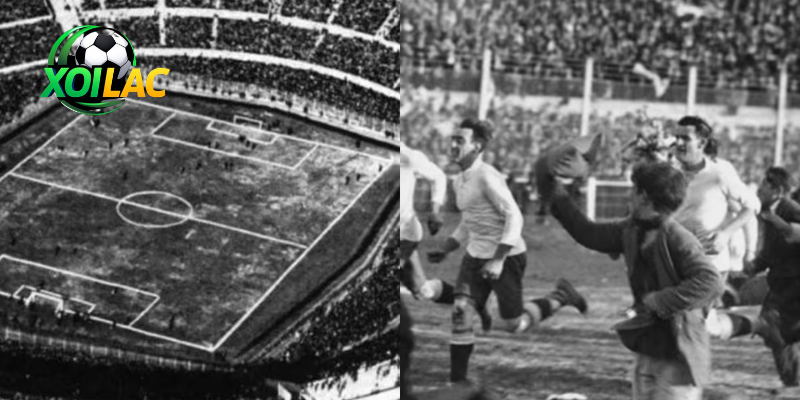
Hosted in Uruguay, the 1930 World Cup marked the beginning of a new era. Although only 13 teams participated—due to the logistical challenges of international travel at the time—the final saw Uruguay defeat Argentina 4-2 before 68,000 spectators in Montevideo. This event proved that football was not just a regional passion but a global phenomenon.
Continental Growth
Following the formation of the Asian Football Confederation (AFC) in 1954 and the Confederation of African Football (CAF) in 1957, the sport became truly universal. By the 1970s, football was played in over 140 countries, cementing its status as the world’s "common language."
Professionalization and Commercialization
The 20th century saw the transition of football from a pastime into a sophisticated, global industry.
The Football League (1888)
William McGregor, an Aston Villa director, organized 11 English clubs to form the Football League in 1888. This introduced a structured, fixed-schedule format and allowed for paid players, effectively ending the amateur-only era. Preston North End’s "Invincibles" season, where they won the title without a single defeat, remains one of the most celebrated achievements in the sport’s history.
The Television Revolution
The landscape changed forever in 1992 with the formation of the English Premier League and its exclusive broadcast deal with BSkyB, valued at £304 million. Television transformed football clubs into global brands. By the 2022-2025 cycle, domestic television rights for the Premier League alone have surged into the billions, fueling the massive wage growth and transfer market inflation seen today.
The Champions League Transformation
In 1992, the European Cup was rebranded as the UEFA Champions League. By introducing a group-stage format and iconic branding, UEFA created the premier club competition in the world. Today, the tournament generates billions in revenue, serving as the stage where the world’s elite stars and biggest commercial entities converge.
Technological Advancements: VAR and Beyond
In the 21st century, technology has begun to play an equal role to the players themselves.
The VAR Era
Introduced to the global stage at the 2018 World Cup in Russia, the Video Assistant Referee (VAR) system allows officials to review decisions via monitors. Supported by goal-line technology and semi-automated offside sensors, the game has reached a level of precision measured in millimeters. While the implementation remains a subject of intense debate among purists, its influence on the fairness and accuracy of match outcomes is undeniable.
Implications: The Industry of the Future
Today, football stands as a multi-billion-euro industry. The "Deloitte Football Money League" consistently reports that the top 20 clubs generate collective revenues exceeding €10 billion annually. This makes football a larger economic engine than most Hollywood film studios.

Furthermore, the cultural impact is immeasurable. With over 4 billion fans, the 2022 Qatar World Cup became the most-watched television event in history. Football has transitioned from a local English folk game to a mechanism for soft power, corporate branding, and global cultural exchange.
Conclusion
The journey of football—from the muddy fields of ancient China and the chaotic village greens of medieval England to the pristine, high-tech stadiums of the modern era—is a story of resilience and universal appeal. At Xoilac, we believe that understanding this 160-year history is essential for every fan to truly appreciate the intensity of the modern game. As we look toward the future, the sport continues to adapt, ensuring that the "Beautiful Game" remains the heartbeat of global sports culture.
For more in-depth analysis and the latest football news, stay tuned to our ongoing coverage of the world’s most popular sport.