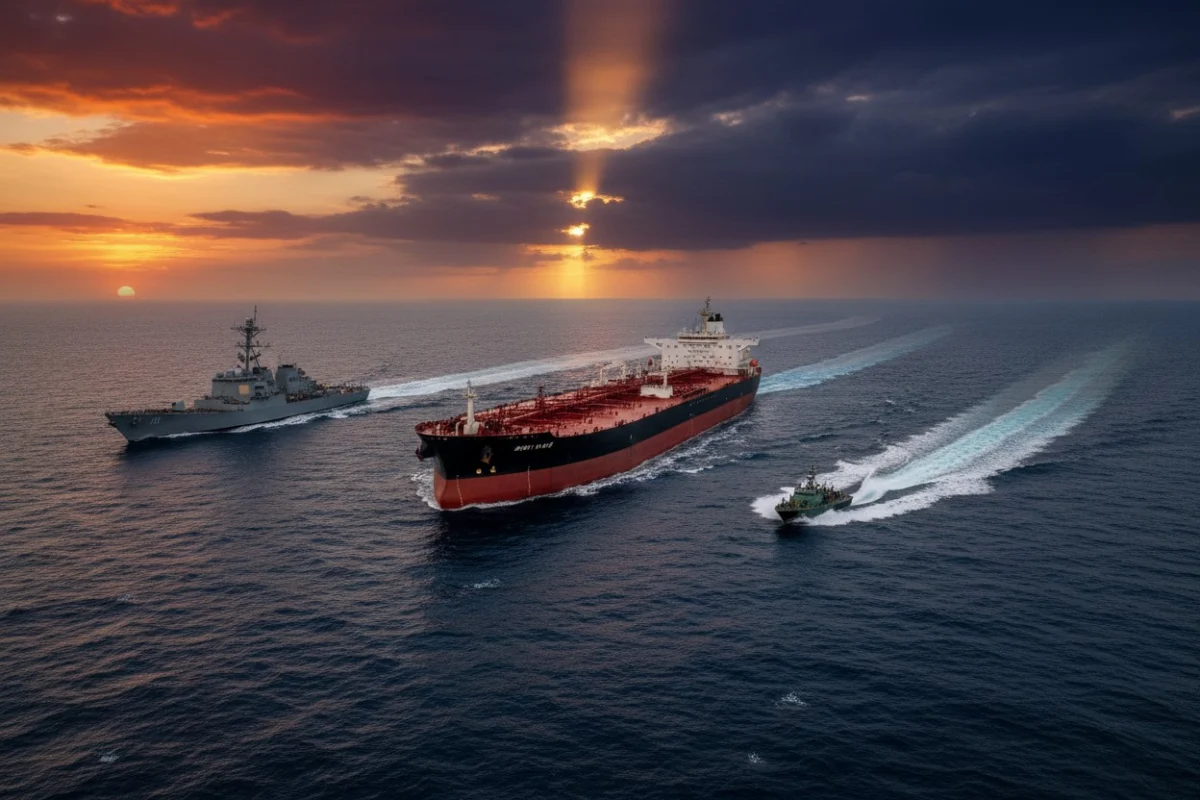
The Strait of Hormuz—a narrow, vital artery through which nearly a third of the world’s seaborne oil passes—has become the epicenter of a precarious geopolitical "gray zone." Recent diplomatic overtures between Washington and Tehran have yielded a temporary negotiation framework, yet this fragile pause falls far short of a durable resolution. As the world watches, the waterway remains in a state of suspended animation: neither fully open nor completely shuttered, but perpetually teetering between localized friction and regional conflagration.
Main Facts: A State of Managed Uncertainty
At the heart of the current crisis is a fundamental disconnect between rhetoric and reality. While U.S. officials, including President Donald Trump and Vice President J.D. Vance, have projected confidence regarding the progress of diplomatic channels, the situation on the ground tells a more complex story. A temporary memorandum of understanding, currently estimated to hold for the next 50 to 60 days, has been established to prevent the total collapse of maritime traffic. However, analysts are quick to categorize this not as a peace treaty, but as a tactical "strategic pause."
The discrepancy is most visible in the conflicting reports regarding maritime access. While President Trump has publicly asserted that the Strait is open for business, Iranian sources, particularly those linked to the Islamic Revolutionary Guard Corps (IRGC), have suggested that transit remains subject to their discretion and oversight. This "regime of managed uncertainty" allows both nations to project strength to domestic audiences while maintaining a backchannel that prevents the conflict from spiraling into an uncontrollable kinetic engagement.
Chronology of the Diplomatic Tightrope
The path to the current, tenuous arrangement has been fraught with sudden shifts and abrupt reversals.
- Early 2026: Tensions reach a boiling point as threats to the Strait of Hormuz escalate, with U.S. intelligence warning of potential blockades.
- The Switzerland Talks: High-level delegations from the U.S. and Iran convene in Switzerland. Vice President J.D. Vance spearheads efforts to establish a de-escalation mechanism, specifically aimed at insulating the Strait from the broader conflict involving Israel, Lebanon, and Hezbollah.
- The Public Blip: The diplomatic momentum faced a significant setback when President Trump publicly criticized Iran’s behavior, prompting a brief walkout by Iranian negotiators. Despite the friction, Iranian Foreign Minister Abbas Araghchi signaled that Tehran remained committed to the dialogue, recognizing that the talks provided a necessary lifeline against mounting sanctions.
- The February 28 Pivot: A critical shift occurred in late February, as internal Iranian discourse shifted toward a more aggressive nuclear posture. The newly appointed Supreme Leader formally rescinded previous international commitments regarding nuclear containment, framing the development of a nuclear deterrent as an "inalienable sovereign right."
- Present Day: The U.S. and Iran remain engaged in a "cat-and-mouse" diplomatic game, using the current 60-day window to test the other side’s resolve while avoiding any act that would force a military escalation.
Supporting Data: Economic Volatility and Global Growth
The global economy is currently paying the "risk premium" for this instability. Brent crude, a benchmark for global oil prices, has hovered between $78 and $80 per barrel. While this range is high, it has prevented the catastrophic price shocks that many energy analysts feared. However, the market remains "acutely sensitive." A single miscalculated incident—a seized tanker or an accidental strike—could trigger a spike toward the $100-per-barrel threshold, a price point that many economists believe would be unsustainable for a recovering global economy.
The International Monetary Fund (IMF) has already sounded the alarm, slashing its global growth forecast to 3.1%. The institution warned that the conflict is effectively derailing global growth, pushing the international community toward what it terms a "devastating recession."
The situation is further complicated by the stance of major global players. U.S. Energy Secretary Chris Wright has indicated that while the U.S. anticipates China will increase its purchases of American crude to offset supply risks, the broader international community has an existential need for a stable Persian Gulf. Commentators have increasingly described the standoff as the "greatest threat to the global economy," noting that the modern world’s energy architecture is fundamentally incompatible with a blocked Strait of Hormuz.
Official Responses and Strategic Motivations
The motivations behind the current pause are as divergent as the parties involved. For the United States, the primary goal is crisis management. By maintaining the negotiation framework, the Trump administration aims to mitigate the risk of a full-scale war that would require a massive, costly military commitment in the Middle East. As noted in Robert Bryce’s seminal work, Gusher of Lies, the U.S. has maintained a doctrine since the Reagan era of defending the "critical oil" facilities of the Persian Gulf at all costs. Modern leadership is navigating that same legacy, attempting to uphold that commitment without triggering the very conflict they seek to deter.
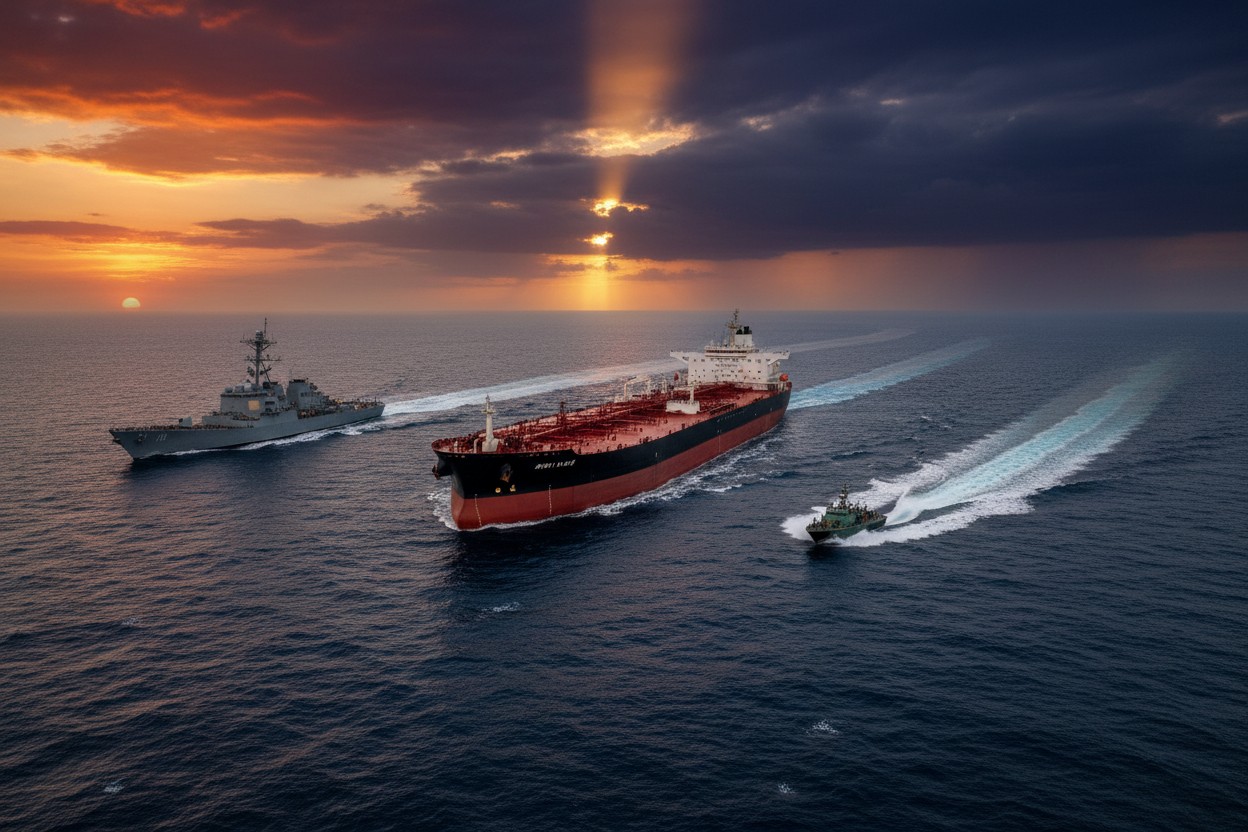
For Tehran, the negotiation table is a strategic instrument designed to buy time. Faced with intense sanctions, Iran is utilizing the diplomatic window to alleviate economic pressure and signal to regional rivals that it remains a central power broker.
U.S. Secretary of State Marco Rubio has characterized the Iranian strategy as turning the Strait of Hormuz into an "economic nuclear weapon." By holding the global energy supply hostage, Tehran exerts leverage that transcends its conventional military capabilities. This assessment is bolstered by the shift in Iran’s nuclear rhetoric, which has moved from compliance to explicit declarations of sovereignty over weapons development.
Implications: The Dangers of the "Gray Zone"
The current "no war, no peace" state of affairs is inherently unstable. By definition, a gray zone existence requires a high degree of communication to prevent accidents, yet the trust between the U.S. and Iran is effectively non-existent.
The primary danger is that the current diplomatic framework relies on a "rhetorical balance" rather than practical concessions. As long as both sides view the negotiations as a way to maintain the status quo rather than resolve core disputes—such as Iran’s nuclear ambitions and the broader regional security architecture—the window for diplomacy remains extremely fragile.
Analysts point to several "tripwires" that could shatter this calm:
- Nuclear Escalation: Any tangible move by Iran to enrich weapons-grade material would likely force the U.S. to abandon the negotiation framework.
- Maritime Incidents: A kinetic clash between naval forces in the Gulf would likely render the current memo of understanding obsolete.
- Domestic Political Pressure: Should either leadership face internal unrest, they may find it politically advantageous to escalate the conflict to boost nationalist sentiment.
Conclusion: A Fragile Window of Opportunity
The current situation is neither a diplomatic failure nor a resounding success. It is a temporary, pragmatic restraint—a "rare moment of pause," as described by various political observers. However, the "chokehold on humanity," as some critics have described the volatility of the Strait, remains firmly in place.
The future of the Strait of Hormuz depends on whether these talks can evolve. If the parties continue to use the current framework merely as a tool for tactical advantage, the gray zone will eventually collapse, either into a settled, long-term de-escalation or into a confrontation that the global economy is ill-equipped to handle.
For now, the world remains in a state of suspended breath. Diplomatic doors remain ajar, but the hinges are rusted by decades of mutual suspicion. Until a comprehensive and transparent agreement replaces the current temporary memo, the global energy markets will remain hostage to a standoff that, despite all appearances of stability, remains one miscalculation away from disaster. The international community, meanwhile, is left to navigate a path between two poles: a slow-motion economic decline or a high-intensity, global-scale conflict. Neither outcome offers the security that the world so desperately requires.