



By Nicole Lou, Senior Staff Writer, MedPage Today
September 18, 2026
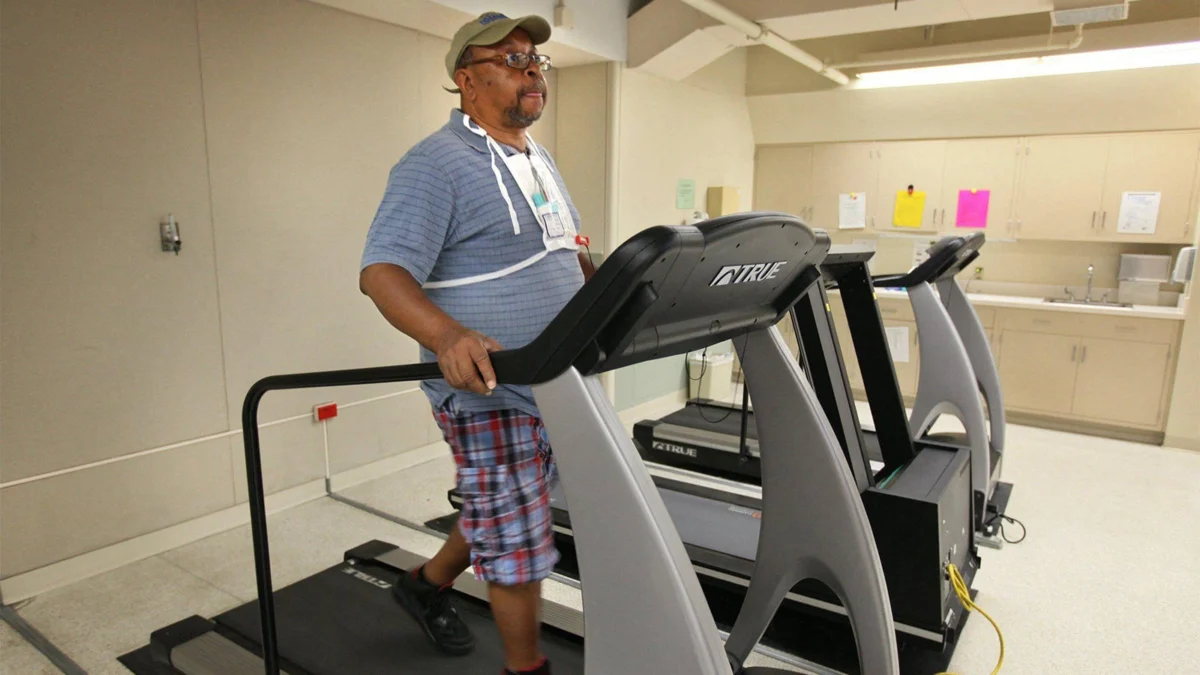
In a landmark update to one of the most cited bodies of evidence in cardiovascular medicine, a comprehensive Cochrane meta-analysis has confirmed that exercise-based cardiac rehabilitation (CR) remains a cornerstone of care for patients with coronary heart disease (CHD). More significantly, the new findings suggest that the benefits of these programs are no longer confined to traditional, hospital-based settings, with digital and home-based interventions proving equally effective.
The updated review, published in the Cochrane Database of Systematic Reviews, synthesizes data from 107 randomized controlled trials involving 26,886 adults. It provides the most robust evidence to date that structured exercise programs—whether conducted in a clinical facility or remotely—significantly reduce mortality and morbidity for patients recovering from myocardial infarction (MI), percutaneous coronary intervention (PCI), coronary artery bypass grafting (CABG), or stable angina.
Main Facts: The Clinical Power of Movement
The primary takeaway from the study is that exercise-based cardiac rehabilitation is not merely an optional "wellness" activity but a critical component of integrated cardiovascular care. When compared to patients who received no structured exercise training, those participating in CR programs demonstrated clear, measurable improvements in clinical outcomes.
The meta-analysis focused on both short-term (6–12 months) and long-term (up to 36 months) recovery benchmarks. Perhaps most notably, the researchers found that in the short term, the reduction in all-cause mortality reached statistical significance for the first time in the history of this recurring Cochrane review.
While the authors cautioned that the incremental survival gain may appear small—partly due to the high efficacy of contemporary pharmacological treatments like statins and antiplatelet therapy—the aggregate data confirms that exercise adds a layer of protection that medication alone cannot fully replicate.
A Chronology of Evidence: From 2021 to 2026
To understand the significance of this update, one must look at the evolution of cardiac rehab research over the last five years. The previous iteration of the Cochrane review, published in 2021, analyzed 85 trials with 23,430 participants.
The 2026 update represents a major leap forward, not just in the volume of data, but in the diversity of the patient populations studied. The intervening years have seen a surge in research concerning:
- The Digital Shift: The COVID-19 pandemic necessitated a rapid pivot to telehealth and remote monitoring, which allowed researchers to capture data on home-based programs that were previously underrepresented in meta-analyses.
- Demographic Inclusivity: Recent trials have made a concerted effort to recruit more women and patients from low- and middle-income countries, addressing long-standing criticisms that past cardiac research was overly centered on male, Western cohorts.
- Technological Integration: The adoption of wearable fitness trackers and mobile applications has transformed how exercise is prescribed and monitored, allowing for a more nuanced understanding of how "remote" rehab compares to "supervised" rehab.
Supporting Data: By the Numbers
The statistical weight of the meta-analysis is substantial. For patients followed for 36 months or longer, the data revealed clear reductions in cardiovascular risks:
- Cardiovascular Mortality: Participants in CR programs experienced a relative risk (RR) of 0.58 (95% CI 0.43–0.78) compared to non-participants.
- Fatal or Non-Fatal MI: The risk of recurrent myocardial infarction was similarly reduced, with an RR of 0.67 (95% CI 0.51–0.87).
Beyond clinical "hard endpoints," the review analyzed quality-of-life metrics and cost-effectiveness. In almost every model tested, CR was found to be a highly cost-effective intervention. By preventing readmissions and reducing the long-term reliance on emergency cardiac care, these programs effectively pay for themselves, providing a rare "win-win" in the context of rising healthcare costs.
However, the authors noted that while the data for mortality and cardiac events is robust, the evidence regarding long-term hospitalization rates and granular quality-of-life scores is still limited by the smaller number of trials that specifically measure those outcomes over extended periods.
Official Responses and Expert Perspective
Rod Taylor, MSc, PhD, of the University of Glasgow, who led the research team, emphasized that the findings should act as a catalyst for policy change.
"By adding newer studies to this update, we’re able to see that digital programs work as well as in-person programs, which really changes the game here," Dr. Taylor stated in a press release. "These approaches may help us reach people who cannot attend traditional center-based services, whether due to geographic isolation, work commitments, or lack of transportation."
Dr. Grace Dibben, a co-author of the study, highlighted the psychological barriers that often keep patients from exercising. "Many people lose confidence after a heart attack or cardiac procedure and worry that physical activity could be dangerous," she said. "Appropriately prescribed exercise is not only safe for most patients, but it can play a vital role in recovery and long-term heart health."
Dr. Dibben expressed frustration that despite the overwhelming evidence, cardiac rehabilitation remains an underutilized and underfunded service in many healthcare systems. "We want this option to be available to everyone," she added. "This new research shows you don’t even have to go into a rehab center to benefit—you can participate from home and still see the benefits."
Implications: Changing the Clinical Paradigm
The implications of this meta-analysis are profound for cardiologists, primary care providers, and health systems administrators.
1. The Death of the "Center-Only" Model
For decades, the "gold standard" of cardiac rehab was a hospital-based gym with cardiac nurses and EKG monitors on-site. While this remains the safest environment for high-risk patients, the 2026 Cochrane review provides the clinical permission needed to move toward hybrid or fully remote models. This shift is essential for increasing participation rates, which have historically been abysmal due to the logistical burden on patients.
2. Broadening the Scope
The success of exercise-based rehab is no longer limited to CHD. As noted in the broader medical literature, similar principles are being applied to heart failure and atrial fibrillation. The Cochrane update reinforces the notion that the human heart, regardless of the underlying pathology, remains a muscle that thrives on consistent, structured, and safe physical activity.
3. Policy and Funding
The review concludes that cardiac rehabilitation should be viewed as a mandatory component of integrated CHD care, standing alongside pharmacological interventions. Policymakers are now faced with a clear economic argument: investing in remote cardiac rehab is a strategy for long-term fiscal health.
As the medical community digests these findings, the focus must shift from proving whether exercise works to how we can implement these digital and home-based systems on a global scale. With the barriers to entry lowered by new technology and supported by irrefutable data, the path to a healthier post-cardiac life is now more accessible than ever.
In closing, the authors of the review reiterate that the integration of these programs into standard clinical practice is a moral and medical imperative. For the patient who has just survived a heart attack, the journey back to health is no longer confined to the hospital walls—it begins with the first step taken at home.