









In the modern landscape of sleep technology, the industry has long been dominated by passive solutions: cooling gel-infused foams, moisture-wicking bamboo sheets, and high-tech mattress fabrics. While these materials offer a temporary sensation of coolness, they eventually reach a thermal equilibrium, often trapping body heat just as the user drifts into their most critical hours of rest.
Chilipad, a leader in active thermal regulation, is shifting the paradigm with the launch of the Chilipad 2.0. By moving away from passive materials toward an active, water-based circulation system, the company is targeting the fundamental biological requirements of sleep. With a complete redesign, a commitment to domestic manufacturing, and a firm stance against subscription-based business models, the Chilipad 2.0 represents a significant leap forward in how we engineer the human sleep environment.
The Science of Thermal Regulation: Why Temperature Matters
To understand the significance of the Chilipad 2.0, one must first look at the physiological demands of the human body. As neurologist and sleep specialist Dr. W. Chris Winter, author of The Sleep Solution, explains, the science of sleep is unambiguous. "Your core body temperature needs to drop in order to initiate and sustain deep sleep," Dr. Winter notes.
For many, the bedroom environment or the presence of a sleeping partner creates a thermal barrier that prevents this essential cooling process. When the body cannot shed heat, the brain remains in a state of heightened alertness, leading to fragmented sleep and reduced time spent in slow-wave sleep—the restorative stage responsible for physical recovery and cognitive sharpness.
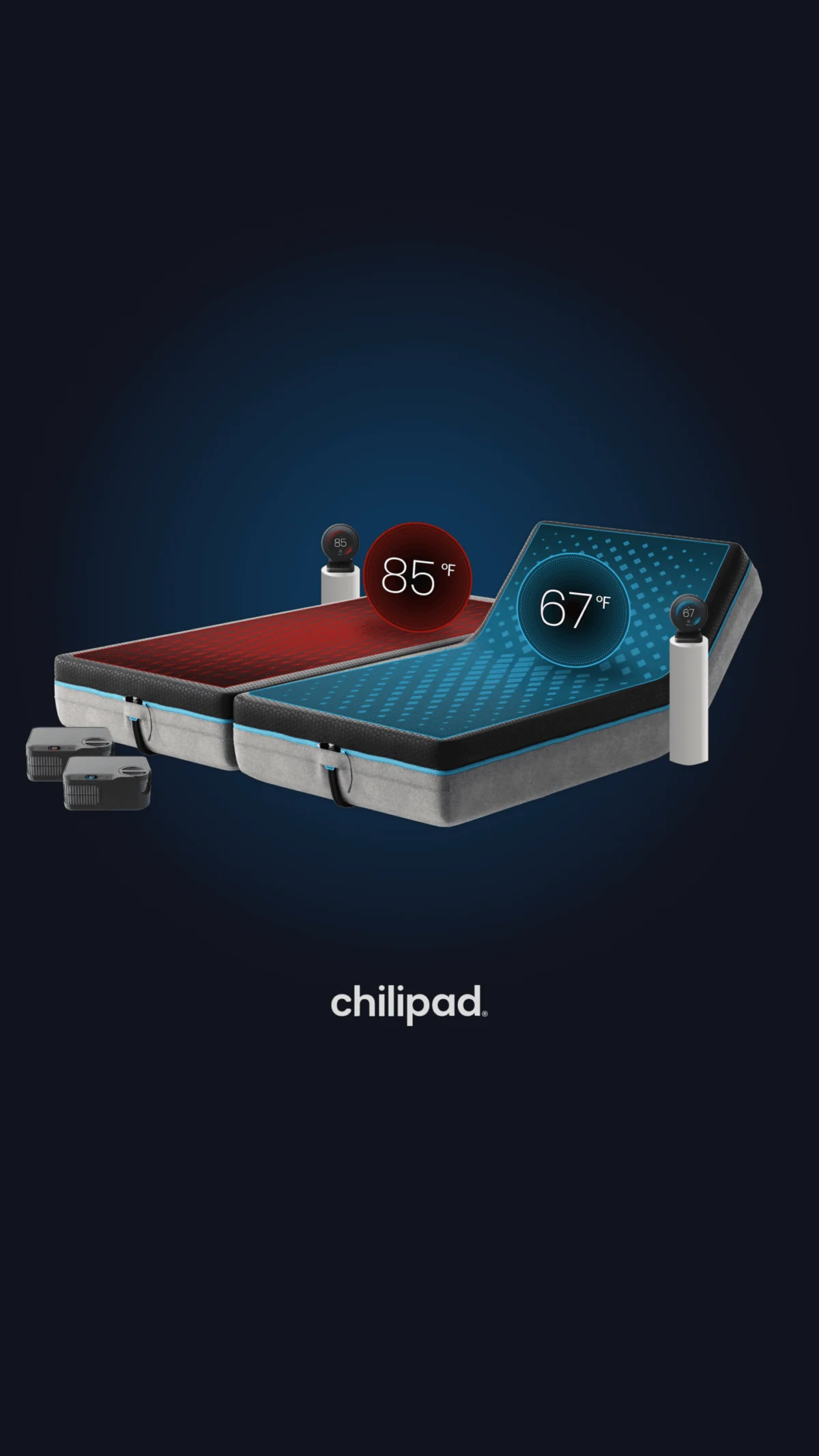
The Chilipad 2.0 addresses this by circulating temperature-controlled water through a modular mattress topper, allowing users to set their bed temperature anywhere from 55°F to 115°F. Unlike passive cooling materials that simply dissipate heat, this active system continuously removes or adds thermal energy, ensuring the user’s micro-climate remains stable regardless of ambient room temperature or metabolic heat output.
Chronology of Development: From Concept to North Carolina
The journey to the Chilipad 2.0 was marked by a strategic pivot toward domestic operations. Recognizing that the complexities of modern sleep hardware require tight integration between design and production, the company established a new facility in North Carolina.
The development phase was defined by a shift in manufacturing philosophy. According to Trey Robinson, chief technology officer at Chilipad, the goal was to eliminate the "ocean gap" between engineering teams and the factory floor. By centralizing R&D, engineering, and assembly in the United States, the team was able to iterate on the system’s design with unprecedented speed.
This shift has resulted in a more robust, modular, and repairable product. By designing the core electronics—including the dock and the remote—in-house, Chilipad has effectively moved away from the "disposable tech" model. The system is built for longevity; if a specific component fails, the modular design allows for targeted repairs rather than requiring the customer to discard and replace the entire unit. This transition reflects a growing trend in consumer electronics toward sustainability and long-term ownership, a welcome change in an industry often criticized for planned obsolescence.
Key Features: A Comprehensive Overhaul
The Chilipad 2.0 is not merely an iteration; it is a total reimagining of the user experience. The system boasts several critical upgrades designed to solve the common pain points of previous generations:
1. Advanced Hydro-Thermal Regulation
The core functionality remains the active water-based temperature control. By maintaining a precise, user-defined temperature throughout the night, the system helps mitigate common sleep disruptors such as night sweats and temperature fluctuations, which are particularly prevalent during perimenopause and menopause.
2. The Redesigned Dock
The system’s "engine," or dock, has been significantly quieted. With a larger internal tank and an ergonomic lid, the system now requires less frequent maintenance, making it more practical for daily, uninterrupted use.
3. The New Nightstand Remote
One of the most requested features, the dedicated physical remote, allows users to adjust their settings without reaching for a smartphone. With auto-detection capabilities, the system recognizes when the user enters the bed and triggers the pre-set sleep schedule, removing the friction of manual activation.
4. Total Sleep Autonomy
In an era where most "smart" devices require an "always-on" cloud connection and a recurring monthly subscription, Chilipad 2.0 stands out. The system is designed for complete autonomy; it functions perfectly with the app, with the remote, or even in a fully offline mode. There is no cloud dependency, no WiFi requirement, and zero subscription fees.
5. Modular Configuration
Recognizing that no two bedrooms are the same, the system is highly modular. Whether a user requires a single-zone setup or a dual-zone configuration for partners with different thermal preferences, the system can be customized. It is now available in more sizes, including Full and Twin XL, ensuring compatibility with a wider range of mattress dimensions.
Official Responses and Strategic Vision
Robbie Falls, chief product and marketing officer at Chilipad, emphasizes that the product’s core mission is user agency. "We combined powerful cooling with a modular, easy-to-set-up cover, along with a nightstand remote and no required subscriptions, making consistent, cooler sleep easier to achieve," Falls stated during the launch.
The focus on "control" is a recurring theme in the company’s messaging. By allowing users to choose their method of interaction—app, remote, or manual—and by ensuring the system functions regardless of internet connectivity, Chilipad is positioning itself as a reliable utility rather than a fragile gadget.
Trey Robinson echoed this sentiment, highlighting the technical advantages of the North Carolina facility. "Chilipad 2.0 is proof that the best products get built when engineering and manufacturing share a hallway, not an ocean," Robinson said. By keeping the R&D lab in proximity to the assembly line, the company has managed to create a more reliable, higher-quality system that is backed by a comprehensive two-year manufacturer’s warranty.
Supporting Data and Clinical Validation
The efficacy of the Chilipad system is supported by a significant body of clinical observation. According to the company, over 700 clinicians currently recommend the use of Chilipad for patients suffering from temperature-related sleep disruption.
The medical community’s interest is driven by the clear link between thermal regulation and deep, restorative sleep. For individuals struggling with hormonal shifts or chronic overheating, the ability to manipulate the bed temperature is not just a luxury—it is a therapeutic intervention. Dr. Winter’s endorsement underscores this, noting that the system offers a level of precision that no mattress, supplement, or simple tracking device can provide. By optimizing the body’s thermal environment, users report not only falling asleep faster but also experiencing higher-quality "slow-wave" sleep, leading to improved physical recovery and cognitive performance the following morning.
Implications for the Sleep Industry
The launch of the Chilipad 2.0 carries broader implications for the sleep health sector.
A Move Away from "Wellness Fads"
As Dr. Winter noted, the industry is often saturated with "wellness fads" that promise better sleep through passive means or unproven gimmicks. Chilipad 2.0, by contrast, relies on "applied sleep science." This shift toward tangible, scientifically backed outcomes may force competitors to reconsider their focus on passive materials and marketing buzzwords.
The Return of Domestic Manufacturing
The emphasis on US-based engineering and assembly is a strategic masterstroke. In an economy where supply chain volatility is a constant threat, domestic production provides the company with greater control over quality assurance and the ability to pivot production based on consumer feedback. It also appeals to a growing demographic of consumers who prioritize domestic manufacturing and high-quality, durable goods.
The "No-Subscription" Standard
Perhaps the most significant implication is the rejection of the subscription model. Many modern health-tracking products have moved to a "hardware-as-a-service" model, where the device is rendered less useful without a monthly fee. Chilipad’s decision to eschew this model signals a respect for the consumer’s long-term investment. By providing a two-year warranty and a modular, repairable design, the company is betting that customer loyalty is better earned through durability and value than through digital gating.
Accessibility and Health Savings
Finally, the company’s alignment with Health Savings Accounts (HSA) and Flexible Spending Accounts (FSA) acknowledges the clinical value of the product. By making the Chilipad 2.0 eligible for these accounts, the company is bridging the gap between luxury home goods and medical-grade health equipment.
Conclusion: A New Standard for the Bedroom
The Chilipad 2.0 represents a mature evolution of the sleep technology market. By prioritizing thermal science, domestic manufacturing, and user autonomy, the company has created a product that feels less like a piece of consumer tech and more like an essential component of a healthy lifestyle.
For those who have long suffered from the restlessness caused by overheating, the 2.0 offers a path to genuine physiological optimization. As the industry continues to advance, the success of the Chilipad 2.0 will likely be measured not just in sales, but in the long-term impact on the quality of rest for its users. In a world that is increasingly noisy, hot, and distracted, the ability to control the temperature of one’s own bed may well be the most effective tool available for regaining a good night’s sleep.
With pricing starting at $1,599 for the single-zone system and $2,798 for the dual-zone, the investment is significant, but for those whose health and daily performance depend on the quality of their recovery, the value proposition—built on science, durability, and autonomy—is clear.