










In the quest to unlock the mysteries of the human brain, sleep has long remained one of the most stubborn frontiers. While the medical community has made significant strides in diagnosing sleep disorders, effective, non-invasive treatments that do not rely on a cocktail of pharmaceuticals remain elusive. However, a breakthrough from the University of Texas (UT) at Austin may be poised to change that paradigm.
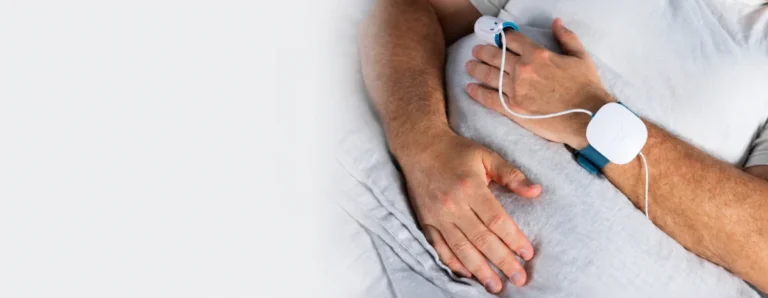
Researchers have unveiled the NEUSLeeP, a soft, wearable bioelectronic patch that utilizes gentle ultrasound waves to stimulate deep brain regions. By facilitating faster entry into Rapid Eye Movement (REM) sleep and extending the duration of this critical cycle, the device offers a non-surgical, drug-free alternative for millions suffering from sleep architecture disruption.
Main Facts: A New Frontier in Neuromodulation
The NEUSLeeP device represents a sophisticated convergence of material science and neurobiology. Unlike traditional polysomnography—which requires a clinical setting and a labyrinth of wires—NEUSLeeP is a compact, skin-attached patch.
How It Works
The device functions through a dual-action mechanism:
- Precision Ultrasound Stimulation: The patch delivers low-intensity ultrasound waves that penetrate the scalp and skull to reach deep-seated brain structures associated with the sleep-wake cycle.
- Real-Time Monitoring: Simultaneously, integrated electrodes track brain activity (EEG) and physiological markers, allowing the device to adjust its stimulation parameters dynamically based on the user’s current sleep stage.
By targeting specific neural circuits involved in the transition to REM, the device acts as a "gentle nudge" to the brain, guiding it into the restorative state that is essential for cognitive maintenance and emotional regulation.
The Chronology of Discovery: From Concept to Clinical Trial
The development of NEUSLeeP was not an overnight success but the result of years of rigorous interdisciplinary collaboration at UT-Austin.
Early Research and Prototyping
The project began as an effort to solve the "accessibility problem" in neurology. Researchers recognized that while deep brain stimulation (DBS) is a proven method for managing neurological issues, it traditionally requires invasive neurosurgery—a barrier that limits its use to only the most severe cases. The team aimed to achieve the same therapeutic benefits through a non-invasive, wearable interface.
The Pilot Study
The culmination of this research was a pivotal study involving 28 participants, the results of which were recently published in Nature Communications. The trial was designed to test the efficacy of the patch across a diverse demographic, including both healthy sleepers and individuals who report chronic difficulties with sleep onset and maintenance.
The results were statistically significant: participants wearing the patch reached REM sleep, on average, 43 minutes faster than they did in control conditions. Furthermore, their total REM duration increased by approximately 16 minutes per night.
Supporting Data: Why REM Matters
To understand the magnitude of this achievement, one must understand the biological necessity of REM sleep. Often associated with dreaming, REM is the "emotional reset" of the brain. It is the stage during which the brain processes the day’s experiences, solidifies memories, and recalibrates the amygdala—the region responsible for fear and stress responses.
Key Performance Metrics from the Study:
- Latency Reduction: 43 minutes faster entry into REM.
- Duration Extension: 16-minute increase in total REM time.
- Heart Rate Variability (HRV): Researchers observed marked improvements in HRV, a critical marker of the autonomic nervous system’s health and an individual’s ability to handle stress.
- Safety Profile: Participants reported high levels of comfort, with no significant adverse events, confirming the device’s potential for long-term home use.
These findings suggest that the NEUSLeeP patch does more than just help a user "sleep better"; it actively promotes neurological resilience.
Official Responses: The Vision of the Researchers
The success of the trial has drawn praise from the lead investigators, who emphasize that this technology is about more than just convenience—it is about restoring mental health.
"This is the first time we’ve been able to noninvasively target deep brain regions involved in REM sleep, while simultaneously monitoring brain activity," said Kai Wing "Kevin" Tang, a recent UT biomedical engineering PhD graduate and lead researcher. His work was pivotal in miniaturizing the hardware to a point where it could be comfortably worn on the skin.
Huiliang "Evan" Wang, assistant professor in the Cockrell School of Engineering and the project’s principal investigator, noted the scalability of the device. "Our skin-attached NEUSLeeP patch opens up new possibilities for understanding sleep and treating sleep disorders in home settings," Wang stated.
Perhaps most poignant are the comments regarding the psychological implications of the research. Gregory Fonzo, assistant professor in the Dell Medical School’s department of psychiatry and behavioral sciences, underscored the link between REM and mental health. "REM sleep is not just about dreaming—it’s about emotional reset and stress adaptation. By enhancing REM, we may help people better cope with stress and improve their overall well-being."
Dr. Vincent Mysliwiec of UT Health San Antonio added a clinical perspective, noting: "Our vision is a future where patients with mental health disorders can optimize their sleep with a noninvasive and safe treatment. This technology could help millions of people get the restorative sleep they need."
Implications: A Future Beyond Insomnia
The implications of the NEUSLeeP patch extend far beyond the bedroom. By targeting the neurological underpinnings of sleep, the device offers a potential lifeline for populations where sleep disruption is both a symptom and a driver of illness.
Potential Clinical Applications:
- PTSD and Anxiety: Patients with Post-Traumatic Stress Disorder often experience fragmented REM sleep, which prevents the brain from "filing away" traumatic memories. By stabilizing REM, NEUSLeeP could serve as a therapeutic adjunct to cognitive behavioral therapy.
- Depression Management: Chronic sleep deprivation is a well-documented precursor to depressive episodes. A tool that ensures consistent, high-quality sleep could prevent or mitigate the severity of mood disorders.
- Neurodegenerative Disease: Emerging research suggests that the brain’s "waste management" system—the glymphatic system—is highly active during specific stages of sleep. By optimizing sleep architecture, scientists hope to slow the progression of conditions like Alzheimer’s disease.
- Personalized Sleep Medicine: Because the device monitors brain activity in real time, it could eventually be programmed to create a personalized "sleep prescription," adjusting stimulation patterns to meet the unique needs of the individual user.
The Road to Market
The transition from a university lab to a consumer or clinical product is notoriously difficult, often referred to as the "valley of death" for new technologies. However, the UT-Austin team is moving with purpose.
They are currently collaborating with Discovery to Impact, the university’s dedicated commercialization unit, to navigate the complexities of product development, regulatory approval, and manufacturing. A patent application has already been filed, marking the first step in protecting this intellectual property while preparing for the larger, multi-site trials required for FDA clearance.
Challenges Ahead
Despite the optimism, the team acknowledges several hurdles:
- Scalability: Translating a research-grade prototype into a mass-manufactured medical device requires rigorous quality control and cost-optimization.
- Long-term Efficacy: While the initial study was successful, the team must prove that the brain does not "adapt" to the stimulation, which could lead to diminished results over time.
- Regulatory Scrutiny: As a neuromodulation device, NEUSLeeP will face stringent reviews to ensure that long-term ultrasound exposure is perfectly safe for daily use.
Conclusion: Reclaiming the Night
For decades, modern society has viewed sleep as a luxury to be sacrificed at the altar of productivity. We have treated sleep disorders with chemicals that often induce sedation rather than restorative rest, leaving the underlying architecture of the brain untouched.
The NEUSLeeP patch represents a fundamental shift in this approach. By treating sleep as a dynamic neurological process that can be fine-tuned rather than merely "turned on," UT-Austin researchers have opened a door to a new era of health.
If the upcoming larger trials confirm the initial findings, we may soon see a world where the "emotional reset" of REM sleep is no longer left to chance. Whether for the stressed professional, the patient with PTSD, or the elderly individual looking to preserve cognitive function, the NEUSLeeP patch offers a promise that is as simple as it is profound: a better night’s sleep, and by extension, a better life.
As the team prepares for the next phase of their journey, the world watches with anticipation. In a field dominated by pharmaceutical giants, a small, soft patch from Texas might just be the most significant innovation in sleep science of the 21st century.