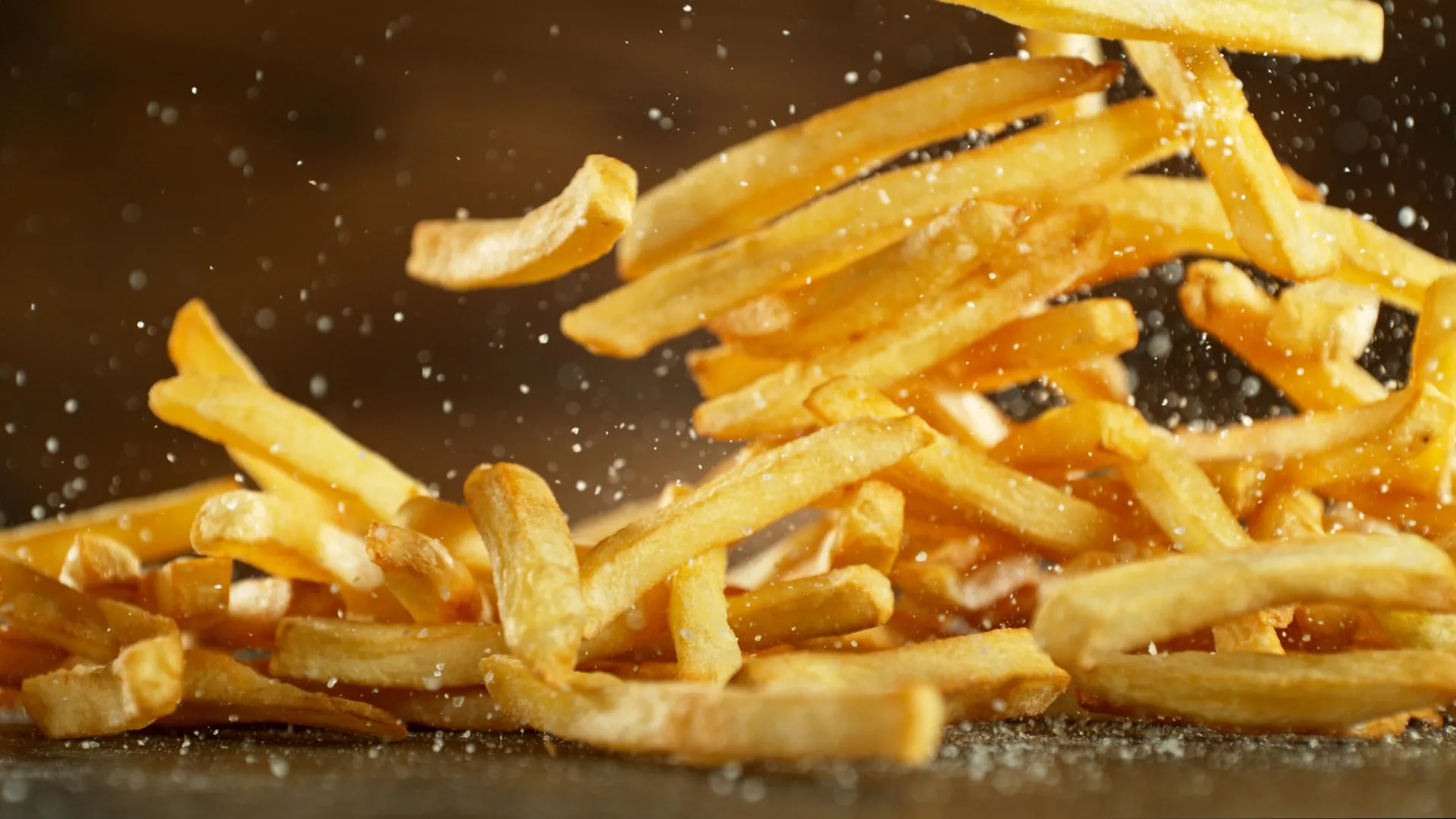
The French fry is a global culinary icon, prized for its golden, crisp exterior and a fluffy, warm interior that defines the "comfort food" experience. Yet, this indulgence comes at a steep physiological cost. Deep-frying—the standard method for achieving that perfect texture—is inherently a process of oil absorption. As moisture escapes the potato, oil rushes into the resulting voids, significantly boosting the caloric density and fat content of the final product.
For years, the food industry has sought a "holy grail": a fry that retains the sensory profile of a classic, deep-fried potato while offering a significantly healthier nutritional profile. Now, researchers at the University of Illinois Urbana-Champaign (UIUC) believe they have found the solution. By integrating microwave energy with conventional deep-frying, scientists are developing a hybrid process that could fundamentally change how we cook our favorite foods.
The Physics of the Perfect Fry
To understand why this breakthrough is significant, one must first understand the mechanics of the deep-fryer. According to Pawan Singh Takhar, a professor of food engineering in the Department of Food Science and Human Nutrition (FSHN) at the University of Illinois, the frying process is a delicate battle of pressure.
When a potato strip hits 180-degree Celsius oil, the water inside the potato begins to boil. As this water turns into vapor, it creates tiny channels and pores that allow moisture to escape. However, once the initial burst of steam subsides, the cooling or settling phase of the process creates a "negative pressure" or suction effect. Much like a straw in a glass of water, the potato creates a vacuum that pulls the surrounding cooking oil deep into its structure.
"We found that as much as 90% of the oil absorption occurs during this negative pressure phase," says Takhar. "The challenge is to keep that pressure positive, pushing outward against the oil, for as long as possible."
Chronology of the Research
The investigation into microwave-assisted frying began with a collaborative effort between the University of Illinois and Washington State University. The team aimed to move beyond the constraints of traditional convective heat, which moves slowly from the outside of the food to the core.
- Initial Framework: The researchers established a baseline for traditional frying, using standardized potato strips that were blanched, salted, and fried in soybean oil.
- Technological Integration: Working with a specialized microwave fryer capable of operating at both 2.45 GHz and 5.8 GHz, the team began testing how electromagnetic waves altered the internal environment of the potato.
- Data Collection: During and after cooking, the researchers utilized advanced sensors to measure temperature, internal pressure, moisture loss, and oil uptake.
- Mathematical Modeling: The team utilized complex computer models based on hybrid mixture theory to simulate how different frying variables interacted. This allowed them to predict results that would be difficult to measure in a laboratory setting.
- Validation: The findings were solidified through two major publications in the Journal of Food Science and Current Research in Food Science, outlining the shift in pressure profiles when using microwave energy.
Supporting Data: Microwave Frequency and Pressure Dynamics
The core innovation lies in the use of microwave energy to disrupt the negative pressure cycle. Unlike a standard deep-fryer, which relies on heat conduction from the exterior, microwave energy penetrates the entire thickness of the potato simultaneously.
As the microwaves oscillate water molecules within the potato, they generate intense internal vapor pressure. This sustained internal pressure effectively "plugs" the pores, preventing the oil from infiltrating the potato as it does in conventional frying. The researchers compared the frying profiles of potatoes cooked at 2.45 GHz and 5.8 GHz against those cooked using traditional methods.
The data was clear:
- Faster Moisture Removal: Microwave energy accelerated the escape of moisture, shortening the overall cooking cycle.
- Reduced Oil Uptake: By maintaining a positive pressure profile for a longer duration, the total amount of oil absorbed by the potato was significantly lower.
- The Texture Dilemma: While the microwave-only approach succeeded in reducing oil, it failed the "sensory test." Fries cooked solely by microwaves tended to be soggy and lacked the necessary crunch.
"If you only use microwaves, you get a healthy but unappealing product," Takhar notes. "The crispiness—the part people love—requires the high-heat, rapid-dehydration surface reaction that only conventional deep-frying can provide."
Official Perspectives: Balancing Health and Cravings
The research team recognizes a fundamental truth of human behavior: taste often trumps nutritional labels. Pawan Singh Takhar and his doctoral student, Yash Shah, have framed their research not as a way to replace fried foods, but as a way to evolve them.
"Consumers want healthy foods, but at the time of purchase, their cravings often take over," Takhar explains. "High oil content adds flavor, but it also carries a heavy burden of calories. Our goal is to achieve that lower fat content without the consumer noticing a significant difference in taste or texture."
By acknowledging the psychological aspect of food, the researchers have focused their efforts on a "hybrid" system. This system utilizes a brief, high-heat conventional fry to "set" the outer crust—the source of that satisfying crunch—while the microwave component handles the bulk of the moisture removal and internal cooking. This dual-action process preserves the sensory qualities of the traditional fry while cutting down on the oil absorption that contributes to obesity and hypertension.
Implications for the Food Industry
The implications of this research extend far beyond the laboratory. For the global fast-food industry and snack manufacturers, the potential for a "healthier" fry that maintains premium quality is an enormous opportunity.
Scalability and Economic Viability
One of the most promising aspects of the Illinois study is the potential for retrofitting existing infrastructure. Large-scale food processing facilities often use continuous frying lines. The researchers have noted that these systems could be modified to include microwave generators. Because these generators are already widely available and relatively cost-effective, the barrier to entry for commercial adoption is lower than that of many other food-tech innovations.
Nutritional Impact
Public health advocates have long targeted fried foods as a primary driver of the modern obesity epidemic. By reducing oil uptake, this technology could provide a pathway for manufacturers to offer products with lower saturated fat levels without necessitating a radical change in consumer behavior. It represents a "stealth health" strategy: improving the nutritional profile of a product without sacrificing the experience that makes it popular.
Efficiency and Sustainability
Beyond health, the hybrid method offers significant operational benefits. By speeding up the cooking process and reducing the amount of oil required for production, manufacturers could realize significant savings in both energy and ingredient costs. As the food industry faces increasing pressure to become more sustainable, technologies that optimize resource use while maintaining product quality are likely to be prioritized.
Conclusion: The Path Forward
The work of the University of Illinois team marks a significant step toward reconciling the conflicting demands of modern consumers: the desire for indulgence and the necessity of health. While the technology is still in the refinement phase, the successful integration of microwave energy and conventional frying provides a clear blueprint for the future of snack engineering.
As Takhar and his team continue to refine their mathematical models and experimental setups, the vision of a "guilt-free" French fry moves closer to reality. In a world where nutrition is increasingly scrutinized, this hybrid frying method offers a compelling example of how engineering and food science can collaborate to make our favorite foods not just better, but better for us.
This research was supported by the USDA National Institute of Food and Agriculture (Awards 2020-67017-31194, ILLU-698-308, and ILLU-698-926).