In the rapidly evolving landscape of medical technology, the gap between high-precision clinical monitoring and convenient, home-based care has long been a significant hurdle. Patients with chronic respiratory and cardiovascular conditions often rely on bulky, restrictive equipment or infrequent, "spot-check" medical visits that fail to capture the nuances of their condition in a real-world environment.
A breakthrough from the Hong Kong University of Science and Technology (HKUST) is set to bridge this divide. Researchers have unveiled the "HELP" patch—a heteromodal epidermal liquid-metal patch—that promises to transform how we monitor heart and lung health. By leveraging bioinspired design and advanced material science, this skin-like sensor offers a new paradigm in continuous, clinical-grade health tracking.
Main Facts: The Anatomy of the HELP Patch
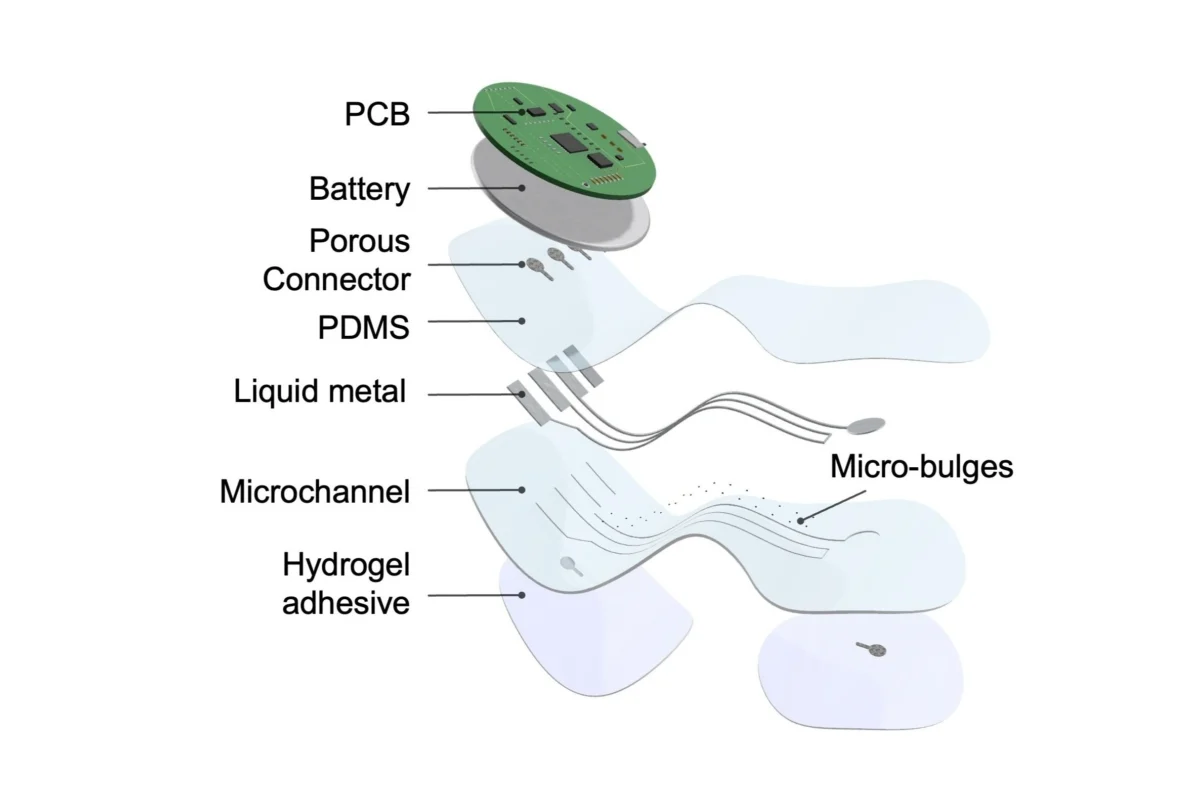
The HELP patch is not merely a sensor; it is a sophisticated, flexible diagnostic platform. At its core, the device utilizes liquid-metal technology to track physiological data, specifically targeting breathing patterns and heart activity. Unlike traditional sensors that rely on rigid circuitry, the HELP patch is designed to be soft, lightweight, and unobtrusive, mimicking the tactile experience of a second skin.
The device features a dual-channel architecture:
- Electrocardiogram (ECG) Channel: Optimized to capture clear, noise-free heart signals.
- Respiratory Channel: A U-shaped loop engineered to monitor the subtle movements of the chest and abdomen during breathing.
By integrating these two channels into a single, cohesive unit, the patch provides a comprehensive snapshot of a patient’s vital signs. The manufacturing process is equally innovative; utilizing a scalable "stencil-brushing" technique, the researchers have ensured that the device is not only technologically advanced but also cost-effective and ready for large-scale production.
Chronology: Overcoming the Liquid-Metal Paradox
The development of the HELP patch represents the culmination of years of research into the limitations of wearable electronics. For decades, engineers have grappled with a fundamental trade-off: sensitivity versus stability.
The Problem with Liquid Metals
Liquid metals are highly valued in soft electronics for their extreme conductivity and stretchability. However, they are notoriously difficult to secure on flexible, elastic substrates. Historically, these metals have suffered from "sliding" or delamination, leading to significant signal drift and distortion as the wearer moves or breathes.
The Gecko-Inspired Solution
To address this, the HKUST team turned to nature for inspiration. By studying the hierarchical, interlocking structures found on the feet of geckos, the researchers developed a novel "anchoring strategy."
The team pre-deposited a microscopic network of silver nanowires onto a flexible silicone base. This structure serves a dual purpose:
- Physical Anchoring: The microscopic interlocking architecture prevents the liquid metal from shifting out of position.
- Chemical Anchoring: The silver nanowire network creates a stable chemical interface that bonds the liquid metal to the substrate.
The result is a robust sensor that maintains perfect electrical performance even after undergoing 500,000 stretching cycles—a durability standard that far exceeds the requirements for daily human movement.
Supporting Data: Precision Under Pressure
The true power of the HELP patch lies in its ability to detect minute physiological changes that other wearables might miss. This is made possible by the device’s "analog constriction gate" architecture.

Capturing Micro-Movements
The sensor incorporates graded, dome-like microbulges along its breathing channel. As the user’s chest expands and contracts, these gates act as a mechanical filter, constricting the liquid metal path in a precise sequence. This architecture amplifies the signal, allowing the device to capture chest strain of less than 0.01%.
For context, a shallow resting breath often produces minimal physical movement. Conventional sensors struggle to differentiate this movement from background electrical "noise." The HELP patch, however, processes these signals with such clarity that the respiratory data is effectively isolated from cardiac interference.
Clinical Validation
In pilot clinical studies, the HELP patch was pitted against hospital-standard Polysomnography (PSG) equipment. The results were striking:
- Sleep Apnea Detection: The patch demonstrated high agreement with professional-grade clinical equipment in identifying apnea events.
- Asthma Management: The device successfully tracked real-time responses to bronchodilator treatments, proving that it can serve as an effective tool for monitoring medication efficacy.
Official Responses: Shifting to Proactive Care
The implications of this technology were highlighted by Hnin Yin Yin Nyein, PhD, an assistant professor in the Department of Chemical and Biological Engineering at HKUST. Her perspective emphasizes a shift in clinical philosophy—moving from reactive care to proactive, preventative medicine.
"What is particularly rewarding about our clinical pilot results is seeing how continuous home monitoring can capture hidden symptoms," Dr. Nyein noted. "In COPD patients, for example, daytime spot-checks often show normal oxygen levels because the body actively compensates while awake. Our patch unmasks these physiological changes as the body relaxes during sleep, enabling proactive rather than reactive care."
This statement underscores the "hidden" nature of chronic conditions. Many patients experience their most dangerous physiological fluctuations during sleep or during periods of rest, when they are disconnected from clinical monitoring systems. The HELP patch effectively "unmasks" these periods, providing clinicians with the data they need to intervene before a condition escalates into a medical emergency.
Implications: The Future of Remote Diagnostics
The introduction of the HELP patch carries profound implications for the global healthcare system. As populations age and the prevalence of chronic respiratory and cardiovascular diseases increases, the burden on hospitals will continue to grow.
Decentralizing Healthcare
The ability to perform clinical-grade monitoring at home is a cornerstone of the future of healthcare. By reducing the need for overnight hospital stays for diagnostic tests like sleep studies, the HELP patch offers:
- Cost Reduction: Lowering the barrier to entry for patients who cannot afford constant hospital monitoring.
- Patient Comfort: Allowing individuals to sleep in their own beds, which can lead to more accurate data as patients are less stressed than they would be in a clinical setting.
- Data-Driven Personalized Medicine: With a continuous stream of high-quality data, doctors can tailor treatments to the individual’s specific physiological patterns, rather than relying on generalized guidelines.
Challenges and Future Directions
While the results are promising, the next phase of development will focus on integrating these sensors into wider digital health ecosystems. Future iterations may focus on:
- Wireless Connectivity: Integrating the patch with smartphone applications for instant physician notification.
- Long-term Biocompatibility: Ensuring that the patch can be worn for extended periods (weeks or months) without skin irritation.
- AI Integration: Utilizing machine learning to analyze the vast amounts of data produced by the patch to predict potential health crises before they occur.
Conclusion
The HKUST research team has successfully demonstrated that the future of medical diagnostics is not just in bigger, faster computers, but in smarter, more integrated materials. By solving the age-old problem of liquid-metal instability through a bioinspired lens, the HELP patch stands as a testament to the power of interdisciplinary engineering.
As this technology moves toward commercialization and wider clinical adoption, it holds the potential to redefine the patient-physician relationship. By turning the skin itself into a gateway for data, the HELP patch ensures that patients are never truly "off the clock," providing a watchful, silent, and highly precise eye on their health, 24 hours a day.