






Reviewed by Brian St. Pierre, MS, RD
"Is this drug going to steal my job?"
When GLP-1 receptor agonists—a class of medications including semaglutide (Ozempic) and tirzepatide—first began to saturate the mainstream market, this question echoed through the fitness industry. In the early days of 2017, the threat felt theoretical. Prescription rates were nominal, and for the average health coach, the medication was a niche topic discussed in medical journals rather than a fixture in client intake forms.
Fast forward to 2026: The landscape has been irrevocably altered. Over 1 in 10 US adults is currently utilizing a GLP-1 medication. For the modern health and fitness coach, the question has shifted from "Will this replace me?" to "How do I integrate this into my practice?" The consensus among industry leaders is clear: The medication is not a replacement for coaching, but a powerful, albeit complex, catalyst that requires a sophisticated support system.
The Chronology of a Medical Disruption
The ascent of GLP-1s followed a trajectory rarely seen in pharmaceutical history. Initially indicated for the treatment of Type 2 diabetes, the drugs—which mimic hormones that regulate appetite and blood sugar—showed unprecedented results in weight management.
- 2017–2020: The "Theoretical Phase." Coaches viewed GLP-1s as a medical outlier. Discussion was largely limited to clinical settings.
- 2021–2023: The "Mainstream Adoption." As FDA approvals expanded for weight management, prescriptions surged. Coaches began reporting that clients were arriving with new biological realities: radically suppressed appetites and rapid, unintended weight loss.
- 2024–2026: The "Integration Era." The industry has moved beyond the initial shock. Professional organizations are now codifying how to train clients who are chemically altering their metabolic and hunger responses. The focus has moved from resistance to collaboration.
Supporting the "GLP-1 Support World"
Kate Solovieva, Super Coach and Director of Community at Precision Nutrition (PN), offers a critical re-framing of the coach’s role. "As a coach, you’re not in the GLP-1 world; you’re in the GLP-1 support world," she explains.
Coaches must stop trying to solve the medical puzzle of the medication and instead focus on the subset of users who are "ready, willing, and able" to engage in lifestyle change. Spending energy on individuals who view the medication as a "magic bullet" is often a futile endeavor. Instead, success lies in identifying those who understand that while the drug manages the symptoms of hunger, it cannot build the habits required for long-term health.
The 7 Archetypes of GLP-1 Clients
Readiness is fluid. A client’s needs will evolve as they move through their medical journey. Below are the seven primary types of clients encountered in current coaching practice.
1. The Honeymooner
This individual is experiencing rapid, "easy" weight loss with minimal side effects. They are currently uninterested in lifestyle changes because the drug is working perfectly.
- Coaching Strategy: Avoid the "righting reflex." Do not lecture them on muscle loss or the dangers of inactivity. Instead, provide a warm, supportive presence. Plant the seed for the future: "I’m so glad things are going well. If you ever feel like you want to optimize your performance or longevity, I’m here."
2. The Ambivalent Candidate
They have a prescription in hand but are paralyzed by fear—fear of side effects, societal stigma, or personal failure.
- Coaching Strategy: Maintain professional boundaries. The decision to medicate is medical, not professional. Use the "4 Crazy Questions" exercise to help them articulate the risks of starting versus the risks of staying the same.
3. The Ready-to-Quitter
They are losing weight, but the side effects—nausea, fatigue, and malaise—are making their life miserable.

- Coaching Strategy: Normalize the experience. Help them track their symptoms to identify triggers. Suggest small, frequent meals rather than large, infrequent ones. If symptoms persist, encourage them to consult their physician regarding a dosage adjustment.
4. The Muscle-Loss Risk
The scale is moving down, but the body composition is shifting in an unhealthy direction. This client is likely sedentary and under-eating protein.
- Coaching Strategy: Use data to motivate change. If a DEXA scan is available, use it as a baseline. If not, focus on functional performance markers like walking speed or ease of movement. Emphasize high protein intake (25–40g per meal) and basic resistance training.
5. The Under-Fueler
The drug has suppressed their appetite to a dangerous degree. Food has become a chore or a source of anxiety.
- Coaching Strategy: Identify disordered eating patterns immediately. If they are eating fewer than 1,000 calories, the risk of metabolic damage is high. Create an "eating schedule" rather than relying on hunger cues, which are currently absent.
6. The Graduate
They are choosing to wean off the medication. They are vulnerable to weight regain and fear the return of their original hunger levels.
- Coaching Strategy: This is a high-stakes transition. Focus on establishing "non-negotiable" habits—resistance training and protein intake—while they are still on the drug. These habits will serve as the safety net when the medication’s suppression effect fades.
7. The Priced-Out
They were successful, but insurance changes or financial constraints have forced them to stop cold turkey.
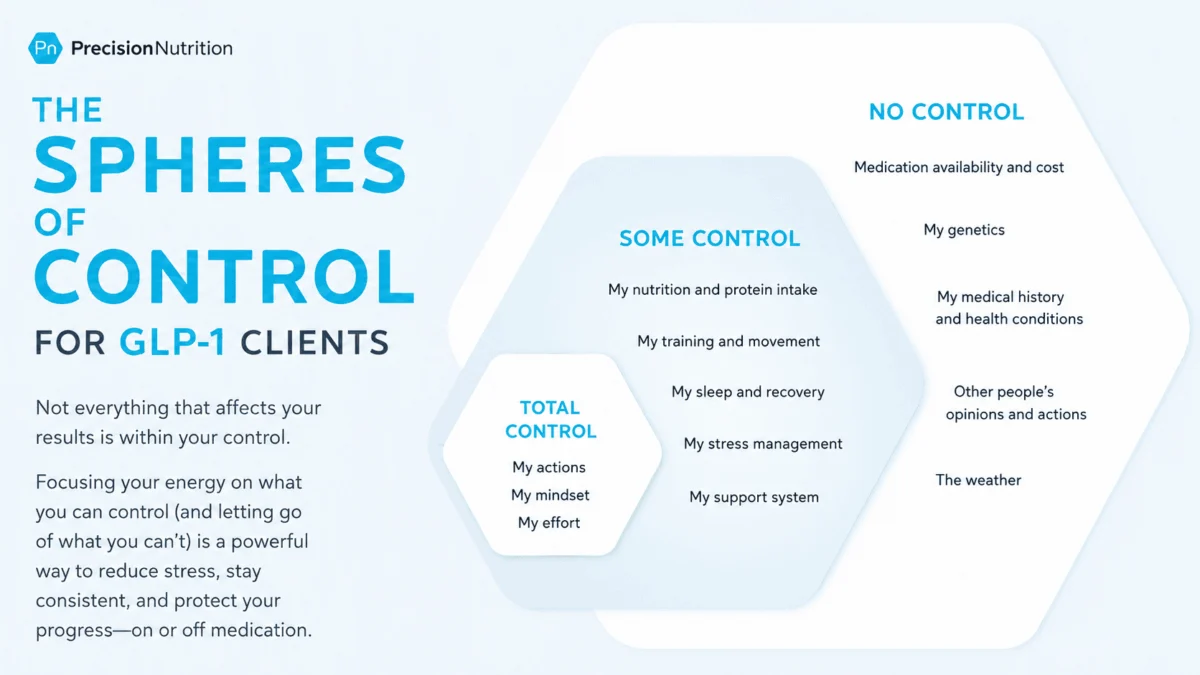
- Coaching Strategy: Acknowledge the systemic frustration. Do not blame the client. Use the "Spheres of Control" exercise to refocus their energy on what they can change (sleep, nutrition, movement) rather than the external factors of medical access.
Implications for Long-Term Success
The most significant data point in the current landscape is the role of habits in long-term maintenance. Studies indicate that while the medication controls the appetite, it does not rewrite the neural pathways of behavior.
"Think of it like the Oregon Trail," says Coach Toni Bauer, Director of Coaching and Education Operations at PN. "The ruts in the trail were made by wagons hitting the same ground over and over. If you lay down those habits while on the medication, those pathways exist when you go off."
The "New Identity" Framework
The ultimate goal of the coach is to help the client evolve their identity. The "successful" client is not one who just loses weight; it is the individual who adopts the identity of someone who prioritizes protein, strength training, and sleep regardless of their pharmaceutical status.
Professional Ethics and Scope of Practice
Coaches must operate within their legal scope. You cannot adjust dosages or prescribe medication. However, you can offer data-driven experiments. Instead of saying, "You must eat more protein," say, "Clients who incorporate 30 grams of protein at breakfast often report higher energy levels; would you be open to trying that for a week?"
Conclusion: The Path Forward
The rise of GLP-1 medications has not diminished the value of the health coach; it has elevated it. As the pharmaceutical industry provides the tools for weight reduction, the coaching industry provides the architecture for behavioral sustainability.
The promise of the coach is no longer just about the scale. It is about deep-tissue preservation, metabolic health, and the creation of a lifestyle that persists long after the medication is discontinued. For those willing to embrace this role, the opportunity to make a generational impact on public health has never been greater.
References
(1) Clinical data regarding GLP-1 side effect frequency, Journal of Metabolic Health, 2025.
(2) Impact of GLP-1 therapy on lean mass, Endocrinology & Metabolism Review, 2024.
(3) Long-term weight regain statistics post-GLP-1 cessation, American Journal of Clinical Nutrition, 2025.
(4) Behavioral integration and success rates in maintenance cohorts, Fitness Industry Research Report, 2026.
(5) First-year attrition rates for GLP-1 users, Healthcare Economic Journal, 2025.