







In the landscape of modern fitness, few exercises are as frequently misunderstood or poorly executed as the crunch. For decades, the sit-up and its derivatives were touted as the quintessential path to a "strong core." However, as we cross the threshold into our sixth and seventh decades, the fitness paradigm has shifted. Today, experts agree that if you want a reliable, functional, and safe indicator of your physical health after 60, you should look no further than the forearm plank.
A single, well-executed forearm plank provides a comprehensive diagnostic of your kinetic chain, revealing more about your structural integrity than a thousand repetitions of crunches ever could. As we age, the focus of our physical activity must transition from aesthetic vanity to functional longevity—the ability to move, reach, balance, and thrive without the looming threat of instability or injury.
Main Facts: Beyond the Crunch
The primary reason trainers and physical therapists champion the plank over traditional abdominal exercises lies in the concept of "integrated recruitment." While a crunch isolates the rectus abdominis—the superficial "six-pack" muscle—it does little to address the deep, stabilizing muscles that actually support the spine and pelvis.
Research consistently demonstrates that a properly performed plank acts as a total-body engagement exercise. It forces the body to coordinate the efforts of the anterior abdominals, the erector spinae (muscles of the back), the gluteal complex, and the shoulder stabilizers simultaneously. This holistic activation is the hallmark of a functional core. After 60, this type of endurance is not merely a fitness goal; it is a vital component of healthy aging. A strong, stable core is the foundation upon which all daily movements—from rising from a chair to carrying groceries—are built.
Chronology of Core Stability: Why Age Matters
The trajectory of physical fitness is not linear, and the challenges faced by a 30-year-old are vastly different from those encountered by a 65-year-old. Over time, the body undergoes natural changes in muscle mass, bone density, and proprioception—the body’s ability to perceive its position in space.
- The Foundation Years (Ages 20–40): During this phase, the primary focus is often power, hypertrophy, and high-intensity output. Core work is often supplementary to lifting or endurance training.
- The Maintenance Phase (Ages 40–60): As metabolic rates shift and time constraints become more prevalent, many adults begin to lose muscle mass (sarcopenia). Core strength often begins to decline if not specifically targeted.
- The Longevity Phase (Age 60+): This is the period where "stability" becomes the primary objective. As studies reveal, the decline in balance is a significant risk factor for falls, which are a leading cause of injury in older adults. By the time one hits 60, the plank serves as a critical diagnostic tool to identify deficits before they lead to compromised mobility.
Supporting Data: The Science of Stability
The link between core endurance and fall prevention is well-documented in clinical literature. A core that is "weak" or "unresponsive" creates a lag in the body’s ability to correct its own position when tripped or unbalanced.

According to recent studies, individuals with higher levels of core muscular endurance demonstrate better postural control. When you perform a plank, you are essentially training your nervous system to maintain rigidity under gravity. This translates directly to the real world: when you reach for a high shelf or walk on uneven pavement, your core "fires" automatically to keep you upright.
Furthermore, the plank is uniquely accessible. It requires zero equipment, making it an egalitarian exercise. You do not need a gym membership or expensive machinery to test your baseline; you only need a floor and a stopwatch. This simplicity makes it one of the most effective tools for tracking progress over time, allowing individuals to quantify their improvement in seconds and minutes.
Official Perspectives: Expert Insights from James Brady, CPT
To better understand the role of the plank for the over-60 demographic, we spoke with James Brady, a Certified Personal Trainer at OriGym. Brady emphasizes that while the number on the clock is a useful metric, it should never supersede the integrity of the movement.
"If you can hold a strict, perfect-form forearm plank for around 60 seconds after 60, I would consider that an excellent level of core endurance," Brady explains. "There is no scientific, age-specific ‘magic number’ that dictates a lifespan, but hitting that one-minute mark requires a high level of neurological and muscular control."
Brady cautions against the common trap of "chasing the clock." Many individuals, in their quest to hit the 60-second milestone, sacrifice form by arching their lower back or letting their hips sag. "The moment that straight line between your shoulders and your heels is compromised, the exercise has stopped providing a benefit to your core," he warns. "At that point, you are simply putting unnecessary stress on your lumbar spine."
The Mechanics of the Perfect Hold
To maximize the benefits of the plank, one must adhere to strict technical standards. According to Brady, the setup is just as important as the hold itself.
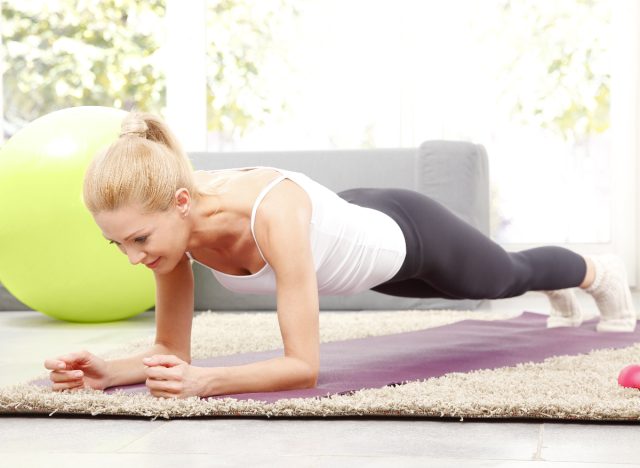
How to Execute a Proper Plank:
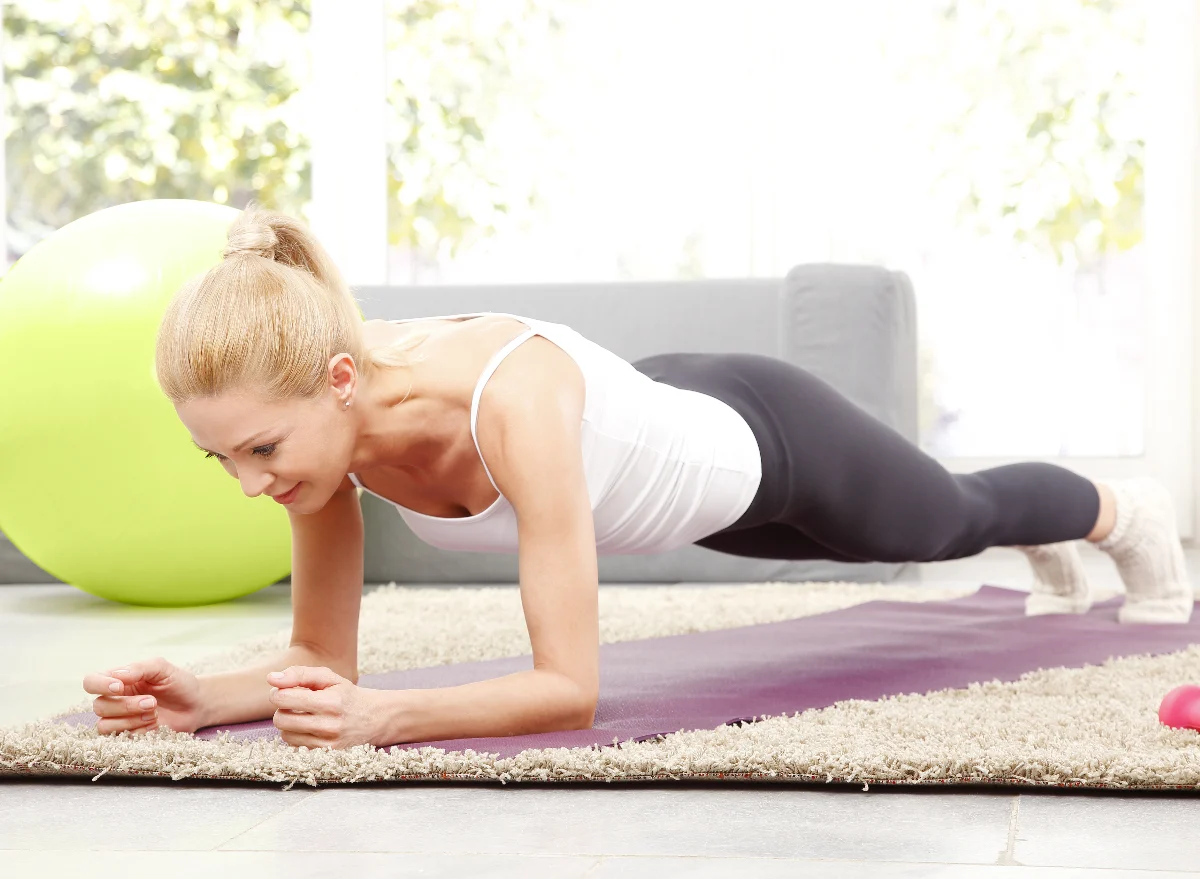
- The Setup: Begin by lying face down on the floor. Place your elbows directly beneath your shoulders, with forearms parallel to one another.
- The Engagement: Tuck your toes and lift your body so that you are supported by your forearms and toes.
- The Line: Imagine your body is a stiff board. Your hips should be in a neutral position—not hiked toward the ceiling, not sagging toward the floor.
- The Breath: Many people hold their breath during a plank, which increases blood pressure. Focus on rhythmic, steady breathing throughout the duration of the hold.
- The Conclusion: The second your hips begin to drop or your shoulders lose their position, your set is complete.
Implications: The Long-Term Benefits
The implications of adopting a consistent planking routine—aiming for three to four sessions per week—are profound. By strengthening the "corset" of muscles surrounding the midsection, you are effectively creating a natural back brace. This reduces the prevalence of chronic lower back pain, which is frequently caused by a weak core forcing the spine to bear loads it was not designed to carry.
Furthermore, the psychological impact of being able to hold a one-minute plank is significant. It fosters a sense of agency and physical competence. When you know that you possess the physical strength to maintain your balance and recover from a stumble, your confidence in performing daily activities—like walking, gardening, or playing with grandchildren—increases.
The "Elite" Tier
If you are currently struggling to hit 30 seconds, do not be discouraged. Consistency is the primary driver of adaptation. Retesting every two to three weeks allows you to monitor your progress objectively. Once you reach that 60-second threshold, you enter an "elite" tier for your age group, possessing a level of core stability that is statistically associated with a higher quality of life and reduced frailty.
Conclusion: Starting Where You Are
The most important takeaway for those over 60 is that the plank is not about who can hold it the longest; it is about who can hold it the best. A 15-second plank performed with perfect, rigid form is vastly superior to a 90-second plank performed with a sagging back.
By prioritizing quality over quantity, you protect your joints, strengthen your core, and build the physical resilience necessary to enjoy your later years with confidence. Start today, hold for as long as you can while maintaining a straight line, and observe how your body—and your quality of life—responds over the coming months. Your future self will thank you for the strength you build today.