










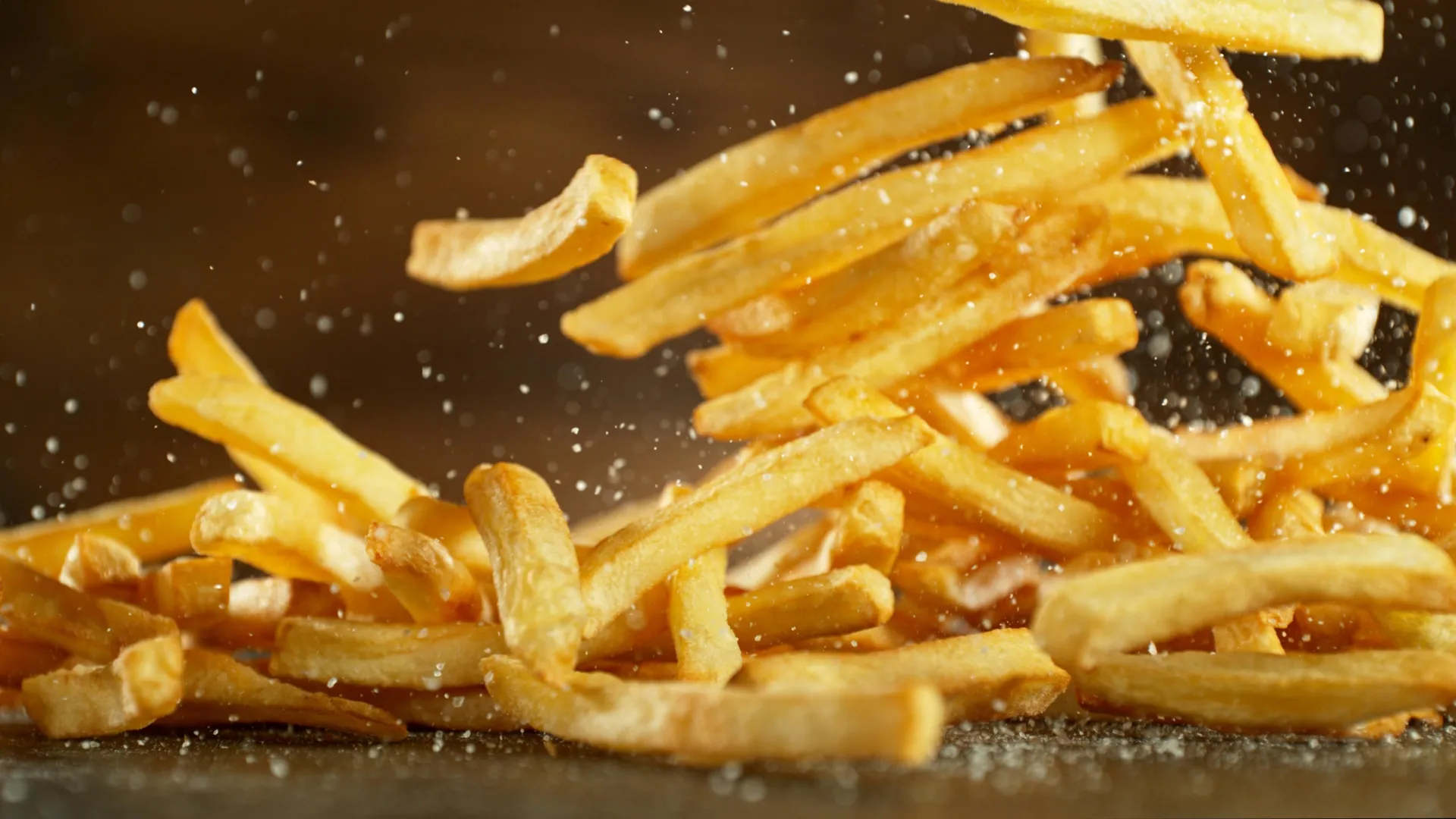
For generations, the French fry has occupied a paradoxical position in the human diet. It is a global culinary staple, beloved for its golden, crisp exterior and fluffy, savory interior. Yet, it remains a frequent target of nutritional scrutiny. The very process that renders a fry delicious—submerging it in high-temperature oil—is the same process that saturates it with fats and calories, contributing to the broader public health crisis of obesity and hypertension.
Now, a team of food scientists at the University of Illinois Urbana-Champaign (UIUC) may have discovered the "holy grail" of culinary engineering: a method to achieve that signature crunch while significantly slashing oil uptake. By integrating microwave energy into the traditional frying process, researchers are challenging the laws of food physics to create a healthier, more efficient fry.
The Core Challenge: Understanding Oil Infiltration
To solve the problem of fatty fries, one must first understand how oil enters a potato in the first place. The process is not merely a passive soak; it is a dynamic, pressure-driven event.
"Think about a straw in a drink," explains Pawan Singh Takhar, a professor of food engineering in the Department of Food Science and Human Nutrition at the College of Agricultural, Consumer and Environmental Sciences (ACES) at UIUC. "If you push air into the straw, it creates positive pressure and any liquid will be pushed out. But if you suck on the straw, the liquid moves upward. Now imagine food materials have lots of tiny straws. When there is positive pressure, the oil stays out. But if there is negative pressure, the oil starts moving in."
During conventional frying, a potato’s internal pores are initially filled with water. As the heat of the oil (typically 180 degrees Celsius) penetrates the potato, this water vaporizes and escapes. This transition leaves behind a vacuum-like network of empty pores. As the surface cools or the moisture escapes, the internal pressure drops, creating a suction effect that draws cooking oil deep into the fry’s structure.
Takhar’s research team found that nearly 90% of the frying process occurs under this "negative pressure" state, essentially inviting the oil to saturate the product.
A Chronology of Discovery: From Potatoes to Electromagnetic Waves
The journey to this discovery involved rigorous laboratory experimentation and high-level mathematical modeling. The researchers, including doctoral student Yash Shah, began by standardizing the raw material: potatoes were peeled, rinsed, sliced into uniform strips, and blanched—a process that softens the tissue and prepares the surface for the heat treatment.
In partnership with Washington State University, the Illinois team utilized a specialized, multi-frequency microwave fryer capable of operating at both 2.45 gigahertz (the standard frequency for home microwaves) and 5.8 gigahertz.
The Experimental Timeline
- Preparation Phase: The researchers standardized the potato strips, ensuring that variables such as surface area and moisture content were consistent across all trials.
- Thermal Processing: The strips were subjected to soybean oil at 180°C, both in traditional vats and within the specialized microwave-hybrid chamber.
- Data Collection: Throughout the process, the team employed sophisticated sensors to track internal temperature, pressure, volume, texture, and moisture loss in real-time.
- Modeling: Following the physical experiments, the team utilized mathematical computer models to simulate the complex interactions between electromagnetic waves and food biopolymers. This allowed them to predict results in scenarios that would be difficult to measure directly, such as the behavior of water molecules at the micro-level.
Supporting Data: The Power of Positive Pressure
The findings, published in the Journal of Food Science and Current Research in Food Science, reveal that the secret to a healthier fry lies in maintaining positive internal pressure.
Unlike conventional ovens, which rely on heat migrating slowly from the surface to the center, microwaves oscillate water molecules throughout the entire volume of the food simultaneously. This "inside-out" heating forces moisture to evaporate rapidly and uniformly. By generating this internal vapor pressure, the microwave energy acts as a shield, preventing the suction that typically draws oil into the fry.
Key metrics from the study highlighted several significant advantages:
- Reduced Oil Uptake: The hybrid process consistently demonstrated a lower percentage of oil absorption compared to conventional frying.
- Faster Processing: The rapid moisture removal accelerated the overall cooking time, potentially increasing throughput for industrial producers.
- Pressure Control: The microwave-induced pressure helped keep the potato’s "pores" pushed outward, preventing the "sucking" effect that occurs during the later stages of traditional frying.
Official Perspectives: Balancing Health and Palatability
Professor Takhar is acutely aware that nutritional value is only one half of the equation; consumer demand is the other.
"Consumers want healthy foods, but at the time of purchase, their cravings often take over," Takhar notes. "High oil content adds flavor, but it also contains a lot of energy and calories. My research team studies frying with the aim of obtaining lower fat content without significant differences in taste and texture."
The researchers discovered that while microwave frying is excellent for moisture control, it has a significant drawback: it does not produce the crispy, browned crust that consumers expect. When cooked only in a microwave, the result is a soft, soggy product that lacks the sensory appeal of a deep-fried treat.
"To obtain a crispy texture and taste, you need conventional heating," Takhar explains. "Therefore, we propose combining the two approaches in the same unit. Conventional heating maintains the crispiness, while microwave heating lowers the oil intake."
Implications for the Food Industry
The implications of this research extend far beyond the laboratory. For the global food industry, the ability to produce a "healthier" French fry without altering the beloved taste profile is a significant commercial opportunity.
Engineering a Hybrid Future
The proposed solution is a hybrid frying system. In this setup, conventional oil frying remains the primary method for creating the surface crust, while integrated microwave generators provide the internal pressure necessary to limit oil saturation.
From an economic perspective, the integration is surprisingly feasible. Large-scale food processing facilities already utilize continuous fryers. Modifying these existing systems to include microwave generators is a path that researchers believe is both technically and economically viable. Since microwave components are widely available and relatively affordable, the barrier to entry for commercial adoption is lower than many other advanced food-processing technologies.
Public Health Impact
The long-term goal of this research is to reduce the prevalence of diet-related health issues. By minimizing the fat content of one of the world’s most popular side dishes, the UIUC team hopes to make a meaningful dent in the intake of "empty" calories. If such technology were to be widely adopted by fast-food chains and frozen food manufacturers, it could represent a quiet, systemic shift in the nutritional landscape without requiring consumers to change their dietary habits.
Conclusion: The Path Ahead
The research, funded by the USDA National Institute of Food and Agriculture, provides a blueprint for a new generation of food processing. By applying the principles of electromagnetic physics to traditional culinary methods, scientists are demonstrating that we do not necessarily need to sacrifice pleasure for health.
As the team continues to refine these hybrid systems, the future of the French fry looks significantly brighter—and less greasy. While the traditional fry will always have its place, the next evolution of this comfort food may well be a testament to how science can refine our oldest traditions, ensuring that the foods we love can be enjoyed with a little less guilt and a lot more nutritional integrity.
For now, the University of Illinois team has provided the proof of concept. As the industry looks toward more sustainable and health-conscious manufacturing, the hybrid microwave-fryer may soon transition from a lab prototype to a standard piece of equipment in the kitchens of the future.