








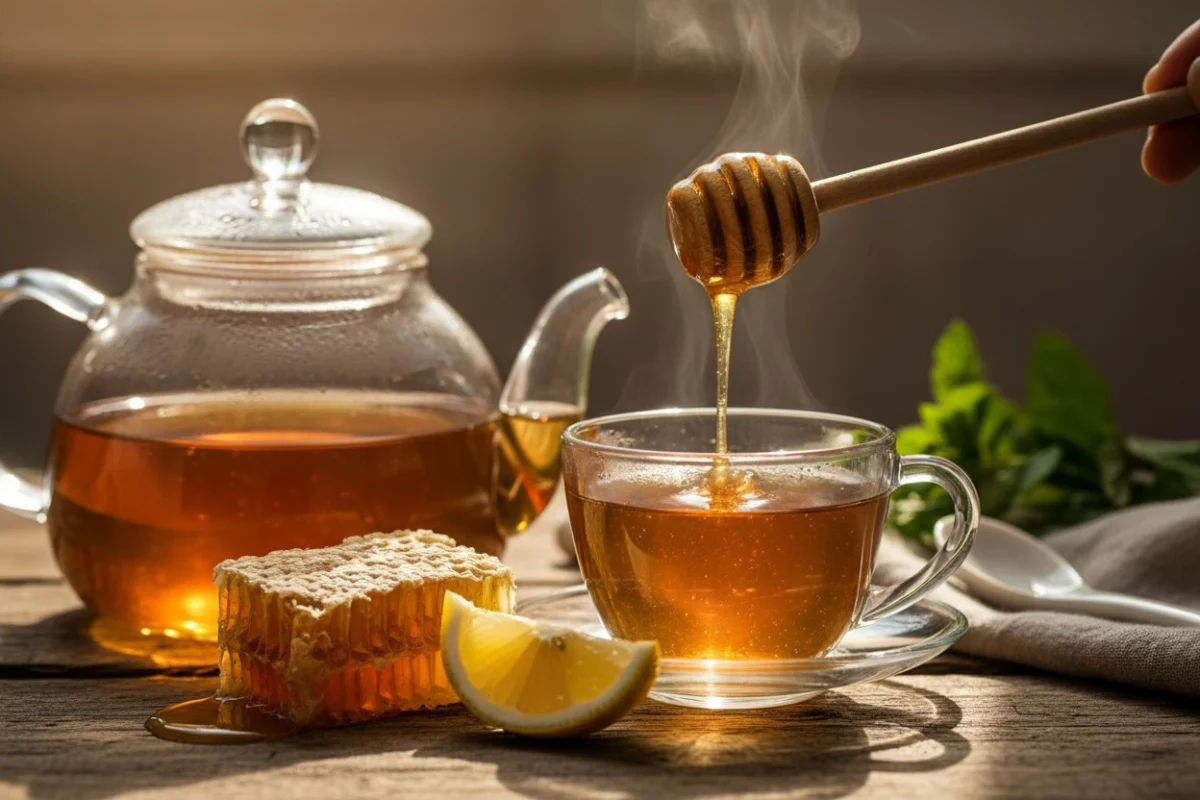
For generations, the simple act of stirring a spoonful of golden honey into a steaming mug of tea has been a hallmark of domestic care—a "grandmother’s remedy" that transcends cultures and centuries. Beyond its role as a natural sweetener, honey has long been heralded as a potent ally in the pursuit of wellness. From soothing a scratchy throat to potentially boosting the immune system, honey is frequently cited as a versatile, medicinal food. However, as the wellness industry grows, the distinction between culinary honey and therapeutic-grade honey has become increasingly critical.
Main Facts: More Than Just Sugar
At its core, honey is a complex biological substance, not merely a simple syrup. Produced by bees from the nectar of flowers, its composition includes a sophisticated blend of sugars, enzymes, minerals, and bioactive compounds. When introduced to the heat of tea, honey serves a dual purpose: it improves the flavor profile of herbal or black tea infusions and acts as a carrier for its inherent health-promoting properties.
The primary health-related claims attributed to honey center on its biological activity. Research and traditional reports consistently highlight three pillars of honey’s efficacy:
- Antibacterial Properties: Honey’s low pH and high sugar concentration create an environment inhospitable to bacteria.
- Anti-inflammatory Effects: It is frequently used to reduce irritation in the mucosal membranes of the throat and mouth.
- Antioxidant Capacity: Honey contains phenolic compounds and flavonoids that help neutralize free radicals in the body.
Chronology of Use: From Ancient Remedy to Modern Superfood
The timeline of honey’s use is as deep as human history itself.
Ancient Origins: Archeological evidence suggests that humans have been harvesting honey for at least 8,000 years. Ancient Egyptian, Greek, and Ayurvedic texts all reference honey as a primary topical and internal remedy.
The Mid-20th Century: As the industrialization of food progressed, honey became widely available in supermarkets. However, this period also saw the rise of pasteurization, which, while extending shelf life, began to strip honey of its delicate enzymes and pollen content.
The Early 2000s: The rise of functional medicine and the "superfood" movement brought a renewed focus on raw, unprocessed honey. Experts like Will Cole began distinguishing between mass-market clover honey and specialized varieties like Manuka.
2025 and Beyond: Contemporary discourse has shifted toward evidence-based usage. Recent reports, such as those from the Health Ranger Mike Adams, emphasize personal anecdotes alongside a growing body of peer-reviewed research, cementing honey’s status as a staple in "prepper" culture and holistic home care.
Supporting Data: What the Research Says
While traditional wisdom supports honey, the scientific community has sought to quantify these benefits. A pivotal study published in Food Chemistry examined the chemical quality of honey used in tea infusions, noting that the interaction between honey and hot water creates a dynamic environment for its bioactive compounds.
One of the most significant areas of research involves Manuka honey, a monofloral honey native to New Zealand. Investigations into its chemical profile have identified methyl syringate as a key phenolic compound. This compound acts as a superoxide anion radical scavenger, confirming that specific types of honey possess measurable antioxidant activity that goes far beyond standard caloric intake.
Furthermore, anecdotal evidence provides a human perspective. In a May 2025 interview, wellness advocate Mike Adams noted that his personal recovery process involved a regimen that included Manuka honey alongside other natural support. While anecdotal, such accounts align with the broader scientific consensus regarding honey’s role in wound care and inflammation management.
Official Guidance and Consumer Considerations
The most significant barrier to reaping the health benefits of honey is the prevalence of adulteration in the modern marketplace. As highlighted in consumer reports, "not all honey is created equal." Many commercial products found on grocery store shelves have been ultra-filtered or diluted with high-fructose corn syrup, effectively neutralizing the antibacterial and antioxidant benefits.
Expert Recommendations for Selection:
- Prioritize "Raw and Unprocessed": Heat pasteurization destroys the beneficial enzymes and beneficial bacteria found in raw honey. Seek products that have been minimally strained.
- Look for the Honeycomb: Honey sold with a piece of the honeycomb in the jar is often the highest quality, as it contains traces of royal jelly, propolis, and bee pollen—all of which are associated with heightened nutritional value.
- Source Matters: Organic certification is vital to ensure that the bees were not foraging in areas treated with pesticides or heavy chemicals, which can end up in the final product.
- Practice Moderation: Despite its health benefits, honey is a concentrated sugar source. Health professionals consistently advise that it be used as a dietary supplement or tea sweetener rather than a primary food source, especially for individuals managing blood glucose levels.
Implications for Public Health
The integration of honey into daily routines represents a "complementary" approach to health. It is not, and should not be, viewed as a panacea or a replacement for pharmaceutical medical treatments for serious conditions. Instead, its role is that of a supportive, evidence-backed lifestyle tool.
Symptomatic Relief
For individuals suffering from the common cold or seasonal respiratory issues, adding honey to warm tea provides a dual-action effect. The warmth of the tea provides immediate physical comfort, while the honey coats the throat, providing a physical barrier that helps soothe irritation and suppress the urge to cough.
The Future of Natural Remedies
As we move deeper into the 2020s, the interest in "natural medicine" is surging. Books like Cat Ellis’s Preppers Natural Medicine and Bruce Lubin’s Who Knew 10001 Household Solutions reflect a societal desire to return to basics. These resources underscore a growing movement toward self-sufficiency and the use of household items—like honey and elderberry—to manage minor health inconveniences.
The implications are clear: as the public becomes more discerning, the market for high-quality, transparently sourced honey will likely continue to expand. The challenge remains for consumers to educate themselves on the differences between "honey-flavored syrup" and authentic, bioactive honey.
Conclusion: A Balanced Perspective
The practice of adding honey to tea is more than a cultural quirk; it is a well-documented habit supported by centuries of tradition and modern biochemical findings. While honey is not a cure-all, its antibacterial, anti-inflammatory, and antioxidant properties make it a valuable addition to a balanced, health-conscious diet.
To maximize these benefits, the modern consumer must be a diligent shopper. By choosing raw, organic, and minimally processed varieties, one can ensure that the honey in their tea cup is performing the job it has been prized for since the dawn of civilization. As with all dietary choices, moderation is key, and honey should be viewed as a potent, natural ingredient—a golden elixir that, when used wisely, offers a soothing, effective way to enhance daily well-being.
Summary of Key Takeaways
- Antibacterial/Antioxidant Power: Honey’s therapeutic properties are scientifically linked to its phenolic and enzyme content.
- Quality is Critical: Raw, unprocessed honey is superior to mass-produced, pasteurized options.
- A Complementary Tool: Honey is best utilized as a supportive measure for minor ailments like coughs and sore throats.
- The "Manuka" Factor: Specialized honeys, such as Manuka, show higher levels of antioxidant activity compared to generic varieties.
- Moderation is Essential: Because honey is a sugar, it should be consumed mindfully as part of a balanced diet.