The field of clinical psychiatry is currently embroiled in a high-stakes intellectual battle over the efficacy, safety, and biological mechanisms of antidepressants. What began as a standard defense of pharmacological treatment in the Psychiatric Times has sparked a fierce counter-offensive from critical voices within the medical community. At the center of this firestorm is Dr. Bryan Shapiro, whose recent "rapid-fire" scientific rebuttal challenges the foundational assertions made by two of the industry’s most prominent figures: Dr. Roger McIntyre and Dr. Ronald Pies.
As the debate intensifies, it exposes a widening rift between the traditional biological model of psychiatry and a growing movement calling for more rigorous evidence and greater transparency regarding the limitations of psychotropic medications.
Main Facts: A Clash of Perspectives
The controversy centers on an article published in the Psychiatric Times titled "The Top 10 Misleading Claims About Antidepressants," authored by Dr. Roger McIntyre, a Professor of Psychiatry and Pharmacology, and Dr. Ronald Pies, a Professor Emeritus of Psychiatry. In their piece, McIntyre and Pies sought to debunk what they characterized as "anti-psychiatry" myths—specifically, claims that antidepressants are no better than placebos, that they cause long-term brain damage, or that the "chemical imbalance" theory was a marketing fabrication.
However, the rebuttal from Dr. Bryan Shapiro, published via Substack and amplified by the advocacy group Mad in America, suggests that the "debunking" itself may be misleading. Shapiro argues that McIntyre and Pies’ defense relies on a selective reading of clinical data and ignores fundamental pharmacological principles.
Shapiro’s critique focuses on eight of the ten points raised by the original authors (notably omitting points five and six regarding suicidal and homicidal associations). His central thesis is that the psychiatric establishment is engaging in "circular reasoning," where the failure of a drug to significantly outperform a placebo is reframed as a success of the "biopsychosocial model," rather than a failure of the drug’s intended mechanism.
Chronology: The Road to the Rebuttal
To understand the weight of this exchange, one must look at the timeline of the "Antidepressant Wars" over the last two decades.
- 2008: Dr. Irving Kirsch published a landmark meta-analysis in PLOS Medicine using FDA data, showing that for most patients with mild to moderate depression, the difference between antidepressants and placebos was clinically insignificant.
- 2019: The UK’s National Institute for Health and Care Excellence (NICE) updated its guidelines to acknowledge that antidepressant withdrawal symptoms can be severe and prolonged, contradicting years of "discontinuation syndrome" narratives that suggested symptoms were mild and lasted only a few weeks.
- July 2022: Dr. Joanna Moncrieff and colleagues published an "umbrella review" in Molecular Psychiatry, concluding there is no consistent evidence that low serotonin levels cause depression. This study went viral, forcing many psychiatrists to distance themselves from the "chemical imbalance" theory.
- Early 2024: In response to the growing public skepticism fueled by the Moncrieff study and the rise of "deprescribing" communities, McIntyre and Pies published their "Top 10" list in the Psychiatric Times to re-establish the legitimacy of SSRIs and SNRIs.
- Mid-2024: Dr. Bryan Shapiro released his point-by-point criticism, accusing the Psychiatric Times authors of utilizing "straw man" arguments and failing to address the low effect sizes found in modern antidepressant trials.
Supporting Data: Analyzing the Points of Contention
The disagreement between Shapiro and the Psychiatric Times authors boils down to how clinical data is interpreted. Several key areas of "supporting data" serve as the battleground for this scientific dispute.
1. The Serotonin Hypothesis and the "Chemical Imbalance"
McIntyre and Pies argued that psychiatrists never truly believed in a simple "chemical imbalance" and that the theory was an oversimplification used primarily for patient education. Shapiro counters this by pointing to decades of pharmaceutical marketing and textbook chapters that explicitly linked depression to serotonin deficits. He argues that if the serotonin hypothesis is dead, the pharmacological justification for Selective Serotonin Reuptake Inhibitors (SSRIs) becomes increasingly tenuous.
2. Clinical vs. Statistical Significance
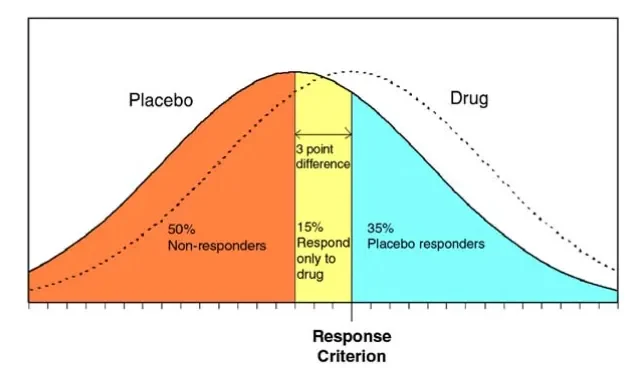
A major point of data contention is the "effect size" of antidepressants. In most clinical trials, the difference between a drug and a placebo on the Hamilton Depression Rating Scale (HAM-D) is approximately 2 points on a 52-point scale. While this difference is often "statistically significant" (meaning it is unlikely to have occurred by chance), Shapiro and other critics argue it is not "clinically significant"—meaning the patient would not actually notice a difference in their daily life.
3. The Nature of Withdrawal
The Psychiatric Times article maintains that "discontinuation symptoms" are manageable. Shapiro’s rebuttal aligns with recent surveys of thousands of patients, which indicate that up to 50% of people attempting to stop antidepressants experience withdrawal, with nearly half of those describing the symptoms as "severe." Shapiro highlights the pharmacological reality of "receptor occupancy," noting that even at very low doses, these drugs have a powerful effect on the brain, making tapering much more difficult than the original authors suggest.
4. The "Placebo Plus" Effect
Shapiro points to the "active placebo" problem in antidepressant research. Because antidepressants have side effects (like dry mouth or nausea), patients in "blinded" trials often realize they are in the drug group, which boosts their expectations of recovery. This "unblinding" can artificially inflate the perceived efficacy of the drug compared to a placebo that has no side effects.
Official Responses and Perspectives from the Field
The response to this debate has been polarized. On one side, the American Psychiatric Association (APA) and many academic departments maintain that antidepressants are "essential tools" in a "comprehensive treatment plan."
The Establishment View:
Dr. Ronald Pies has frequently argued that criticizing antidepressants harms patients by increasing "stigma" and discouraging people from seeking help. The establishment view is that while the drugs aren’t perfect, they are "better than nothing" and save lives by reducing the burden of severe depressive episodes.
The Critical View:
Conversely, organizations like Mad in America and researchers like Dr. Joanna Moncrieff argue that the "stigma" argument is used to silence legitimate scientific inquiry. They contend that true "informed consent" is impossible if patients are not told that the drugs’ benefits are marginal and their side effects—such as sexual dysfunction, weight gain, and emotional blunting—can be permanent (as seen in cases of Post-SSRI Sexual Dysfunction, or PSSD).
Dr. Shapiro’s Stance:
Shapiro’s rebuttal is particularly stinging because it comes from a fellow medical doctor. He asserts that "pharmacological principles" are being ignored in favor of maintaining a status quo that benefits the pharmaceutical industry and the prestige of the psychiatric profession.
Implications: The Future of Mental Health Care
The fallout from this debate has profound implications for the future of mental health treatment, patient safety, and the credibility of the medical profession.
The Erosion of Informed Consent
If Shapiro’s critique is correct—that the Psychiatric Times article contains "misleading claims not substantiated by fundamental pharmacological principles"—then the medical community faces a crisis of informed consent. If doctors are taught a sanitized version of drug efficacy and safety, they cannot accurately inform their patients of the risks and benefits.
The Shift Toward "Deprescribing"
The intensity of this debate is fueling the "deprescribing" movement. More patients are seeking "tapering strips" and specialized help to come off medications they were told they might need for life. This shift suggests that the public is becoming increasingly wary of the traditional psychiatric narrative.
Need for Independent Research
The controversy underscores the need for "non-industry-funded" research. Most antidepressant trials are funded by the companies that manufacture the drugs, leading to what critics call "publication bias," where negative trials are buried and positive trials are highlighted. Shapiro’s rebuttal calls for a return to "adequate quality evidence" that is independent of commercial interests.
Redefining Depression
Perhaps the most significant implication is the move away from the "brain-as-a-broken-machine" model. If the scientific rebuttals continue to gain traction, psychiatry may be forced to pivot back toward addressing the social, environmental, and psychological roots of distress—such as trauma, poverty, and isolation—rather than relying on a "chemical fix" that is increasingly under scientific fire.
Conclusion
The "rapid-fire" rebuttal by Dr. Bryan Shapiro serves as a microcosm of a larger struggle within 21st-century medicine. It is no longer enough for authorities to issue "Top 10" lists to silence dissent. In an era of open-access data and patient-led advocacy, the psychiatric establishment is being held to a higher standard of proof. Whether antidepressants are viewed as life-saving miracles or over-prescribed placebos with significant risks depends entirely on whose "scientific rebuttal" one finds more compelling. As the debate continues, the only certainty is that the conversation around mental health will never be the same.