By [Your Name/Journalist Alias]
Published September 21, 2026
The headline arrived in the digital ether like a familiar refrain: "What Happened to Yoga?" The piece, published by The Atlantic, posited a provocative, if not slightly morose, theory: that the practice of yoga, once a dominant pillar of the modern wellness landscape, is effectively dead.
For those who have spent decades on the mat, such proclamations are nothing new. They are the cyclical tremors of a culture obsessed with novelty. Yet, as Yoga Journal Editor-in-Chief Renee Schettler notes, this specific critique carries a weight that cannot be ignored. It points to a palpable shift in the "cool factor" of the practice. As boutique fitness studios struggle with overhead and a demographic shift toward "strengthmaxxing" and high-intensity biohacking, the image of the serene, legging-clad practitioner has lost its luster.
But if we look past the surface-level metrics of attendance sheets and aesthetic trends, we find that yoga hasn’t disappeared—it has simply evolved. It is shedding the skin of commercialized status and, in doing so, reclaiming the very anonymity that once defined its ancient roots.
A Chronology of Influence: From Fringe to Fashion
To understand where yoga is today, we must map where it has been. The trajectory of yoga in the West is not a steady upward climb, but a series of distinct, often turbulent, waves.
- The 1960s: The Fringe Era. During this decade, yoga was largely a counter-cultural pursuit, found in the basements and living rooms of seekers looking for something beyond the materialism of the post-war era. It was experimental, unbranded, and deeply personal.
- The 1990s: The Celebrity Crossover. As the century drew to a close, yoga underwent a massive pivot. It became a celebrity-endorsed phenomenon. The era of the "power yoga" craze saw the practice enter the mainstream gym, marketed as a tool for physical transformation.
- The 2000s: The Commercialization Gold Rush. The new millennium saw the commodification of yoga. It became a lifestyle brand, characterized by luxury studios, high-end apparel, and a rapid increase in teacher training certifications. Yoga became a social signifier—a way to perform health and wealth simultaneously.
- The 2020s: The Great Reset. The pandemic served as a major catalyst for the current decline in traditional studio attendance. With the forced migration to digital platforms, the "temple" of the studio was replaced by the living room floor. Today, as we move into the latter half of the decade, the industry is grappling with the reality that the "yoga bubble" of the early 2000s has burst.
Supporting Data: Why "Cool" is a Flawed Metric
The narrative that yoga is dying relies heavily on one specific dataset: the occupancy rates of premium, membership-based yoga studios. However, this metric is inherently skewed by privilege.
When an economic downturn hits, the first thing to go is the $30-per-class boutique membership. The Atlantic report accurately highlights the financial hardships facing studio owners, but it fails to account for the "invisible" practitioners.
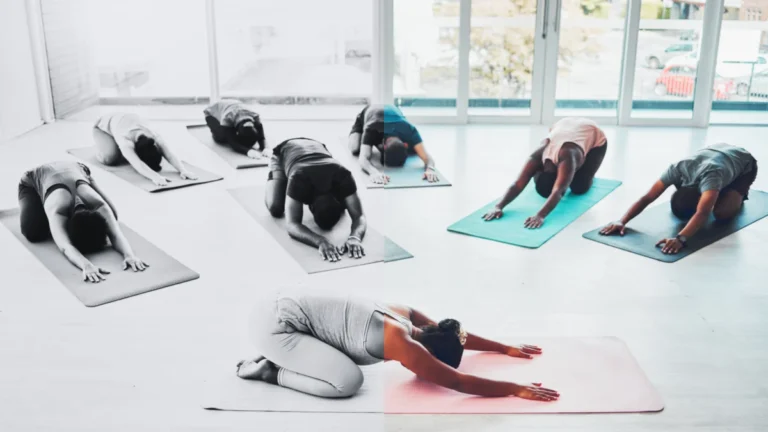
The decline in studio attendance is not a decline in practice; it is a shift in accessibility. We are seeing a democratization of the movement. When a student can no longer afford the boutique studio, they don’t stop practicing; they go to the gym, they use an app, or they join a community-led session in a public space.
Evidence of this "diffuse" yoga presence is everywhere. From prison yoga programs and addiction recovery centers to chair-yoga classes for seniors set to classic rock in community halls, the practice has bled out of the exclusive studio and into the fabric of everyday life. These sessions are often free, donation-based, or integrated into existing social services. They are rarely tracked by industry analysts, yet they represent a far more stable and culturally integrated version of yoga than the boutique boom ever did.
The Philosophical Paradox: When Ego Meets Practice
There is an undeniable irony in lamenting the loss of yoga’s "coolness." At its core, the philosophy of yoga is centered on the citta vritti nirodhah—the cessation of the fluctuations of the mind. It is a practice of turning inward, of shedding the ego, and of finding equanimity.
The pursuit of "coolness" is, by definition, an ego-driven endeavor. For years, the industry leaned into this, using celebrity influencers, high-fashion leggings, and viral social media moments to sell a lifestyle. But yoga never asked to be a status symbol. The fact that it is now being critiqued for being "less culturally conspicuous" is, in many ways, the most successful thing that could have happened to it.
When the cameras turn away and the trend-chasers migrate to the next biohacking craze, what remains is the essence of the practice. The "death" of yoga as a social trend may actually be the birth of yoga as a sustainable, grounded, and authentic tool for human flourishing.
Official Responses and Industry Perspectives
Industry leaders are beginning to pivot. Many studio owners, recognizing the shifting landscape, are moving away from the "luxury gym" model and toward "community hub" models. By diversifying their offerings—incorporating trauma-informed movement, therapeutic classes, and partnerships with local health organizations—studios are becoming more resilient.
"It’s not that yoga hasn’t been there all this time," noted the late Maty Ezraty in 1993, a sentiment that rings truer than ever in 2026. "But it’s like it’s just been discovered."
The current consensus among seasoned practitioners is that we are witnessing a return to the natural cycle of the practice. Just as it survived the 60s, the 90s, and the 00s, it will survive the current era of "strengthmaxxing." Yoga has remained an influencer of human health, not through marketing, but through the consistent, quiet, and profound physiological changes it creates in the practitioner—changes that have been backed by decades of neuroscientific research.
Implications: The Road Ahead
What does this "de-cooling" mean for the future of the practice?
- Resilience over Revenue: Studios that prioritize community and inclusivity over high-gloss aesthetics will be the ones that survive the current financial squeeze.
- Integration into Healthcare: As the evidence for yoga’s role in stress reduction, sleep quality, and neuroplasticity continues to mount, we can expect to see more integration into standard medical and mental health settings.
- The End of the "One-Size-Fits-All" Studio: The future of yoga is not one large, monolithic industry. It is a fragmented, diverse network of practitioners in homes, schools, community centers, and specialized clinics.
To look at the decline of the boutique yoga studio and conclude that "yoga is dead" is to make the same mistake as someone judging a practitioner’s depth based on the alignment of their Warrior II pose. It ignores the internal experience, the long-term benefit, and the quiet resilience of a practice that has lasted for millennia.
Yoga is not disappearing. It is simply coming back to earth. It is moving from the pedestal of "cool" and back into the lives of the people who actually need it. And for a practice designed to humble the ego, there is perhaps no better place to be.