By Political Correspondent
September 21, 2026
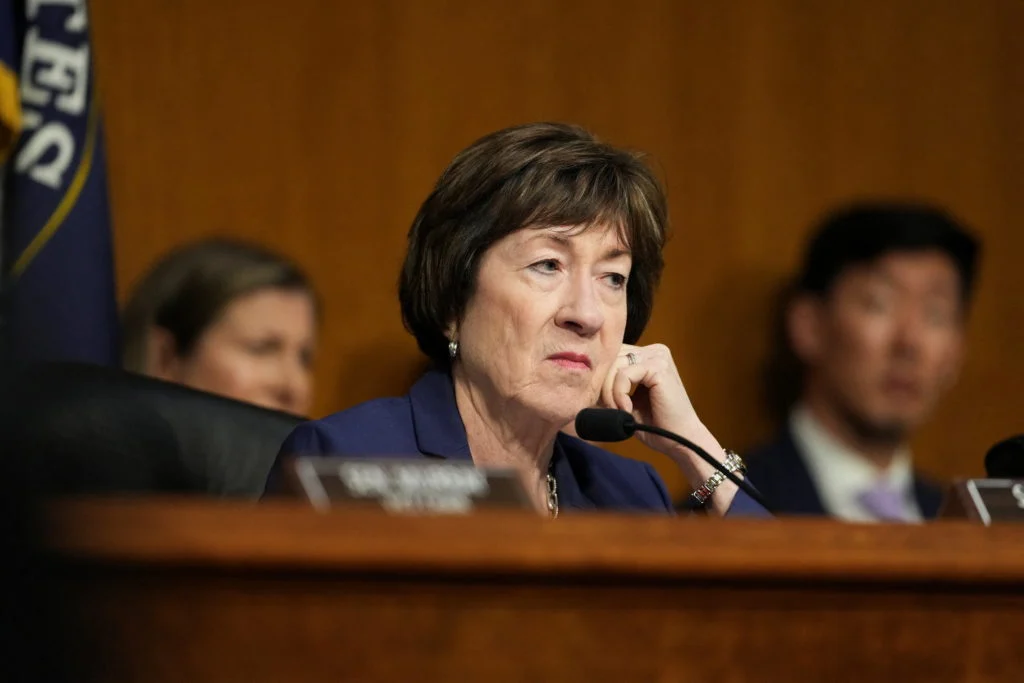
In a rare display of bipartisan unity, the leadership of the Senate Appropriations Committee has launched a formal challenge against the Trump administration’s attempt to exert direct political oversight over the National Institutes of Health (NIH). Senator Susan Collins (R-Maine), chair of the committee, and Senator Patty Murray (D-Washington), the panel’s ranking member, have signaled they will use their legislative authority to block any executive efforts to shift control of medical research funding from scientific peer-review panels to White House appointees.
The confrontation follows reports that the administration is preparing to install a political board—spearheaded by budget director Russ Vought—to oversee and potentially veto specific grant allocations. This move represents a fundamental departure from the decades-old practice of funding medical research based strictly on scientific merit and public health necessity.
The Core Conflict: Science vs. Political Oversight
At the heart of the dispute is the NIH’s long-standing peer-review system. For decades, the agency has relied on independent scientists and experts to evaluate grant proposals, ensuring that taxpayer dollars are directed toward projects with the highest probability of clinical success or breakthrough innovation.
The administration’s reported plan would dismantle this firewall, granting a White House-appointed panel the power to review, approve, or reject specific studies. Critics argue that this would allow political considerations—ranging from ideology to electoral optics—to supersede the objective evaluation of cancer research, infectious disease control, and genetic therapy.
Senator Collins, typically a moderate voice in the GOP, issued a sharp rebuke, stating that any attempt to "politicize grantmaking" through executive orders or administrative guidance is a direct violation of congressional intent. "The integrity of the NIH is predicated on its independence," Collins said in a press release. "To allow political appointees to override the consensus of the scientific community is to jeopardize the very foundation of our nation’s medical research enterprise."
Senator Murray was more pointed in her condemnation, framing the move as a dangerous overreach that threatens the future of American medicine. "Whether lifesaving medical research gets funded or not should be determined by experts at the NIH—not a panel of lackeys chosen by Donald Trump and Russ Vought," Murray remarked. "A single political appointee could, with the stroke of a pen, kill a vital cancer study simply because it doesn’t align with the administration’s current political agenda."
Chronology of the Funding Dispute
The tension between the White House and the NIH is not a sudden development but the culmination of a broader strategy regarding federal spending.
- Early 2026: The administration begins an aggressive audit of federal grant programs, citing a need for "fiscal accountability" and "alignment with executive priorities."
- May 2026: Internal memos circulate within the Office of Management and Budget (OMB) suggesting that scientific research grants, particularly those related to climate science and social health factors, are being scrutinized for ideological bias.
- July 2026: Senate Appropriations hearings confirm that the administration has begun delaying or freezing significant portions of federal grants across various departments.
- August 2026: Reports surface that the administration has frozen or cut approximately $177 billion in grants across all 50 states, prompting widespread alarm among university researchers and medical institutions.
- September 2026: Politico reports that Russ Vought has been tasked with creating a "Grant Oversight Board" to centralize authority over NIH spending, triggering the immediate bipartisan pushback from Collins and Murray.
Supporting Data: The Scale of the Disruption
The $177 billion figure cited in recent analyses of the administration’s grant-freezing strategy underscores the scale of the potential disruption. This funding supports a diverse array of projects, including rural health clinics, university-based medical research, and infrastructure projects that rely on federal backing to secure private investment.
When funding is frozen, the ripple effects are immediate. Research labs are forced to place staff on leave; long-term longitudinal studies—which require years of consistent data collection—are interrupted, potentially rendering years of previous work useless; and graduate students and post-doctoral researchers find their career paths stalled.
"The scientific process is not a light switch you can turn on and off," noted one former NIH official. "When you stop funding, the research doesn’t just pause; it decays. The expertise, the data continuity, and the institutional momentum are lost. Rebuilding that infrastructure takes significantly longer than the time spent in the freeze."
The Administration’s Justification
The Trump administration has consistently framed these actions as necessary measures to curb "wasteful spending" and ensure that taxpayer money is not supporting research that contradicts the administration’s policy goals. Proponents of the move argue that the NIH has, for too long, functioned as a "black box," operating with little accountability to the executive branch.
In previous comments, officials associated with the OMB have argued that the federal government has a right to ensure that the priorities of the elected administration are reflected in the projects that receive public support. They argue that the current peer-review system is essentially an insular club of academics who are insulated from the democratic process.
However, legal experts point out that the NIH is governed by specific statutes that dictate how funds must be allocated. Congress, which holds the "power of the purse," has historically mandated that these decisions be based on merit and peer review. Any attempt to bypass these statutes via executive order would almost certainly face an immediate legal challenge.
Implications for the Future of Public Health
The potential politicization of the NIH carries profound implications for the American public. If the criteria for medical funding shift from "scientific excellence" to "political alignment," the following outcomes are likely:
1. The "Brain Drain" of Top Talent
Leading scientists, already wary of political interference, may move their research to private industry or international institutions where the funding environment is more stable and less subject to political volatility. This would diminish the United States’ status as the world leader in medical innovation.
2. Erosion of Public Trust
The NIH has historically been viewed as a non-partisan institution, a bastion of objective science. If the public begins to view NIH-funded research as a product of partisan influence, the legitimacy of public health guidance—particularly in the event of future pandemics or health crises—could be permanently damaged.
3. Increased Congressional Gridlock
The bipartisan pushback from Collins and Murray suggests that the administration’s plan will face a hostile reception in the Senate. If the White House attempts to force the issue, it could lead to a legislative standoff, potentially resulting in government shutdowns or the blocking of key administration nominees.
4. A Shift in Private-Public Partnerships
Large pharmaceutical companies and private foundations often partner with the NIH to mitigate the risks associated with early-stage research. If those partnerships are perceived as unstable, the private sector may pull back its investment, further slowing the pace of drug discovery and medical advancement.
The Road Ahead
As the Senate Appropriations Committee prepares to draft the coming fiscal year’s budget, the battle over NIH independence will likely become a centerpiece of the legislative session. Senator Collins has indicated that she will use the appropriations process to attach "guardrails" that explicitly forbid the use of funds for the creation of a politically-appointed grant board.
"We have a responsibility to ensure that American tax dollars continue to support the world-class research that has saved countless lives," Collins said. "We will not stand by and allow that system to be dismantled for the sake of political convenience."
With the administration doubling down on its efforts to consolidate control over federal agencies, the clash between the White House and Capitol Hill is set to intensify. For the scientific community, the stakes could not be higher. They are waiting to see if the institution that has been the bedrock of modern American medicine will remain a beacon of objective inquiry or become another front in the nation’s ongoing culture wars.
As the political maneuvering continues, the scientific community remains in a state of high alert. Whether the administration’s "Grant Oversight Board" becomes a reality or is thwarted by congressional intervention, the episode has already highlighted a fragile vulnerability in the American research system—one that may require new, more robust legislative protections to ensure that science remains guided by evidence, not by political preference.