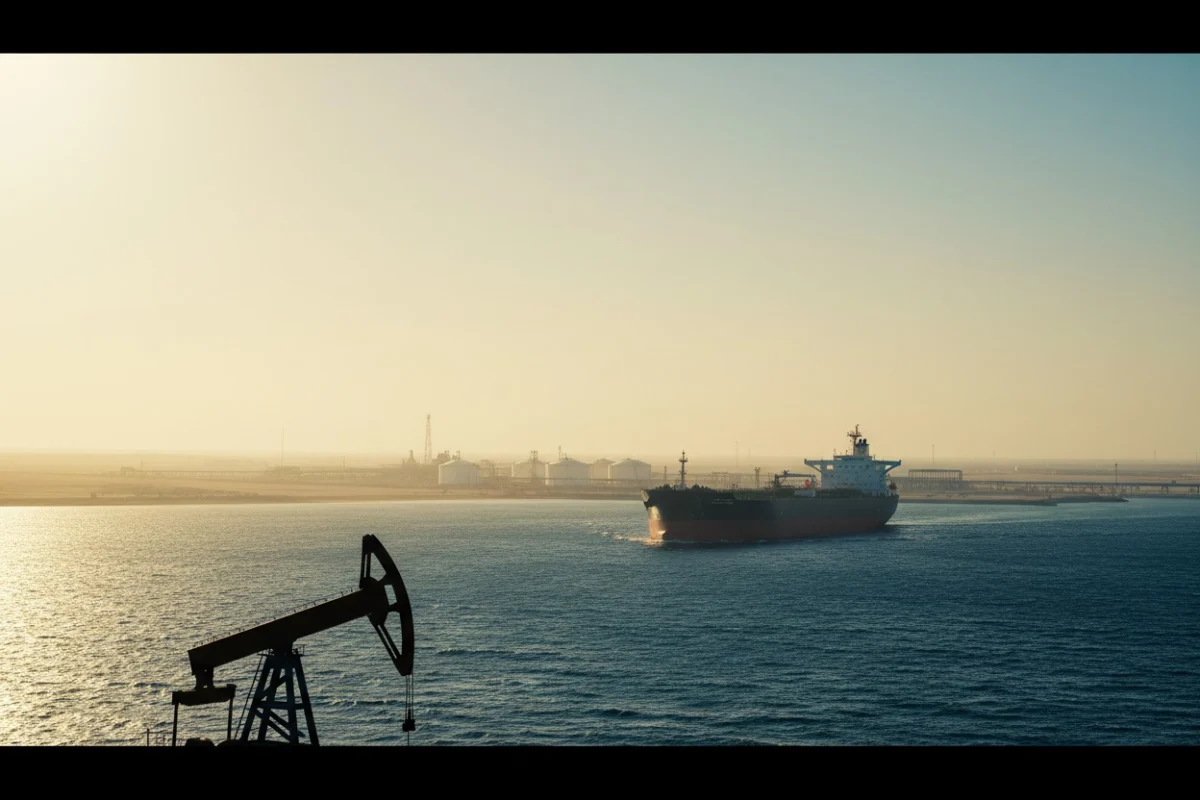
In a development that underscores the growing friction between Washington’s geopolitical ambitions and the realities of global energy markets, India’s imports of Russian crude have surged to an unprecedented 2.8 million barrels per day (bpd) as of July 2026. According to vessel-tracking data provided by Kpler and reported by the Times of India, Russian oil now accounts for over 55 percent of India’s total crude intake. This massive shift represents more than just a logistical pivot; it serves as a glaring indicator of the diminishing efficacy of U.S.-led economic sanctions.
As Washington debates the implementation of the "Senator Lindsey O. Graham Sanctioning Russia Act of 2026"—a bill proposing tariffs as high as 100 percent on nations importing Russian energy—the gap between American policy objectives and the ground-level economic realities in South Asia is widening into a chasm.
The Perfect Storm: Drivers of the Energy Pivot
The surge in India’s reliance on Russian crude is not merely a political statement; it is a calculated response to a series of cascading crises in global supply chains. According to Nikhil Dubey, lead analyst at Kpler, two primary factors have effectively forced New Delhi’s hand.
1. The Chokepoint Crisis
The most critical factor remains the continued disruption of the world’s most vital maritime arteries. The closure of the Strait of Hormuz and the Bab al-Mandab Strait has essentially dismantled the traditional energy supply routes that sustained the Indian economy for decades. These passages, which once facilitated the efficient transport of crude from the Persian Gulf to Indian refineries, have become high-risk zones, forcing New Delhi to look elsewhere for stable, reliable energy security.
2. Russia’s Refining Deficit
The second driver is the unexpected consequence of the ongoing conflict in Eastern Europe. Sustained Ukrainian drone strikes have significantly crippled Russia’s domestic refining infrastructure. While these strikes have been framed as a military strategy to degrade Russia’s war machine, they have inadvertently created a surplus of raw, unrefined crude within Russia. With fewer domestic facilities to process this oil, Moscow has been left with significant volumes of inventory that must be exported to remain liquid. This has kept Russian crude prices artificially low, making it an economically irresistible proposition for an energy-hungry India.
Before these supply chain disruptions, India had steadily increased its intake from Saudi Arabia and Iraq. However, once Washington broke the terms of the Iran ceasefire—a move that roiled regional markets—those established supply pipelines effectively dried up. The United Arab Emirates has since emerged as India’s second-largest supplier, utilizing tanker routes that bypass the embattled Hormuz Strait entirely.
Chronology of a Failed Strategy: From Tariffs to Stagnation
The U.S. approach to managing Russian oil flows has been characterized by a cycle of escalation and retreat. Understanding this timeline is crucial to evaluating the potential success of the 2026 Sanctions Act.
- Early 2025: Washington begins signaling a shift toward aggressive tariff policies aimed at curbing global demand for Russian energy, targeting nations that maintain trade relations with Moscow.
- August 2025: The United States imposes a 25 percent tariff on Indian energy imports. The move is met with stiff resistance in New Delhi and leads to significant diplomatic friction.
- February 2026: Recognizing the economic blowback and the failure of the policy to deter Russian exports, Washington and New Delhi negotiate a trade deal that lifts the 25 percent tariff, attempting a reset in energy relations.
- July 2026: Despite the earlier tariff experiment, Indian imports of Russian crude hit an all-time high, proving that market demand and logistical necessity have far outweighed the threat of American penalties.
- Late 2026 (Current): Congress debates the Senator Lindsey O. Graham Sanctioning Russia Act of 2026, which seeks to escalate the conflict by threatening 100 percent tariffs on the top five importers of Russian oil and gas, including India and China.
The "Hidden Tax": Debating the Economic Impact
The proposed 2026 legislation has ignited a fierce debate within the halls of the U.S. Congress, pitting proponents of "maximum pressure" foreign policy against those who fear domestic economic self-sabotage.
Senator Rand Paul (R-KY) has emerged as the leading voice of dissent, framing the bill as a catastrophic misstep. "This will likely be the largest tax increase ever passed by a Republican Congress and cost the American people half a trillion dollars," Paul noted in his recent critiques. His argument is rooted in the economic theory of tax incidence: tariffs are not paid by the foreign government—in this case, Russia—but by the American importers who facilitate the trade.
These importers, faced with the prospect of massive tariff costs, inevitably pass those expenses down to the consumer at the gas pump and the retail shelf. Paul’s rhetoric has been sharp, specifically targeting the logic behind the sanctions: "China isn’t on the refund list because China doesn’t pay the tariffs. American importers and retailers pay the tariffs, and they pass the cost of the tariffs onto you, the consumer."
Implications: A Strategic Backfire?
The implications of this policy extend far beyond the price of gasoline. Strategic analysts, including former policy staffers like Brian Darling, argue that the proposed sanctions represent a "tariff trap." Darling, writing in RealClearPolicy, pointed out that the previous iteration of China tariffs failed to achieve their primary geopolitical goals while simultaneously straining the U.S. manufacturing base.
The Diplomatic Cost
There is a profound concern that by forcing India into a corner, Washington may be driving a wedge between itself and one of its most important strategic partners. India, which has historically maintained a policy of "strategic autonomy," views its energy security as a non-negotiable national interest. If the U.S. persists in using economic leverage to dictate India’s energy procurement, New Delhi may find itself with little choice but to deepen its ties with the BRICS+ alliance and, by extension, the People’s Republic of China.
The Geopolitical Reality
Critics of the Graham Act argue that the war in Ukraine will continue regardless of whether India pays a 25 percent or a 100 percent premium for its oil. As Senator Paul warned, "Moscow may in fact welcome the United States inflicting unnecessary economic self-harm."
The logic is simple: If the United States imposes tariffs that hurt its own economy while failing to significantly reduce Russia’s total export volume, the result is a lose-lose scenario. Moscow continues to find buyers in the Global South, the U.S. experiences inflationary pressure, and the diplomatic goodwill required to keep the "Quad" (U.S., India, Japan, Australia) functioning as a check against regional hegemony begins to erode.
Conclusion: The Limits of Coercion
The data is clear: the global energy market is too interconnected and too driven by bottom-line logistics for conventional, unilateral sanctions to serve as a panacea. By focusing on punitive measures that punish the end-consumer rather than the intended target, the U.S. risks creating a fragmented global economy where its influence is marginalized.
As of late 2026, the question for policymakers is no longer whether they can punish Russia for its actions, but whether they can do so without sacrificing the very economic stability and diplomatic alliances that sustain American global leadership. The surge in India’s Russian oil imports stands as a testament to the reality that in a world of limited supply and closed shipping lanes, economic gravity will almost always triumph over legislative intent.
Whether the 2026 Sanctions Act becomes law remains to be seen, but the history of the last 18 months suggests that without a viable alternative for global energy supply, such measures are likely to yield little more than higher costs for Americans and a more emboldened, isolated geopolitical landscape.