











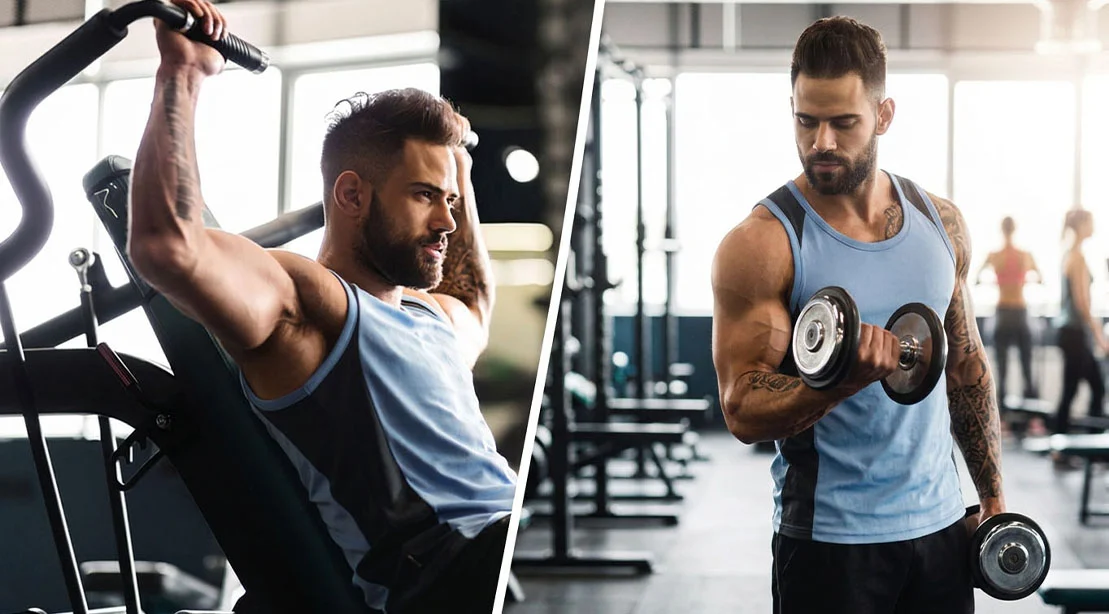
For decades, the hierarchy of the gym floor was undisputed. At the pinnacle sat the barbell—the undisputed king of strength—flanked by its loyal subjects, the dumbbells and plates. Machines, by contrast, were long relegated to the periphery. They were viewed as tools for novices, rehabilitating patients, or perhaps a means to provide a "finisher" pump after the real, strenuous work of free-weight training was complete.
However, the landscape of modern fitness is undergoing a tectonic shift. Walk into any premium commercial gym today and you are likely to be greeted by rows of Pendulum squats, Arsenal Strength rows, and converging chest presses that look less like gym equipment and more like hardware from a NASA training facility. These are not your grandfather’s clunky, static pin-loaded machines. They feature sophisticated resistance curves, biomechanically optimized movement paths, and ergonomics that seem custom-molded to the human frame.
As these machines become more ubiquitous, a question echoes through the fitness industry: Are we witnessing the decline of the barbell, or are we simply mistaking clever engineering for superior physiological results?
A Brief Chronology of Resistance Training
To understand the current tension, we must look at the evolution of strength training. For most of the 20th century, the barbell was the gold standard, favored for its simplicity and the raw demand it placed on the lifter to stabilize a moving object through space. The "Golden Era" of bodybuilding in the 1970s was built almost exclusively on free weights, with machines serving as an afterthought.
The 1980s and 90s saw the rise of "selectorized" equipment, aimed primarily at the general population looking for safety and ease of use. These machines were often criticized for their rigid paths of motion, which rarely accounted for individual anthropometry—the unique proportions of a lifter’s limbs and torso.
The current decade, however, marks the "Age of Optimization." Companies like Prime Fitness, Rogers Athletic (the makers of the Pendulum), and Arsenal Strength have moved beyond simple cable-and-pulley systems. By integrating lever-driven resistance, variable cam systems, and adjustable pivot points, these manufacturers have successfully bridged the gap between the stabilization requirements of free weights and the ease-of-use of traditional machines. We have moved from "dumb" machines that force a lifter into a suboptimal path to "smart" machines that accommodate the natural movement patterns of the human body.
The Case for the Barbell: Why Free Weights Endure
Despite the sleek appeal of modern machinery, the barbell remains a fundamental pillar of strength culture. Matt Wenning of Wenning Strength remains a staunch advocate for the classic approach.
"Free weights should always remain the foundation," Wenning explains. "They develop strength, coordination, and stability that machines simply cannot fully replicate."
1. Progressive Overload and Simplicity
The genius of the barbell lies in its modularity. Because plates are standardized, increasing intensity is as simple as adding a 2.5-pound micro-plate. This provides a clear, objective metric for progression. Furthermore, because barbells are inherently less stable than a machine, the body must recruit a vast network of stabilizer muscles—from the rotator cuff in a bench press to the core muscles during a squat—to keep the weight on track.
2. Freedom of Movement
One of the primary criticisms of machines is their "fixed path." While modern machines have improved this, they still enforce a specific range of motion. With dumbbells, a lifter can adjust their grip angle, elbow tuck, and pressing path mid-set to accommodate unique skeletal structures or lingering injuries. This freedom is essential for longevity, allowing the lifter to work with their anatomy rather than fighting against a steel frame.
The "Optimization" Trend: The Rise of the Machines
Jay Ashman of Ashman Strength offers a pragmatic view of why the industry has shifted toward high-tech machines. "We are currently in the midst of an ‘optimization’ trend that is heavy on aesthetics and efficiency," Ashman notes. "Why would a trainee not use the easiest tool for the job? That doesn’t make it the best tool for every purpose, but it is certainly the most efficient way to stimulate a specific muscle."
Sophisticated Resistance Profiles
Modern machines utilize cams and lever arms to manipulate the resistance curve. In a standard free-weight lift, the resistance is dictated by gravity; it is hardest when the lever arm is longest. Advanced machines can change this, offering resistance that matches the "strength curve" of a specific muscle group. By aligning the peak resistance with the muscle’s strongest range, these machines can arguably produce a more intense stimulus than a free weight, which might be too heavy at the bottom of a movement and too light at the top.
Targeted Hypertrophy Through Stability
The biggest advantage of the new wave of equipment is the reduction of the "stabilization tax." When you perform a heavy back squat, your central nervous system must work hard just to keep you upright. If your core or back tires before your quads, your legs never truly reach failure. By using a machine like a Pendulum Squat, you eliminate the need to balance, allowing the quads to become the sole limiting factor. As Gareth Sapstead, CSCS, explains, "Reducing the stability demands can be a good thing because you’re challenging the target muscle rather than worrying about balance or maintaining position."
Scientific Data: What Does the Research Say?
If you ask the literature, the debate between machines and free weights is surprisingly anti-climactic.
A 2023 systematic review and meta-analysis published in the Journal of Strength and Conditioning Research analyzed 13 studies involving over 1,000 participants. The conclusion? There is effectively no difference in hypertrophy (muscle growth) between the two methods. If your goal is simply to add muscle mass, the body appears indifferent to whether that tension is provided by a bar or a machine.
However, the "Specificity Principle" holds true in the data. The same research shows that strength is highly equipment-specific. Those who train with barbells see the greatest gains in barbell-based strength tests, while those who train on machines see the greatest improvements in machine-based output. This suggests that the "skill" of lifting a barbell is a learned neurological process that cannot be fully transferred to a machine.
Implications for the Modern Lifter
The emergence of these machines does not signal the end of the barbell, but it does signal the end of a "one size fits all" approach to programming. The implications for the average gym-goer are significant:
- Reduced Systemic Fatigue: By incorporating machines, a lifter can achieve high levels of local muscle fatigue without the crushing systemic demand of heavy free-weight compound lifts. This is a game-changer for recovery.
- Increased Safety: Training to absolute failure on a barbell back squat is a dangerous endeavor without a spotter. Doing so on a modern hack squat or leg press machine is standard, safe, and highly effective.
- Individualization: For those with anthropometric limitations—such as long femurs that make traditional squatting difficult—modern machines offer an ergonomic "hack" to build legs without the mechanical frustration of a barbell.
Synthesis: A Hybrid Future
The most successful strength programs of the coming decade will likely be hybrid in nature. Expert coaches are increasingly utilizing the "best of both worlds" approach: using free weights to build foundational strength, coordination, and bone density, and using high-tech machines to safely push muscles to their limits and bypass anatomical sticking points.
Sample Hybrid Upper-Body Session:
- Barbell Bench Press (4×6-12): Used for heavy, compound, multi-joint recruitment.
- Chest-Supported Machine Row (4×10-15): Used to isolate the lats and mid-back without stressing the lower back.
- Converging Machine Chest Press (3×10-15): Used to take the pectorals to failure in a safe, stable environment.
Sample Hybrid Lower-Body Session:
- Barbell Romanian Deadlift (4×6-12): Essential for the posterior chain and hinge mechanics.
- Pendulum Squat (4×6-12): Used to maximize quad hypertrophy through deep range of motion.
- Seated Leg Curl (3×12-15): Used for direct hamstring isolation.
Conclusion: Choosing Your Tools
Ultimately, the machine versus free-weight debate is a false dichotomy. The barbell is not "better" than a machine, and a machine is not "smarter" than a barbell. They are simply different tools in a toolbox.
The barbell remains the ultimate tool for strength, coordination, and full-body integration. The modern machine is the ultimate tool for isolation, safety, and hypertrophic efficiency. If your goal is to be a competitive powerlifter, your time belongs under the bar. If your goal is maximum muscle growth with minimal injury risk, a well-balanced program featuring both modalities is the gold standard.
We are not choosing between the past and the future; we are choosing between methods. By integrating both the raw, stabilizing demand of the barbell and the biomechanical precision of modern machines, the contemporary lifter can build a physique that is as functional as it is aesthetic. The crown hasn’t slipped from the barbell—it has simply been shared with a more capable partner.