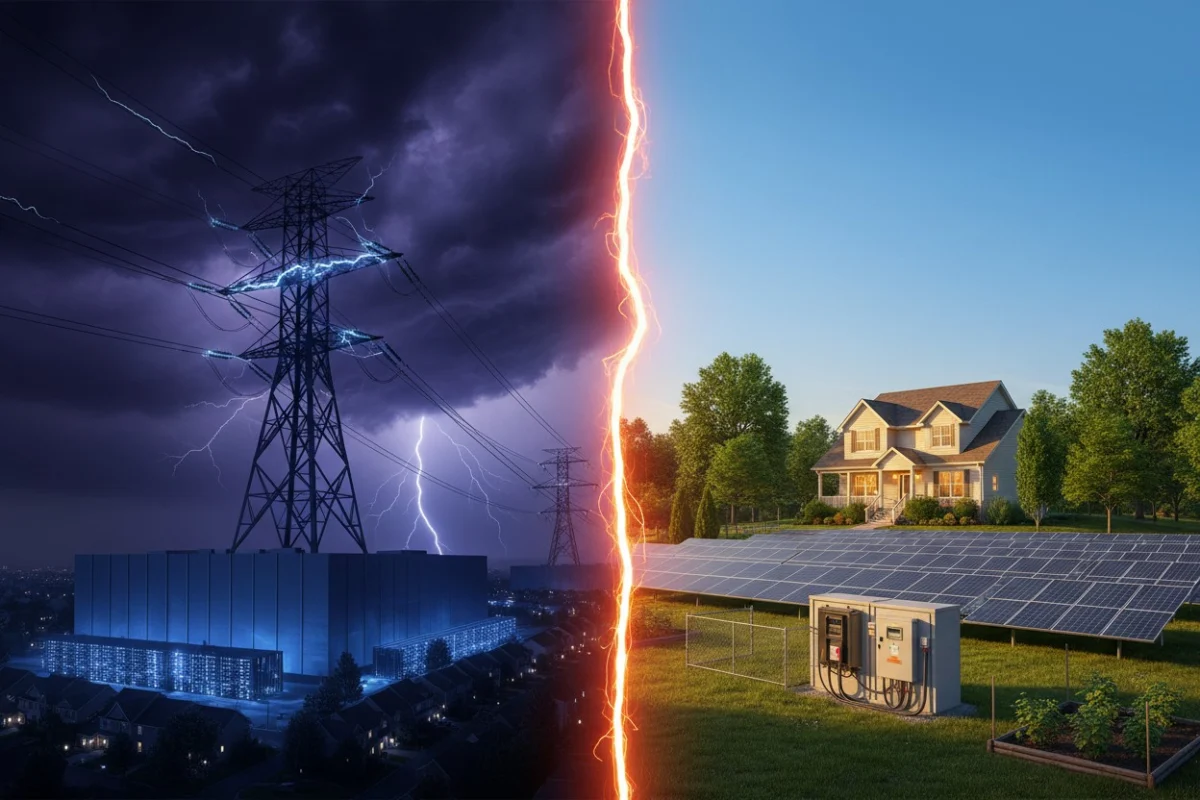
The American electrical grid, once the bedrock of the nation’s industrial might, is facing an unprecedented convergence of systemic fragility and surging demand. By 2029, energy analysts and industry insiders suggest that high-frequency rolling blackouts will transition from rare emergency events to a standardized feature of domestic life. As the three primary North American interconnections—the Eastern PJM grid, the Western grid, and the Texas interconnection—struggle to maintain stability, the rapid expansion of Artificial Intelligence (AI) data centers has created a "load crisis" that infrastructure upgrades are failing to keep pace with.
The Anatomy of a Systemic Failure
The crisis is defined by a widening chasm between available generation capacity and total system demand. The PJM Interconnection, which serves 76 million people across 13 states and the District of Columbia, serves as a primary case study in grid degradation. In its most recent capacity auction, PJM procured 149,182 megawatts of supply. While that figure appears substantial, it falls approximately 6.8 gigawatts short of the operator’s own "one-event-in-10-years" reliability standard. This marks the third consecutive year that PJM has failed to meet its internal security mandates.
The mathematics of the grid are unforgiving. To prevent cascading failures, operators require a "spare generation capacity" safety margin of at least 20%. Current projections suggest that spare capacity on the Eastern grid will plummet to roughly 14% by 2027. When supply margins shrink to these levels, the grid loses its ability to buffer against extreme weather, equipment failures, or sudden spikes in usage.
Chronology of the Capacity Crunch
The current trajectory of the power crisis did not emerge overnight; it is the culmination of years of policy decisions and shifting technological priorities:
- 2021: The Texas grid (ERCOT) suffers a near-total collapse during a severe winter storm, exposing the lack of weatherization and the vulnerability of a decoupled, independent grid system.
- 2022-2023: As global tensions rise, the "AI Arms Race" accelerates. Silicon Valley firms and hyperscalers begin rapid expansion of data centers, each requiring hundreds of megawatts of continuous, "always-on" power.
- 2024: NERC (North American Electric Reliability Corporation) issues a federal report identifying large swaths of North America as being at high risk for blackouts during peak winter months, citing the surging demand from data centers as a primary catalyst.
- 2025-2027 (Projected): Grid operators begin triggering emergency orders with increasing frequency. The precedent is established: when energy is scarce, residential load-shedding becomes the primary tool to keep critical infrastructure—and now, designated national security AI assets—online.
Supporting Data: The Data Center Dilemma
The central conflict in the modern energy landscape is the competition for electrons. Data centers are not merely "another customer"; they are being framed by the federal government as essential components of national security. With the Pentagon and the White House viewing AI dominance as a prerequisite for maintaining a strategic edge over China, the legal framework is shifting to grant these facilities "power preference."
Evidence of this shift is already surfacing. The Department of Energy has issued emergency orders allowing grid operators—such as the Southwest Power Pool—to utilize emergency backup generators to maintain system stability. These orders signal a departure from traditional utility management; they confirm that the grid is no longer capable of satisfying both the public’s residential needs and the insatiable appetite of the burgeoning AI industry simultaneously.
Official Responses and Regulatory Gridlock
The political response to this crisis has been characterized by a paradoxical tension. In states like New York, legislative mandates—such as the Climate Leadership and Community Protection Act—have effectively prohibited the construction of new fossil fuel generation plants while simultaneously forcing the retirement of aging infrastructure. This policy gap leaves the grid without a reliable "baseload" power source to replace the intermittent nature of renewables during peak demand periods.
Meanwhile, federal agencies are caught in the middle. While the DOE attempts to manage the immediate threat of outages through emergency administrative orders, there is no comprehensive federal roadmap for scaling the physical high-voltage transmission network at the pace required by current AI development. As Goldman Sachs and other financial analysts have noted, the math simply does not support the current load-growth projections. The "political class," as critics argue, has yet to reconcile the goals of rapid digital industrialization with the physical limitations of the existing electrical distribution architecture.
The Implications: A Growing Power Divide
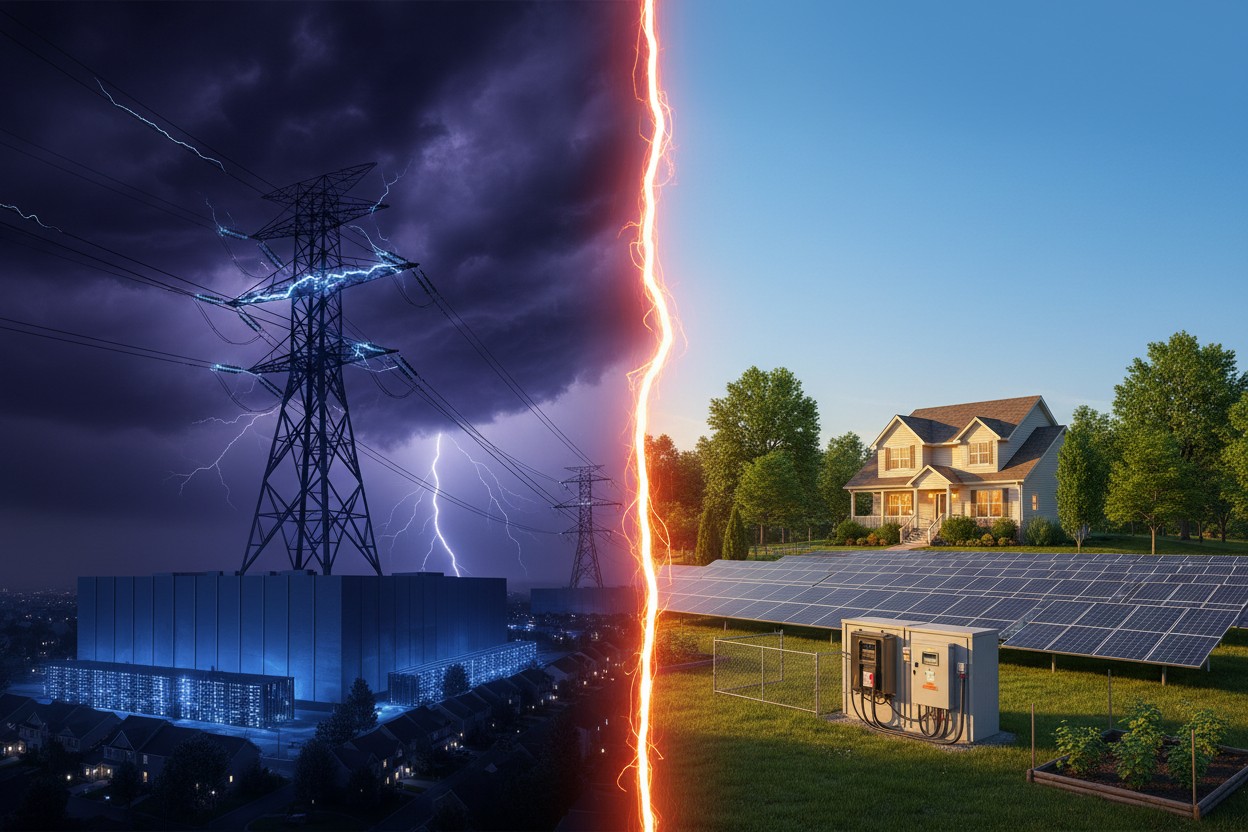
The most significant social implication of this energy scarcity is the emergence of a "power divide." As reliability decreases, a tiered system of access is beginning to take shape. Wealthy and middle-class households are increasingly investing in private, off-grid energy systems, effectively "seceding" from the public grid. Conversely, lower-income households, who lack the capital for high-end battery storage and solar arrays, remain tethered to the public utility.
This creates a scenario where the public grid is utilized primarily by those who cannot afford an alternative, while the system itself becomes increasingly prone to "third-world" reliability standards. The recent news that utility providers in the Lake Tahoe region are phasing out service for thousands of residents while prioritizing data centers illustrates this transition. It is no longer a technical glitch; it is an economic and operational choice to prioritize industrial load over residential stability.
The Shift to Off-Grid Self-Reliance
For the individual homeowner, the realization that grid-tie solar systems are functionally useless during a blackout is often a harsh awakening. Most grid-tie inverters are legally required to shut down when the utility goes dark to protect line workers from "backfeed." Consequently, those relying on standard solar setups find themselves in the dark just like everyone else during a grid failure.
The alternative—the off-grid microgrid—has moved from a fringe lifestyle choice to a strategic necessity. By utilizing independent battery storage (such as Lithium Iron Phosphate or emerging Sodium-Ion technology) and ground-mounted solar arrays, individuals can create a localized power environment that is immune to utility-level blackouts.
Technical Recommendations for Preparedness:
- Ground-Mount Arrays: Unlike roof-mounted systems, ground-mounted arrays allow for seasonal tilt adjustments, which can increase winter energy production by up to 20%. They are also easier to maintain and clean.
- Battery Technology: While Lithium Iron Phosphate (LiFePO4) remains the industry standard for reliability, Sodium-Ion batteries represent the next frontier, offering better temperature tolerance and improved safety profiles.
- Prioritize Critical Loads: Building a system that can sustain core life-support functions—lighting, refrigeration, communication, and medical devices—is a more prudent starting point than attempting to power an entire home at once.
- Regulatory Awareness: Investors should be mindful of shifting trade policies. New tariffs on polysilicon derivatives and import restrictions may significantly inflate the cost of solar components in the coming years, making early procurement a cost-saving measure.
Conclusion: The New Imperative
The era of reliable, constant, and cheap electricity provided by a centralized grid is drawing to a close. By 2029, the combination of AI-driven demand, aging infrastructure, and conflicting regulatory policies will ensure that blackouts are a recurring reality. Self-reliance is no longer an abstract concept or a hobbyist’s pursuit; it is a fundamental strategy for maintaining a functioning household.
As the "power divide" widens, the ability to generate and store one’s own electricity will become the defining factor in household resilience. The question for the average American is no longer whether the grid will face stress, but rather how they will manage when the grid reaches its breaking point. Those who act now to establish energy independence will be the ones who maintain their standard of living when the rest of the country is forced to adapt to a new, darkened reality.