BANGOR, Maine — The American health care landscape is undergoing its most radical transformation in decades, triggered by a sweeping legislative overhaul enacted last year that effectively dismantled the financial pillars supporting the nation’s most vulnerable populations. By slashing $1 trillion in projected Medicaid funding over the next ten years and allowing tens of billions in Affordable Care Act (ACA) subsidies to sunset, the federal government has effectively signaled a retreat from its role as the primary safety net for rural and low-income Americans.
As the ripple effects of these policies move from Washington, D.C., to the front lines of care, hospitals and clinics—particularly in rural states like Maine—are finding themselves in a fight for survival. This is not merely a budgetary crisis; it is a fundamental reconfiguration of where and how Americans receive medical care.
The Anatomy of the Cuts: A New Financial Reality
The legislative changes implemented by Republicans have fundamentally altered the economics of American medicine. By curbing federal Medicaid expenditures and failing to renew enhanced insurance subsidies, the government has created an immediate revenue vacuum for providers.
The Chronology of the Shift
- Late 2025: The passage of the health care reform bill, which imposed strict work requirements for Medicaid eligibility and capped federal funding growth.
- Early 2026: The expiration of enhanced ACA marketplace subsidies, leading to a surge in premiums and a corresponding drop in insurance enrollment.
- Mid-2026 to Present: The onset of "uncompensated care" spikes as hospitals face rising numbers of uninsured patients while simultaneously losing the federal reimbursement dollars that previously covered those costs.
The impact is mathematically devastating. According to reports from the center-left think tank Third Way, hospitals nationwide are facing an average decline in annual revenue that, while seemingly modest in percentage, is catastrophic for facilities already operating on margins of less than 1%.
The "Canary in the Coal Mine": The Maine Perspective
Maine serves as a harrowing case study for the rest of the nation. With the highest proportion of rural residents in the United States and an aging population heavily dependent on government-funded health programs, the state’s medical infrastructure is acutely exposed to these federal shifts.
"We will look different moving forward," says Lisa Harvey-McPherson, vice president of government relations at Northern Light Health, one of Maine’s largest health systems. "Some services that we provide today will either look different or won’t be offered."
For health systems like Northern Light and MaineHealth, the planning process has turned into a desperate exercise in contingency management. Strategies include shifting high-cost care to telehealth, aggressively managing patient enrollment in remaining state programs, and, most controversially, planning for the consolidation or outright closure of unprofitable service lines.
Trampas Hutches, president of the Mountain Region for MaineHealth, describes the state as the "canary in the coal mine." He warns that the distress currently being signaled by Maine’s hospitals—ranging from staff shortages to the shuttering of specialized units—is a preview of the systemic instability that will soon ripple across the country.

Strategic Adaptation: Philanthropy, AI, and Consolidation
Faced with a shrinking federal safety net, health systems are scrambling to invent new, often non-traditional business models to stay afloat.
The Rise of Philanthropy-Dependent Care
In some regions, the survival of the hospital is now tethered to the generosity of donors. MDI Health, located in a coastal region popular with wealthy seasonal residents, has successfully pivoted to a philanthropy-heavy model. By relying on grants and private donations, the system has managed to maintain positive operating margins even as state and federal reimbursements decline.
However, this "lifeline" is not universal. "We would be smoked without it," says Philip Pizzola, the system’s director of medical imaging. "We would not have a chance without the donors." The concern among health policy experts is that this model creates a "geographic lottery"—if a hospital is located in an affluent area, it may survive; if it is in an impoverished rural county, it will likely perish.
The 340B and AI Gambits
Many providers are leaning heavily on the 340B drug discount program, which allows hospitals to purchase pharmaceuticals at a steep discount and be reimbursed at higher rates. While this has been a vital source of revenue, it is currently under intense scrutiny from both pharmaceutical companies and federal lawmakers who view the practice as an overreach.
Simultaneously, hospitals are pouring resources into artificial intelligence, hoping that automation will solve the labor shortage and drive down administrative costs. Yet, for many, the technological investment feels like a desperate attempt to plug a leaking dam with a piece of tape.
The Human Toll: Emergency Services at the Breaking Point
The most visceral impact of these cuts is the decline in local services, forcing patients to travel further for life-saving care. The closure of obstetric units in towns like Fort Kent and Houlton has forced expectant mothers to endure long, high-risk drives to reach a labor and delivery ward.
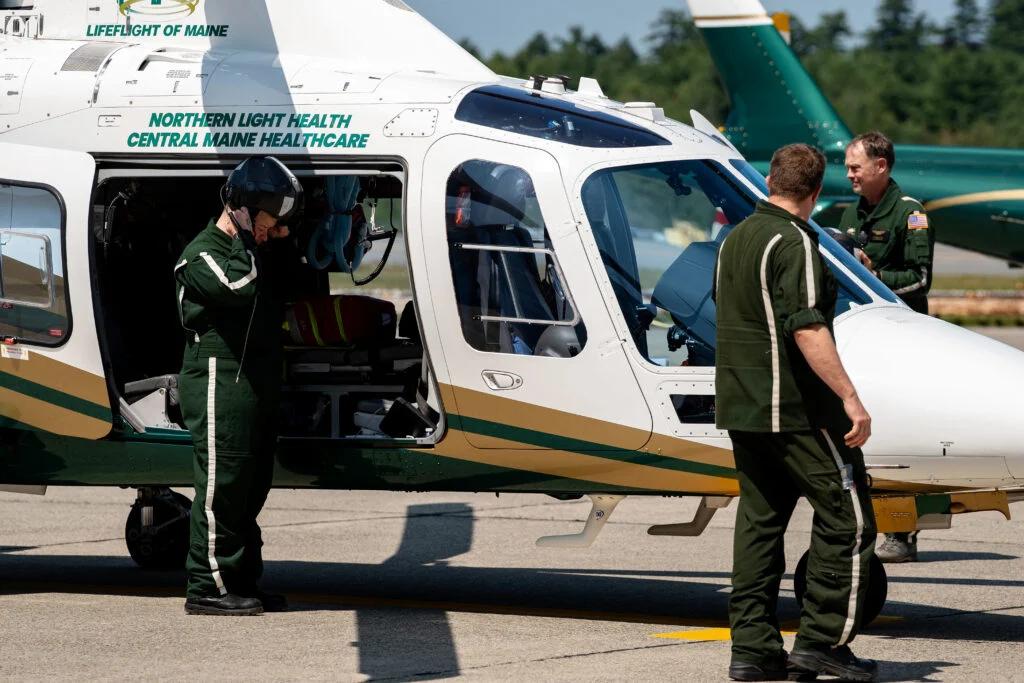
Norman Dinerman, medical director of LifeFlight of Maine, highlights the grim reality of this "care desert." He recounts instances where the lack of local proximity to specialized care has resulted in preventable tragedies, including near-misses during transport. LifeFlight has begun training with the National Guard, essentially preparing for a "battlefield" medical environment where air transport becomes the only bridge between the patient and the nearest functioning hospital.
"The capabilities in the little hospitals just keep declining," says Tom Judge, founding executive director of LifeFlight. "Demand is going to keep going up."

Official Responses and Political Fallout
The political discourse surrounding these cuts has become a primary flashpoint in the national election cycle. Republicans have defended the legislation as necessary fiscal discipline, arguing that the Medicaid program had become bloated and that the changes represent a transition to "sustainability." They maintain that the term "cuts" is a misnomer, preferring to characterize the policy as a reduction in the rate of future spending growth.
Conversely, Democrats have framed the issue as a betrayal of the rural voter. In Maine’s high-stakes Senate race, the debate over health care access has taken center stage. Former state Senate President Troy Jackson has pointedly blamed the current instability on the GOP-led legislation, citing the loss of regional health services as evidence that the system is failing the average citizen.
"There’s an energy like I’ve never seen of people that are frustrated," Jackson stated. "They want a government that works for them."
Incumbent Senator Susan Collins has sought to distance herself from the legislative fallout, positioning herself as a "Medicaid Champion" and emphasizing her opposition to the specific bill that enacted the cuts. Yet, for the average voter seeing their local clinic shutter its doors, the nuance of legislative voting records is often secondary to the immediate, painful loss of access to care.
The Long-Term Implications
The long-term outlook for the American health care system is, by all accounts from the front lines, increasingly grim. As 7.6 million Americans lose Medicaid coverage and millions more are priced out of the ACA marketplace, the "uncompensated care" burden on hospitals will likely continue to climb.
This creates a self-reinforcing cycle of failure:
- Revenue Loss: Medicaid and ACA subsidy reductions lead to lower hospital revenues.
- Service Contraction: Hospitals close unprofitable departments (labor and delivery, mental health, specialty surgery) to survive.
- Increased Costs: Patients delay care due to costs, leading to more expensive, acute medical emergencies.
- Emergency Overload: Emergency rooms and ambulance services are overwhelmed by patients with advanced, untreated conditions they cannot afford to pay for.
"I’ve never seen us more concerned about sustainability," says Chrissi Maguire, CEO of MDI Health. "It’s the most fragile I’ve ever seen it."
As the nation heads toward a post-subsidy future, the evidence from rural Maine suggests that the primary victim of this fiscal shift will be the social contract itself. When the closest birthing center is an hour away and the local hospital is operating on a razor-thin, donor-dependent budget, the promise of "equal access to care" ceases to be a reality, leaving rural America to navigate a new, uncertain frontier of medicine.