









From the rapid-fire rhythm of TikTok wellness trends to the dogmatic corners of the "carnivore diet" community, a singular, polarizing question has emerged in the modern culinary conversation: Are vegetable and seed oils inherently toxic?
The debate has moved from niche health forums into the mainstream, with detractors labeling common cooking fats like canola, soybean, and corn oil as "toxic sludge," "motor oil," or "the hateful eight." These critics argue that these oils are the hidden architects of chronic disease, allegedly fueling everything from obesity and anxiety to ulcerative colitis. In contrast, mainstream nutrition science often paints a more measured picture, viewing these oils as either neutral or, in specific contexts, potentially health-promoting.
To understand the truth, we must move beyond the constraints of a 15-second social media clip and examine the complex intersection of food processing, biochemistry, and long-term epidemiological data.
The Origins of the Controversy: A Chronology of Conflict
The skepticism surrounding vegetable oils is not entirely new. It is rooted in a historical shift in the human diet that began in the early 20th century.
- The Early 1900s: The rise of industrial agriculture allowed for the mass production of oils from seeds like cottonseed, corn, and soy. Marketed as shelf-stable, cost-effective alternatives to animal fats like lard and butter, these oils quickly became staples in the American pantry.
- The Mid-20th Century: The medical community largely pivoted toward vegetable oils, viewing them as "heart-healthy" replacements for the saturated fats found in animal products. This era birthed the margarine craze, which later backfired when it was discovered that the hydrogenation process used to harden these oils created high levels of trans fats—a discovery that led to a major public health course correction.
- The 21st Century: The "seed oil hate" movement emerged as a reactionary force against the ultra-processed food industry. Critics argue that because these oils are "modern" inventions—unlike animal fats, which have been consumed for millennia—the human body is ill-equipped to process them, leading to systemic inflammation.
The Processing Problem: How "Seed" Becomes "Oil"
One of the central arguments against seed oils is their extraction process. Unlike olives or avocados, which are naturally fatty and can be pressed to release their oil, seeds like corn, soy, and canola contain relatively little fat.
To extract oil from these non-oily sources, manufacturers employ an intensive, multi-stage industrial process. This typically involves:
- Cleaning and dehulling: Removing impurities from the raw seeds.
- Mechanical pressing: Extracting the initial oil.
- Solvent extraction: Using chemicals like hexane to draw out the remaining oil from the seed cake.
- Refining, bleaching, and deodorizing: A process that uses high heat and chemicals to neutralize the oil’s flavor and color, making it shelf-stable for months or years.
The concern for many nutritionists is that this high-heat, industrial processing can degrade the oil’s natural stability, potentially creating small amounts of trans fatty acids and stripping away beneficial phytonutrients. However, calling the final product "toxic" is a significant scientific leap. While the FDA banned the addition of industrial trans fats to processed foods in 2018, the lingering question remains: Does the processing of these oils fundamentally alter their health impact?

Supporting Data: The Case for Extra Virgin Olive Oil (EVOO)
When examining the scientific literature, one fat stands apart for its consistent association with longevity: Extra Virgin Olive Oil (EVOO).
Unlike refined seed oils, EVOO is produced mechanically without the use of high heat or chemical solvents. This preserves the oil’s polyphenols—plant-based antioxidants that combat cellular damage. A landmark study of over 22,000 adults in Southern Italy found that those who consumed more than two tablespoons of olive oil daily had a 20 percent lower risk of mortality over a 13-year period compared to those who consumed less than one tablespoon.
Furthermore, recent research has debunked the "smoke point" myth. Culinary experts previously warned against cooking with EVOO, fearing that heat would degrade its health benefits. We now know that the high polyphenol content of EVOO makes it remarkably stable, even at temperatures as high as 464°F (240°C), often outperforming more "stable" refined oils in laboratory tests.
The Omega-6 Dilemma: Fact vs. Theory
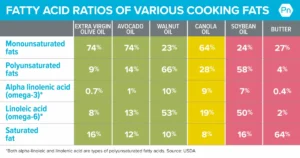
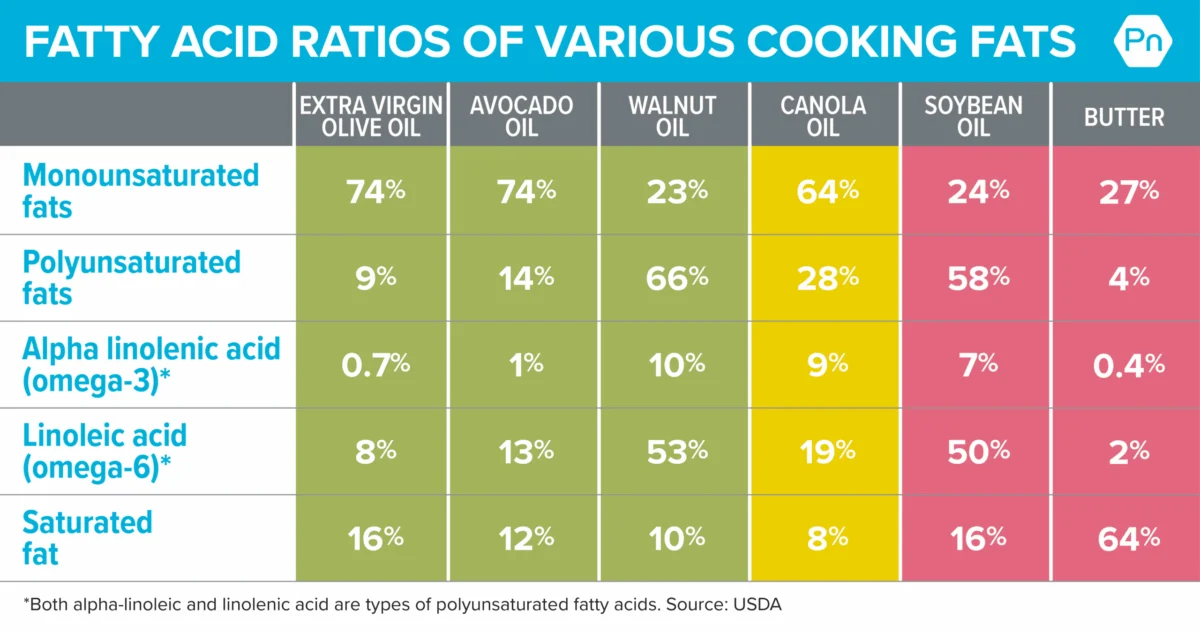
The most common scientific argument against seed oils involves the Omega-6 fatty acid content. The typical Western diet is heavily skewed, with people consuming 16 to 20 times more Omega-6 fats than Omega-3s.
The theory suggests that this imbalance promotes systemic inflammation, a precursor to many chronic diseases. However, the scientific consensus is shifting. A 2019 study published in the American Heart Association journal Circulation found that higher consumption of Omega-6 fats was actually associated with a reduced risk of heart disease and early death.
The nuance, however, lies in the "food matrix." When you consume Omega-6s through whole foods like walnuts or seeds, you are also getting fiber, protein, and minerals. When you consume them through refined oils in ultra-processed food, you are getting the fat in isolation, stripped of the "protective packaging" that helps the body manage those fatty acids.
Official Responses and Dietary Recommendations
Major health organizations, including the U.S. Dietary Guidelines, recommend limiting saturated fats to less than 10 percent of daily caloric intake. This is where the debate over butter versus refined oils becomes particularly heated.

While proponents of animal fats argue that saturated fats were "vilified" during the 1990s, the data remains clear that excessive saturated fat intake increases LDL cholesterol. Studies show that replacing just 5 percent of saturated fat calories with monounsaturated fats (like those in olive oil) can reduce heart disease risk by 15 percent.
The "draw" in this match-up is that both refined vegetable oils and butter have drawbacks. Butter is high in saturated fat and lacks the protective "milk fat globule membrane" found in whole dairy, while refined vegetable oils are highly processed and often serve as a vehicle for the consumption of ultra-processed, calorie-dense foods.
Implications for Your Plate
If the goal is optimal health, the strategy is not to fear specific oils, but to prioritize the quality of your overall diet. Here are the key takeaways for the modern consumer:
- Prioritize Minimally Processed Fats: Focus on oils that retain their natural compounds. Extra Virgin Olive Oil, avocado oil, and walnut oil are the gold standards. If you are on a budget, expeller-pressed canola oil is a "health-neutral" runner-up that is significantly better than hydrogenated or heavily refined options.
- The "Food First" Rule: The most potent health benefits come from eating whole olives, avocados, nuts, and seeds rather than relying on extracted oils. Whole foods provide a complex matrix of nutrients that a bottle of oil simply cannot replicate.
- The 80/20 Rule: The real danger of vegetable oils isn’t found in a bottle of oil sitting in your pantry; it is found in the ingredient lists of ultra-processed snacks, frozen meals, and restaurant deep-fryers. Aim to get 80 percent of your calories from whole, minimally processed foods. If you limit your intake of ultra-processed foods, your consumption of refined seed oils will naturally drop to a level that is unlikely to impact your health.
- Moderation is Key: Even with healthy fats like olive oil, caloric density is a reality. While they contribute to a healthy life, they should not be consumed in excess.
Conclusion
The "seed oil" hysteria is largely a symptom of our broader confusion regarding modern food production. While it is true that industrial processing creates oils that are less than ideal compared to their whole-food counterparts, the fear-mongering surrounding them often ignores the reality that for most people, the true culprit is an over-reliance on ultra-processed, nutrient-poor foods.
By focusing on high-quality, minimally processed oils like EVOO and prioritizing whole food sources of fat, you can bypass the viral trends and build a sustainable, science-backed approach to nutrition. The truth about your cooking oil is not found in a meme; it is found in the kitchen, where the focus remains on simple, whole, and unprocessed ingredients.