











By Editorial Staff
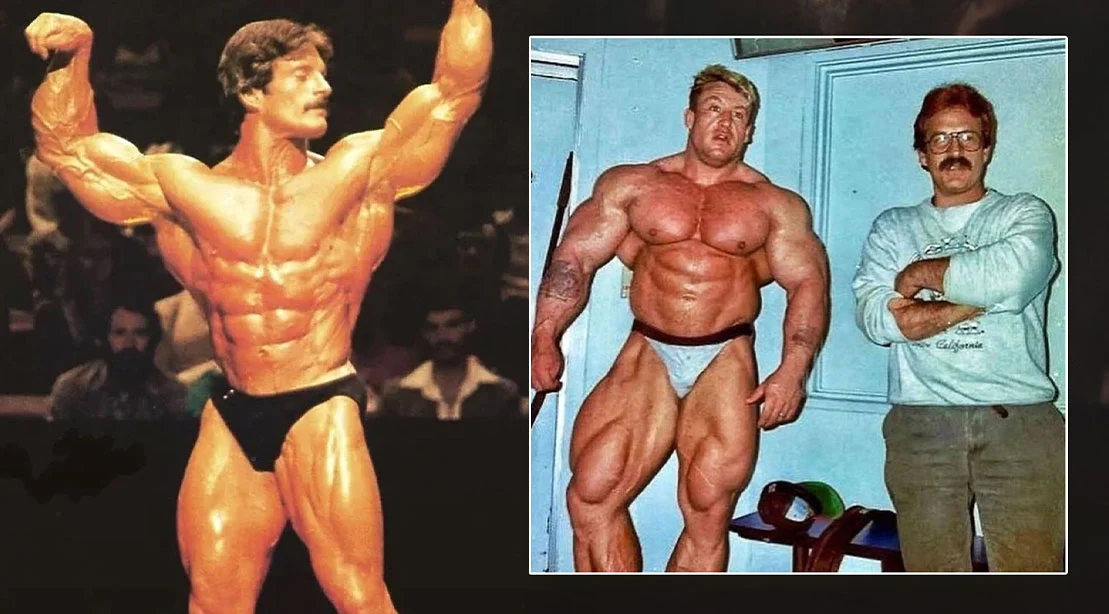
June 10, 2026, marked a somber yet significant milestone in the history of physical culture. It has been precisely a quarter-century since the world lost Mike Mentzer, a man whose intellect was as formidable as the legendary physique he carved out of stone. A former Mr. Universe and a pioneer of the "Heavy Duty" training philosophy, Mentzer’s influence remains a cornerstone of modern bodybuilding. To commemorate the anniversary, six-time Mr. Olympia Dorian Yates—a man who arguably best embodied the practical application of Mentzer’s theories—offered a poignant tribute, reflecting on a mentor who changed the trajectory of the sport forever.
The Architect of Intensity: Who Was Mike Mentzer?
Michael John Mentzer (1951–2001) was not merely a bodybuilder; he was a revolutionary. While the bodybuilding landscape of the 1970s was dominated by the high-volume, "more is better" mentality popularized by the Golden Era greats, Mentzer dared to challenge the dogma. He was a thinker, a philosopher, and an athlete who believed that intensity and efficiency should take precedence over sheer duration.
Mentzer’s competitive career was nothing short of legendary. His most notable achievement came in 1978 when he became the first bodybuilder in history to receive a perfect score of 300 at the Mr. Universe contest. This feat was not a fluke; it was the result of a scientific, objective approach to training that defied the conventional wisdom of the time. Throughout the late 1970s, he remained a top-tier contender in the IFBB, eventually retiring from professional competition in 1980. His induction into the IFBB Hall of Fame served as a formal recognition of his impact, but his true legacy was etched in the thousands of athletes who adopted his "Heavy Duty" methodology.
A Chronology of a Revolution
To understand the weight of Mentzer’s contribution, one must look at the timeline of his evolution:
- 1971: A young Mike Mentzer enters the Mr. America contest, marking the beginning of his professional journey.
- 1978: Mentzer achieves perfection, securing the Mr. Universe title with a flawless 300-point score.
- 1979: He competes at the Mr. Olympia, placing second in the heavyweight class, cementing his status as one of the world’s best.
- 1980: Mentzer retires from active competition, shifting his focus to coaching, writing, and refining his Heavy Duty philosophy.
- 1990s: Mentzer’s theories find a disciple in Dorian Yates, a young British bodybuilder who would go on to dominate the Mr. Olympia stage for six consecutive years.
- June 10, 2001: The bodybuilding world loses Mike Mentzer, leaving behind a void in the fitness community.
- June 10, 2026: The 25th anniversary of his passing serves as a global moment of reflection for the industry, as stars like Dorian Yates publicly acknowledge the lasting power of his teachings.
The Science of Efficiency: The "Heavy Duty" Method
The core of Mentzer’s philosophy was built upon the teachings of Arthur Jones, the inventor of Nautilus equipment. Jones hypothesized that if a muscle was pushed to its absolute limit, the stimulation for growth was triggered; anything beyond that point was not only unnecessary but potentially counterproductive due to the body’s limited recovery resources.
Mentzer took this concept and refined it into "Heavy Duty." It focused on:
- Low Volume: Performing as few sets as possible to achieve failure.
- High Intensity: Taking every set beyond the point of normal failure through techniques like forced reps and negatives.
- Adequate Recovery: Recognizing that muscle growth happens outside the gym, not inside it, Mentzer advocated for significant rest periods between workouts—sometimes up to several days or even a week between sessions for a specific body part.
While skeptics initially dismissed his methods as "lazy," Mentzer’s perfect scores and the success of his proteges provided an undeniable validation of his work.
Dorian Yates: The Shadow and the Master
For Dorian Yates, the "Shadow" who would go on to redefine the mass monster era of the 1990s, meeting Mike Mentzer was a turning point. In his recent Instagram tribute, Yates recalled the intellectual attraction he felt toward Mentzer long before they had ever shared a gym floor.
"I’d seen Mike’s training stuff long before I ever met him, and I was impressed," Yates reflected. "He was an interesting person and was incredibly intelligent. With Mike, it goes beyond his physique, although his physique was incredible—especially with that muscle thickness; big forearms and calves. In the end, it turned out that we shared those traits."
Yates noted that beyond the iron, it was Mentzer’s willingness to be a "free thinker" that resonated most. "What Mentzer did was ask the question: ‘Am I training in a certain way due to habit and the pressures of conformity, or am I doing everything to ascertain the best ways of approaching bodybuilding to get maximum results?’"
This inquisitive nature directly fueled Yates’s own "Blood & Guts" training philosophy. The brutal, high-intensity sessions they shared were, according to Yates, the most focused of his entire career. It was this partnership that helped propel Yates to his six consecutive Sandow trophies between 1992 and 1997.
Supporting Data: The Longevity of the Philosophy
The efficacy of Mentzer’s methods is supported by the resurgence of interest in his work in the digital age. As Yates noted in his tribute, there is a visible increase in the consumption of "Mr. Heavy Duty" content on social media platforms.
Modern exercise science has, in many ways, circled back to the principles Mentzer championed. Current research into hypertrophy (muscle growth) consistently shows that while volume has a place, the intensity of effort—training close to or at technical failure—is the primary driver of motor unit recruitment. Mentzer’s insistence on recovery has also found a new audience in the "recovery-focused" fitness movement of the mid-2020s, where overtraining is increasingly recognized as a barrier to progress.
Official Responses and Reflections
The tribute shared by Dorian Yates was not merely a nostalgic post; it was a candid look at the man behind the myth. Yates made a point to address the complexities of Mentzer’s life, specifically his struggles with mental health.
"In all my meetings with him, he came across as a very intelligent and kind man," Yates wrote. "I do want to say that Mike did suffer from mental health issues, which back then were probably not so well recognized or taught about as they are now. I think it’s important to mention this, and to recognize men’s mental health."
This admission adds a layer of humanity to Mentzer’s legacy. It reminds the bodybuilding community that the pursuit of physical perfection does not insulate an individual from the struggles of the human condition. By speaking openly, Yates has helped foster a healthier dialogue regarding the psychological well-being of athletes.
Implications for the Future of Bodybuilding
As the sport looks back on the 25 years since Mentzer’s death, the implications are clear: his work is not a relic of the past, but a living, breathing component of modern training. The "Heavy Duty" method remains the gold standard for those who seek to maximize results while minimizing the time spent in the gym.
Moreover, Mentzer’s influence has transcended the physical. He taught a generation of lifters to think for themselves, to question authority, and to treat training as a logical, scientific pursuit rather than a repetitive chore. His legacy lives on through:
- Educational Content: The proliferation of Mentzer’s books and recorded lectures on digital platforms.
- The "MentzerHit" Movement: Dedicated channels and communities that continue to dissect and promote his high-intensity principles.
- Professional Mentorship: The continued public support from legends like Dorian Yates, who ensure that the next generation of bodybuilders is aware of the foundation upon which their sport was built.
In his concluding remarks, Yates expressed a sentiment that surely resonates with thousands: "He probably didn’t know just how much he was influencing people worldwide, but hopefully, I can pass that on. I’m seeing more and more pictures and videos of Mr. Heavy Duty online, which is great to see."
Mike Mentzer may have left the stage in 2001, but the "Heavy Duty" intensity he ignited continues to burn bright in gyms across the globe. As long as there are athletes looking to push past their limits, questioning the status quo, and seeking the most efficient path to excellence, the spirit of Mike Mentzer will remain at the heart of bodybuilding.