











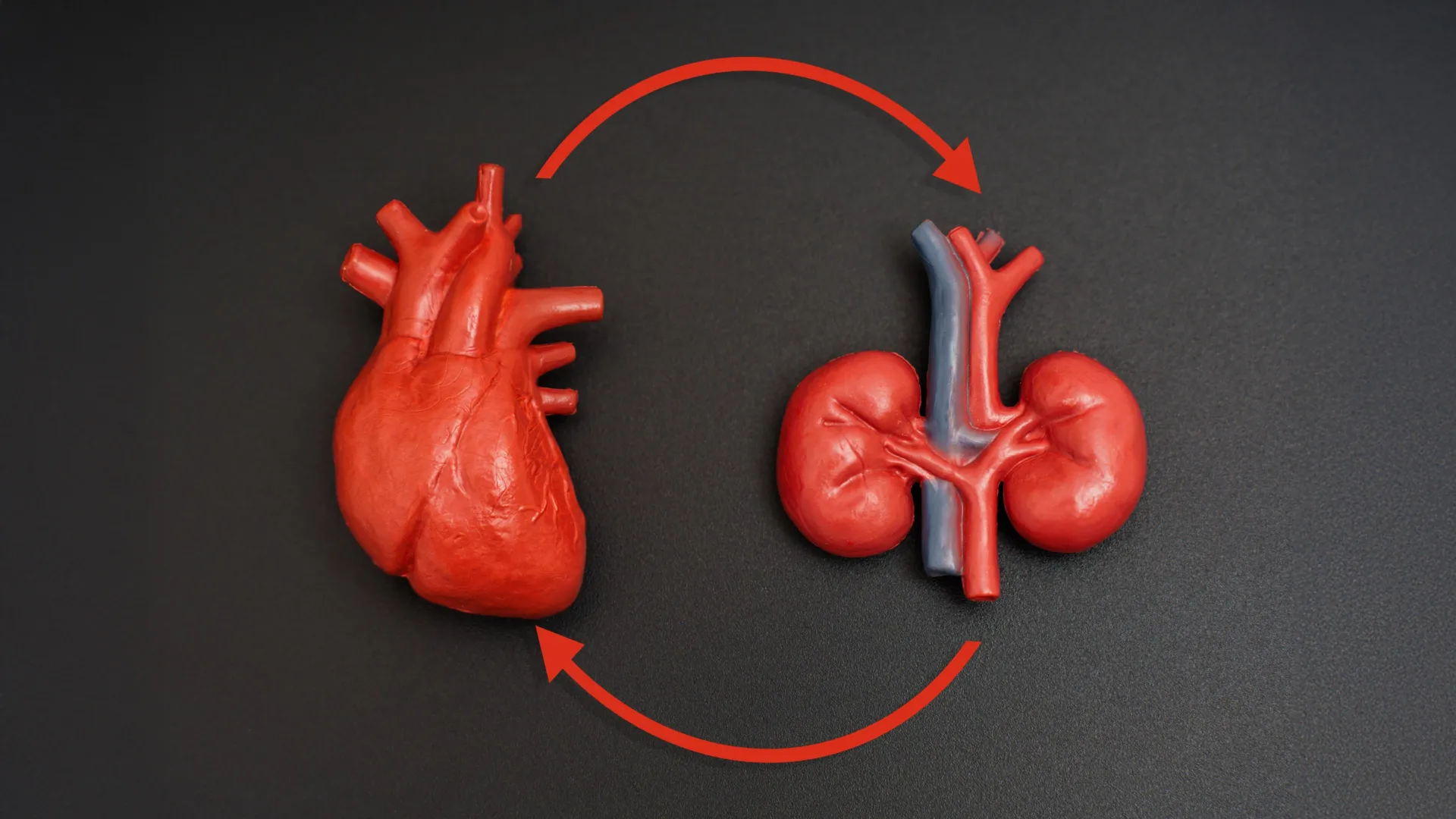
In the landscape of modern medicine, we have long compartmentalized the body’s systems: we visit a cardiologist for our heart, an endocrinologist for our metabolism, and a nephrologist for our kidneys. However, a groundbreaking shift in medical understanding is challenging this siloed approach. A newly defined condition, Cardiovascular-Kidney-Metabolic (CKM) syndrome, is revealing that these systems are deeply interconnected—and that their collective failure is a silent epidemic affecting nearly 90% of the U.S. adult population.
Despite the prevalence of the condition, a recent survey conducted by The Harris Poll on behalf of the American Heart Association (AHA) reveals a staggering gap in public awareness. While the vast majority of Americans are living with at least one risk factor associated with CKM syndrome, most have never heard the term. As medical experts race to bridge this knowledge gap, the message is clear: understanding the "full circle" of health is the most effective way to prevent catastrophic events like heart attacks, strokes, and heart failure.
Main Facts: Understanding the "Full Circle" of Health
CKM syndrome is not a single disease, but rather a clinical framework that links heart disease, kidney disease, diabetes, and obesity. The core principle of CKM health is that the heart, kidneys, and metabolic system—which governs how the body creates, stores, and utilizes energy—function as a singular, interdependent network.
When one system begins to falter, it inevitably places strain on the others. For example, high blood pressure (a cardiovascular issue) can damage the kidneys, while high blood glucose (a metabolic issue) can accelerate arterial damage, further stressing the heart. This cycle, if left unchecked, creates a domino effect that significantly amplifies the risk of chronic disease.
The risk factors are ubiquitous in American society:
- Hypertension (High Blood Pressure): The silent driver of arterial strain.
- Dyslipidemia (Abnormal Cholesterol): Leading to plaque buildup.
- Hyperglycemia (High Blood Sugar): A hallmark of metabolic dysfunction.
- Excess Body Weight: A primary driver of inflammation and metabolic stress.
- Reduced Kidney Function: Impairing the body’s ability to filter waste and regulate blood pressure.
Crucially, the AHA emphasizes that CKM syndrome is not necessarily a permanent diagnosis. For many, the condition is reversible or manageable through a combination of lifestyle modifications—such as improved nutrition and increased physical activity—and proactive medical interventions.
Chronology: The Emergence of a New Clinical Paradigm
The formal recognition of CKM syndrome marks a pivotal moment in preventative medicine. While the interconnectedness of these organs has been known for decades, the clinical formalization of "CKM syndrome" as a diagnostic framework is a relatively recent development in the medical community.
- Pre-2025: Medical professionals increasingly observed that patients with diabetes often presented with comorbid heart and kidney issues, but clinical guidelines remained largely siloed by specialty.
- August 2025: The American Heart Association commissioned The Harris Poll to conduct a nationwide survey of 4,007 U.S. adults to gauge public awareness. The results confirmed a disconnect: while the condition affects nearly 90% of the population, public recognition was near zero.
- Late 2025: The AHA launched the CKM Health Initiative, a comprehensive effort to educate both the public and medical providers on the importance of interdisciplinary care.
- Early 2026 (Forthcoming): The AHA is scheduled to release the first-ever formal clinical guidelines for the management and treatment of CKM syndrome. This document is expected to fundamentally change how primary care physicians approach patients with multiple chronic conditions.
Supporting Data: The Scope of the Crisis
The data behind CKM syndrome is both sobering and illuminating. According to the 2025 Harris Poll data, the prevalence of at least one risk factor among U.S. adults is approximately 90%. This statistic underscores that CKM syndrome is not a "niche" health issue; it is a mainstream public health challenge.
The survey methodology, which utilized a robust sample size of 4,007 adults, was weighted across demographics including age, gender, race, household income, and regional geography. This ensures that the findings are representative of the U.S. population. With a Bayesian credible interval of ± 2.0 percentage points at a 95% confidence level, the data provides a statistically significant snapshot of American health literacy.
The findings revealed that while respondents were largely unfamiliar with the term "CKM syndrome," the vast majority—nearly 75%—expressed an immediate desire to learn more once the connection between their heart, kidneys, and metabolism was explained. This indicates that the barrier to better health outcomes is not a lack of concern, but a lack of accessible, synthesized information.
Official Responses: Bridging the Gap
Dr. Eduardo Sanchez, the American Heart Association’s chief medical officer for prevention, has been at the forefront of this initiative. His perspective centers on the necessity of "coordinated care."
"We want people to know that it’s really common to have heart, kidney and metabolic risk factors at the same time," Dr. Sanchez noted. "The heart, kidney, and metabolic systems are connected and, as such, should be treated in a coordinated way. These results reveal the need to emphasize those connections and help patients understand the importance of collaborative care."
Dr. Sanchez advocates for a shift in the patient-provider relationship. Instead of seeing separate specialists for blood sugar, cholesterol, and kidney filtration, patients should be encouraged to view these metrics as a single "CKM profile." By monitoring these indicators collectively, physicians can identify the "harmful cycle" earlier, intervening before a chronic condition transitions into an acute medical emergency.
The AHA’s institutional response has been the development of the CKM Health Initiative, which serves as an online resource hub. This platform provides educational videos, plain-language resources, and digital tools designed to simplify complex biological concepts. The initiative is bolstered by a diverse range of sponsors, including Novo Nordisk, Boehringer Ingelheim, Novartis, Bayer, and DaVita, reflecting the broad interest across the pharmaceutical and clinical care sectors in addressing this systemic health challenge.
Implications: A New Era for Preventative Medicine
The implications of the CKM framework are far-reaching. By shifting the clinical focus from treating isolated diseases to managing an interconnected system, the healthcare industry hopes to reduce the burden of heart failure, stroke, and kidney failure—three of the leading causes of morbidity and mortality in the United States.
1. Changing the Patient Mindset
For the individual, the concept of CKM health empowers a more holistic approach to personal wellness. Instead of worrying about a single lab result, individuals are encouraged to look at their "full circle" of health. Regular checks of blood pressure, cholesterol, weight, blood sugar, and kidney function are not just administrative tasks; they are essential indicators of how these three critical systems are interacting.
2. Redefining Clinical Care
For healthcare professionals, the upcoming 2026 guidelines will be a watershed moment. The transition toward "interdisciplinary care" means that a primary care physician may soon have standardized protocols to manage a patient’s cardiovascular, metabolic, and renal health simultaneously. This reduces the risk of conflicting treatments and ensures that a medication prescribed for one condition does not inadvertently stress another system.
3. Proactive vs. Reactive Intervention
Perhaps the most significant implication is the focus on early detection. Currently, many patients are only treated for these conditions once they have manifested as chronic disease. The CKM framework encourages screening for "at-risk" patients—those who may not yet have a chronic diagnosis but exhibit early indicators of system-wide strain. By catching these issues early, the medical community can deploy lifestyle and pharmaceutical interventions that prevent the progression to CKM syndrome.
4. Societal Impact
As awareness grows, the burden on the American healthcare system could potentially decrease. By addressing the root causes of systemic metabolic and cardiovascular decline, we can reduce the reliance on costly, high-acuity interventions like dialysis or surgical cardiac procedures.
Conclusion: The Path Forward
The emergence of CKM syndrome as a clinical priority is a wake-up call. It highlights the inherent interconnectedness of human biology and the limitations of a medical system that has historically focused on the parts rather than the whole. As the American Heart Association moves toward the 2026 guidelines, the onus is now on both the medical establishment and the general public to adopt this more integrated view.
For the 90% of adults living with at least one risk factor, the message is one of opportunity rather than alarm. By understanding the link between the heart, the kidneys, and the metabolism, individuals can take agency over their health. Through regular screenings, mindful lifestyle changes, and a collaborative relationship with their healthcare team, the "harmful cycle" of CKM syndrome can be broken, paving the way for a healthier, more resilient future.
For those looking to learn more, the American Heart Association continues to update its resource hub at heart.org/CKMtools, providing the tools necessary to navigate this new landscape of integrated health.