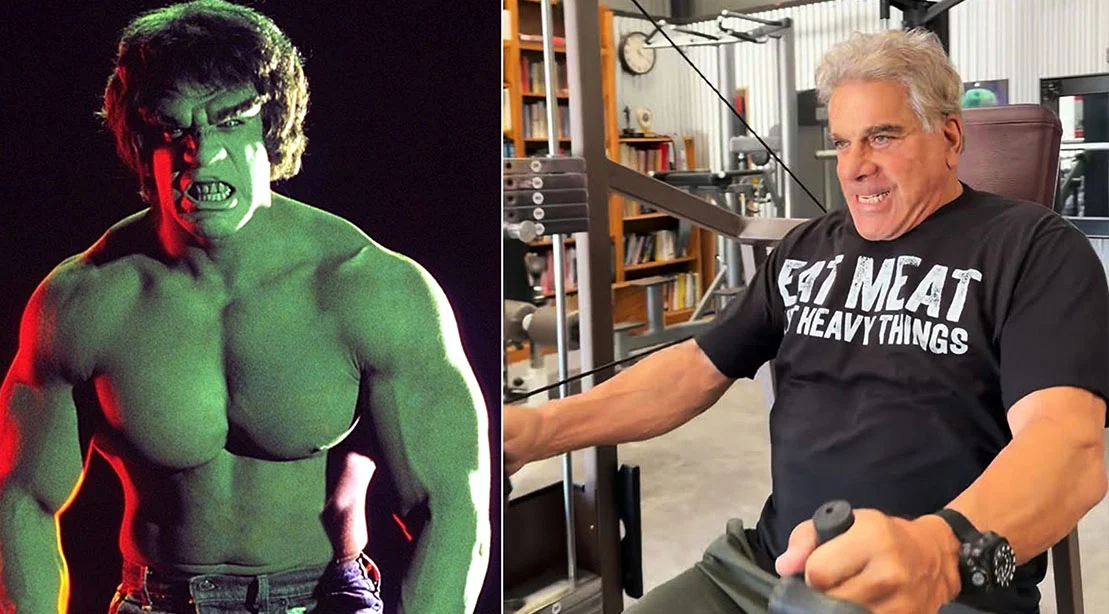
At 74 years of age, most individuals are focused on maintaining mobility and managing the natural decline associated with the aging process. Lou Ferrigno, however, is not most people. The two-time Mr. Universe, legendary bodybuilder, and iconic star of the 1970s hit series The Incredible Hulk, continues to defy conventional wisdom regarding aging and physical performance.
Following a major, life-altering shoulder surgery in December 2025—which involved the reattachment of a staggering 95 percent of a major tendon—the fitness icon has returned to the gym with a vigor that mirrors his prime. His recent recovery journey serves as more than just a personal health update; it is a masterclass in the necessity of lifelong strength training and a testament to the power of a disciplined, pro-active approach to biological longevity.
The Core Facts: A Major Surgical Hurdle
In late 2025, Ferrigno faced a significant medical challenge that would have sidelined most athletes of any age. The diagnosis required an intensive surgical intervention on his shoulder. With nearly the entirety of a primary tendon detached, the surgery was not merely a minor procedure, but a complex reconstruction.
Despite the severity of the injury, Ferrigno’s recovery has been nothing short of extraordinary. Speaking to his followers on social media, the bodybuilding legend emphasized that his ability to regain nearly full range of motion in such a compressed timeframe is not a stroke of luck. Rather, it is the result of decades of structural preparation. Ferrigno argues that the "Incredible" nature of his recovery is directly tied to the foundation of muscle mass and joint strength he built throughout his life, effectively "pre-hab-ing" his body for the eventual wear and tear of aging.
Chronology of a Comeback
The timeline of Ferrigno’s recent journey highlights the grit required to maintain elite-level fitness in one’s eighth decade:
- December 2025: Ferrigno undergoes a high-stakes surgical procedure to repair a severely damaged shoulder, involving a 95 percent tendon reattachment.
- Early 2026 (Post-Op Phase): The immediate focus shifts from heavy lifting to therapeutic range-of-motion exercises. Ferrigno adheres strictly to a rehabilitation protocol, emphasizing the importance of patience and controlled movement.
- Spring 2026: Ferrigno begins integrating light, resistance-based movements back into his routine. He documents his progress, focusing on neural drive and muscle activation rather than sheer volume.
- May 2026: Ferrigno provides a definitive update to his community, showcasing his return to the gym floor. He declares that he has reclaimed almost 100 percent of his functional range of motion, attributing this success to the baseline conditioning he maintained prior to the surgery.
The Science of Strength: Why Training Matters After 60
Ferrigno’s philosophy is rooted in both anecdotal success and emerging exercise science. As we age, the human body undergoes sarcopenia (muscle loss) and a reduction in tendon elasticity.
Tendon Aging and Vascularity
One of the most critical points Ferrigno raises is the decline in blood flow to the tendons after age 60. Tendons are notoriously slow to heal because they are poorly vascularized compared to muscle tissue. When an injury occurs—such as a rotator cuff tear—the lack of blood flow can lead to chronic pain and limited mobility.
Research consistently supports Ferrigno’s stance. Studies indicate that while the risk of tendon injury increases with age due to collagen degradation, individuals who engage in consistent, progressive resistance training maintain higher levels of tendon stiffness and structural integrity. By maintaining a high level of physical fitness, Ferrigno essentially buffered his joints against the catastrophic failure that might occur in a more sedentary individual.
The "Pre-Hab" Effect
The medical community often refers to "pre-habilitation"—the process of increasing physical strength and functional capacity prior to an anticipated surgery—to improve surgical outcomes. Ferrigno is a walking case study for this concept. By entering his surgery with a high baseline of muscle mass, his body was better equipped to handle the metabolic stress of the operation and the atrophy that follows immobility.
Official Perspectives and Expert Implications
While Ferrigno speaks as an athlete, his message resonates with modern medical practitioners who advocate for strength training as a cornerstone of geriatric health.
The Shift in Surgical Demands
The average age for joint replacements (knees, hips, and shoulders) is currently hovering around the mid-60s. As the population ages, the demand for these procedures is skyrocketing. Experts argue that the "Ferrigno Method"—which prioritizes maximum health and mental fortitude—is the most effective way to ensure that these surgeries are successful.
A patient who enters the operating room with significant muscle atrophy faces a much longer, more difficult road to recovery. The muscles surrounding the joint act as a natural support system. When those muscles are strong, they take the load off the surgical site, allowing for faster healing and reduced reliance on pain management.
The Philosophy of "Maximum Effort"
Ferrigno’s approach is defined by three pillars: Maximum Health, Maximum Mental Attitude, and Maximum Physical Effort.
Mental Resilience
The psychological aspect of recovery is often overlooked. For a man who built his identity on the "Incredible Hulk" persona, the vulnerability of surgery could have been a significant blow to his morale. Instead, Ferrigno used the challenge as an opportunity to educate his audience. He advocates for "embracing the aging process" rather than fighting it or succumbing to it. This mental shift is what separates those who decline rapidly in their 70s from those who, like Ferrigno, continue to thrive.
Sustaining the Legacy
Even at 74, Ferrigno remains a beacon for the fitness community. His influence is not just about the weights he moves; it is about the consistency he displays. By maintaining his physique, he challenges the ageist stereotypes that suggest the elderly should "take it easy." For Ferrigno, taking it easy is a recipe for stagnation. He encourages his followers to find their own version of "maximum effort," regardless of their starting point.
Implications for the Future of Aging
The story of Lou Ferrigno is a clarion call for a new standard of healthy aging. As we look toward the future, the integration of strength training into the standard of care for seniors will likely become a primary focus of preventative medicine.
1. Longevity Through Muscle Mass
Muscle is the "organ of longevity." It plays a critical role in metabolic health, glucose regulation, and bone density. Ferrigno’s recovery proves that the investment one makes in their 30s, 40s, and 50s pays dividends in the 70s.
2. Functional Independence
The primary goal of geriatric medicine is to maintain functional independence. Ferrigno’s ability to perform everyday tasks—and return to his training regimen—after a major surgery highlights the importance of functional strength. It is not about looking like a superhero; it is about having the structural integrity to remain autonomous.
3. Community Inspiration
By sharing his journey on platforms like Instagram, Ferrigno bridges the gap between the "Golden Era" of bodybuilding and the modern digital age. He has successfully translated his fame from the silver screen to the smartphone, providing a relatable, yet aspirational, narrative for a new generation of fitness enthusiasts who are worried about their own future.
Conclusion: A Living Legend
Lou Ferrigno’s post-surgical comeback is more than a news item; it is a blueprint for the modern aging experience. By prioritizing structural strength, maintaining a proactive approach to medical care, and keeping a "maximum" mindset, he has demonstrated that the human body—even at 74—is capable of remarkable repair and adaptation.
He does not claim to be an immortal, nor does he suggest that age doesn’t change the body. He simply argues that we have more control over the aging process than we realize. As the "Incredible" actor continues his journey, he reminds us all that while time is inevitable, the speed and quality of our physical decline remain, to a large extent, within our own hands. Whether you are lifting in your 20s or navigating the challenges of your 70s, Ferrigno’s message remains clear: keep moving, keep training, and never stop pushing the boundaries of what your body can achieve.