









For decades, the global industrial engine has operated on a precarious assumption: that the raw materials underpinning our existence—food, energy, transportation, and technology—would remain in constant, frictionless supply. However, a silent, systemic failure is currently unfolding, one that corporate media outlets have largely relegated to the shadows. Since March of this year, the consistent flow of elemental sulfur from the Persian Gulf—a byproduct of critical oil and gas operations—has been effectively severed.
This is not merely a regional trade disruption; it is an existential threat to the "molecular supply chain." As the Strait of Hormuz remains a flashpoint of geopolitical instability, the industrialized world is beginning to experience the downstream consequences of an input that most of the public cannot even identify. Sulfur is the hidden glue of the modern world. Without it, the gears of agriculture, mining, and high-tech manufacturing are grinding to a halt.
The Architecture of the Crisis: Sulfur as Industrial Infrastructure
To understand the severity of this crisis, one must first recognize that sulfur is not a niche commodity. It is the lifeblood of the global chemical industry. Most of the world’s sulfur is recovered from the desulfurization of "sour" crude oil and natural gas. When this supply is interrupted, the impact is not linear; it is exponential.
The primary destination for this recovered sulfur is the production of sulfuric acid, arguably the most important industrial chemical on Earth. Sulfuric acid is the indispensable agent required to dissolve phosphate rock, transforming it into plant-available fertilizer. Without a steady supply of sulfuric acid, the global agricultural sector cannot produce the phosphorus-based nutrients required to sustain modern crop yields.
Beyond the farm, sulfur’s footprint is ubiquitous. It is the critical ingredient in vulcanization—the process that grants latex the durability required for tires. It is the solvent used in hydrometallurgical processes to leach copper, zinc, and nickel from raw ore. It is even an essential component in the chemistry of modern batteries, including those powering the electric vehicle (EV) revolution and large-scale grid storage. When we speak of a "sulfur crisis," we are speaking of a potential collapse in food security, a bottleneck in base metal production, and a deceleration of the energy transition.
Chronology of a Silent Collapse
The current crisis did not emerge overnight, though its effects have been accelerated by recent geopolitical volatility.
- Pre-March 2026: The global market relied on a "just-in-time" delivery model, with the Persian Gulf acting as a primary artery for elemental sulfur recovery and export.
- March 2026: Geopolitical friction in the Strait of Hormuz leads to a total cessation of standard shipping lanes. The destruction of refining infrastructure in the region effectively halts the output of elemental sulfur.
- April – June 2026: Global spot prices for sulfur begin a parabolic ascent. While the market initially treats this as a temporary spike, major industrial consumers realize that supply is not just expensive—it is absent.
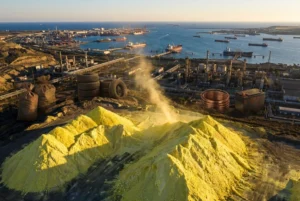
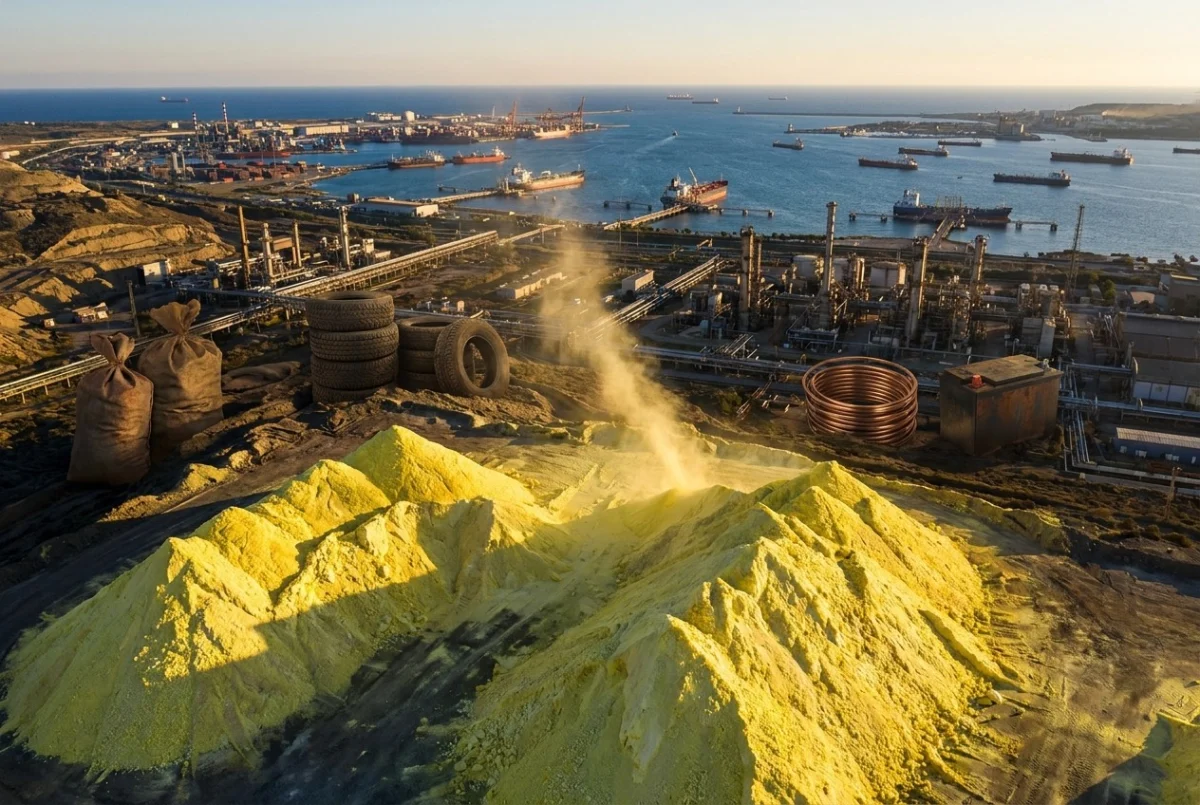
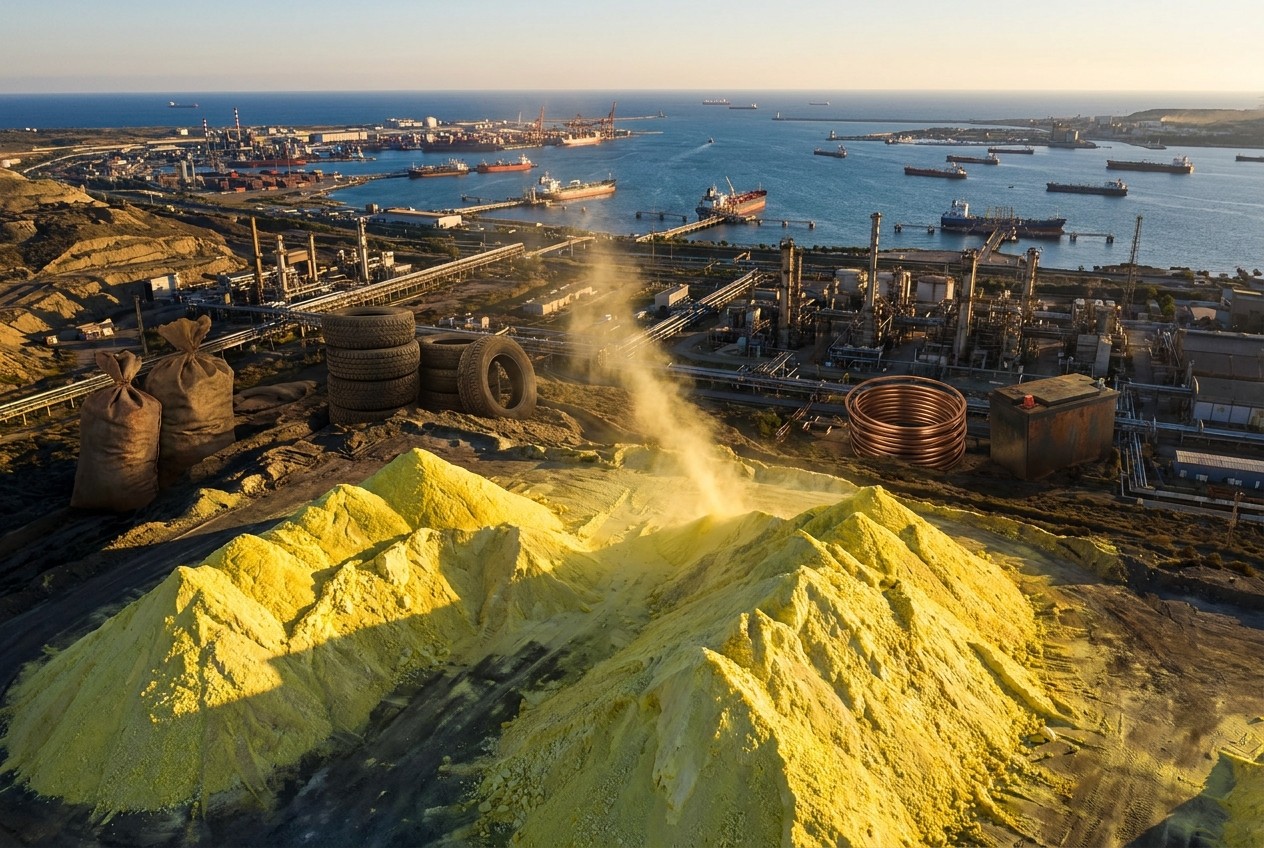
- July 2026 – Present: The world enters the "Stockpile Drawdown Phase." The massive, decades-old reserves of sulfur stored in Alberta, Canada, become the final buffer shielding the global economy from total paralysis.
As of today, we are burning through these Canadian reserves at an unsustainable rate. The question facing industry analysts is not if these piles will run out, but when.
Supporting Data: The Arithmetic of Scarcity
The fragility of our current position is best illustrated by the price signals emerging from the commodity markets. Sulfur, historically considered a low-value byproduct often trading near $50 per ton, has seen its value climb by orders of magnitude.
The interdependence of these sectors creates a "cascading failure" scenario:
- Agriculture: With the price of urea and phosphate-based fertilizers doubling in many regions, farmers are facing a cost-of-production crisis that will inevitably manifest as food price inflation in the coming 6–9 months.
- Mining: A reduction in sulfuric acid supply directly limits the extraction of copper and zinc. Because silver is often a byproduct of these base metal mines, the supply of silver is also being quietly strangled, affecting everything from electronics manufacturing to investment demand.
- Technology & Energy: The nickel-dependent chemistries of modern batteries are sensitive to supply chain shocks. A lack of sulfuric acid limits the refining capacity for these critical battery metals, creating a bottleneck for the EV market that no amount of government subsidies can fix.
Official Responses and Institutional Blindness
While the market is sending clear signals, the response from global governing bodies has been largely reactive and delayed. In several jurisdictions, "disaster declarations" have been issued as fuel pumps run dry and fertilizer supplies dwindle.
Some nations have begun to implement emergency duty-free imports for phosphate fertilizers, a desperate attempt to keep agricultural cycles moving. However, these are surface-level interventions that fail to address the core problem: the structural absence of the precursor chemicals required to build these fertilizers in the first place.
The silence from the mainstream press regarding the systemic nature of this shortage is perhaps the most concerning element of the crisis. By framing individual symptoms—such as rising food prices or localized power grid issues—as isolated events, institutions avoid discussing the reality that our "just-in-time" supply chain is fundamentally broken.
Implications: The Necessity of Decentralization
If the sulfur crisis teaches us anything, it is that efficiency has come at the cost of resilience. Centralized, globalized supply chains are highly optimized for profit but highly brittle in the face of conflict.
The Path Toward Resilience
- Diversification of Supply: Industry must move away from a reliance on single-corridor supply chains. This includes investing in local recovery technologies and circular chemical economies where sulfur is recycled rather than discarded.
- Community-Level Preparedness: On an individual level, the era of relying solely on institutional food systems is waning. Strengthening local food networks, diversifying storage of essential inputs, and supporting regional manufacturing are no longer fringe activities; they are rational strategies for survival in a volatile era.
- Transparency: The public deserves an honest assessment of the remaining stockpiles in Alberta and other storage facilities. Without transparent data, the ability for businesses and communities to plan for a post-buffer reality is nonexistent.
Conclusion: A World Without Sulfur
The crisis we are witnessing is not a temporary market fluctuation. It is the beginning of a re-evaluation of how industrial civilization is constructed. We have built a world of eight billion people on a foundation of chemical processes that rely on specific, narrow corridors of global trade. When those corridors are closed, the "molecular supply chain" breaks, and the consequences ripple outward into every facet of human life.
We are currently operating on the borrowed time of Canadian stockpiles. As these reserves continue to deplete, the reality of our interdependence will become impossible to ignore. For the reader, the mandate is clear: observe the reality of the supply chain, prioritize the development of local resilience, and prepare for a future where the seamless availability of industrial inputs can no longer be guaranteed.
The "invisible chokepoint" is now visible. Whether the system can adjust before the yellow piles of Alberta are exhausted remains the most significant question of our time. We must move beyond the headlines and recognize that our food, our energy, and our technology are only as secure as the raw materials that build them. The era of blind confidence in global supply chains has ended; the era of localized, strategic preparedness has begun.