










In an era defined by a heightened consciousness regarding nutrition, the modern consumer is more vigilant than ever. From meticulous calorie tracking to the daily integration of fresh produce and whole grains, the public has embraced the mantra that "you are what you eat." However, beneath the surface of seemingly wholesome diets lies a complex, invisible challenge: the presence of chemical contaminants that are not inherent to the food itself, but are introduced through environmental factors or transformative cooking processes.
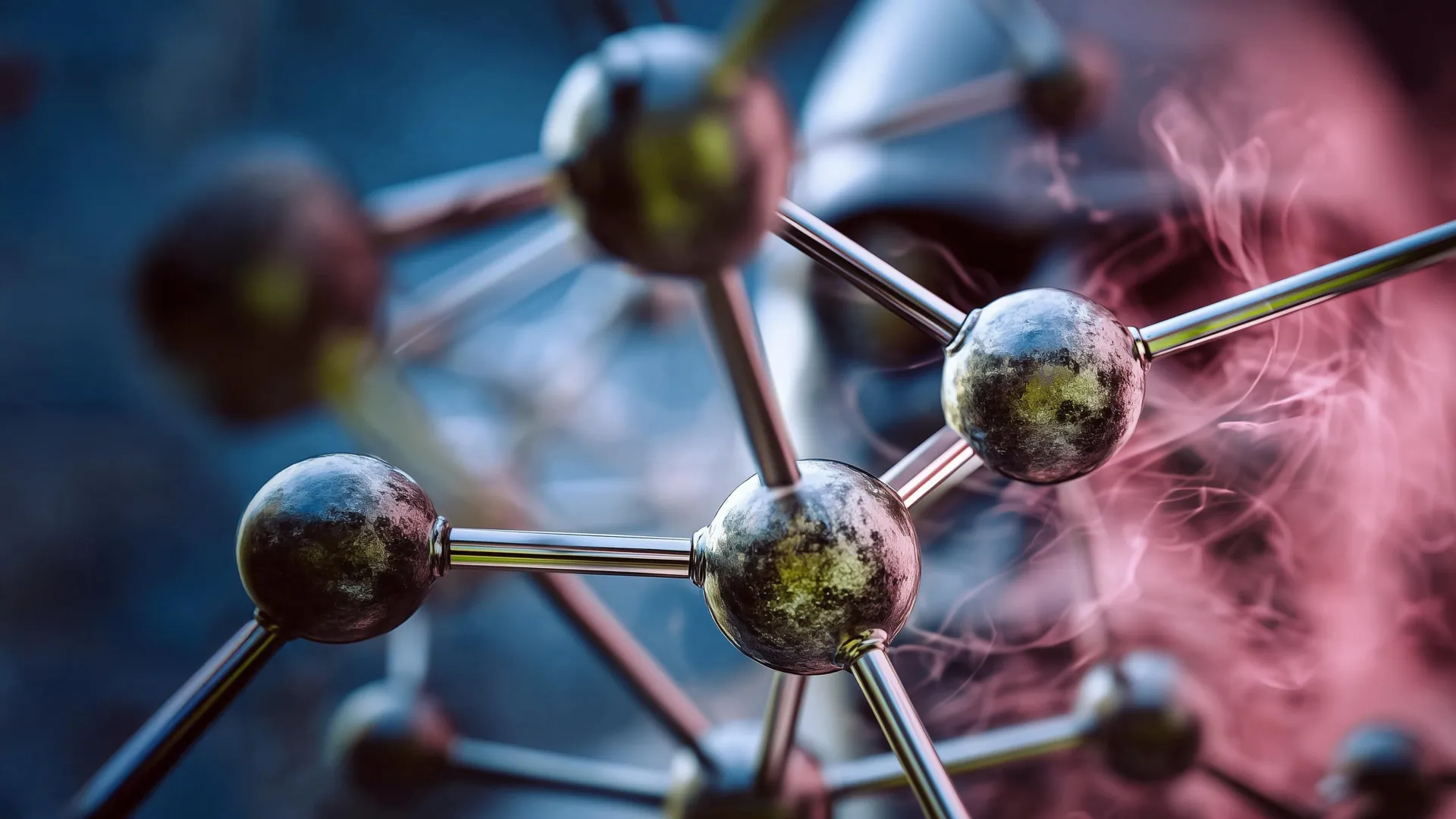
Among the most significant of these concerns are polycyclic aromatic hydrocarbons (PAHs)—a class of hydrophobic organic compounds characterized by their multiple fused aromatic rings. While these compounds are a natural byproduct of combustion, their presence in our food supply has necessitated a shift in how regulatory bodies and scientists approach food safety testing. Recent breakthroughs in analytical chemistry, specifically the application of the QuEChERS method, are now providing the tools required to identify these threats with unprecedented speed, accuracy, and environmental responsibility.
The Nature of the Concern: Understanding PAHs
PAHs are ubiquitous in the environment, formed primarily through the incomplete combustion of organic matter. In the context of food, they often emerge during high-heat culinary practices, including grilling, smoking, roasting, frying, and heating. When fats and juices from meat drip onto open flames or searing-hot surfaces, the resulting smoke deposits these potentially carcinogenic compounds back onto the food’s surface.
The National Cancer Institute (NCI) has long identified PAHs as a point of interest for public health. While animal studies have consistently demonstrated that high-temperature cooking compounds can induce carcinogenic effects, human population studies have historically been more ambiguous, often failing to establish a definitive, singular link between the consumption of grilled meats and cancer rates. This scientific uncertainty underscores the necessity for rigorous, widespread monitoring. If we cannot yet fully quantify the risk to human health, the imperative must be to minimize exposure by accurately identifying the sources of contamination.
A Chronology of Analytical Evolution
For decades, food safety testing relied on conventional extraction methods, such as solid-phase extraction (SPE), liquid-liquid extraction (LLE), and accelerated solvent extraction. While these methods provided foundational data, they were far from ideal for a modern, high-throughput food industry. These legacy processes were notoriously labor-intensive, requiring lengthy preparation times and substantial quantities of chemical solvents, which posed risks to both the laboratory workers and the environment.
The transition toward a more sustainable and efficient paradigm began with the adoption of the QuEChERS approach—an acronym standing for "Quick, Easy, Cheap, Effective, Rugged, and Safe." Initially developed for pesticide residue analysis, the methodology has been rapidly adapted for a wider array of chemical contaminants, including PAHs.
The 2025 SeoulTech Milestone
The evolution reached a critical juncture in 2025, when a research team from the Department of Food Science and Biotechnology at Seoul National University of Science and Technology (SeoulTech), led by Professor Joon-Goo Lee, published a landmark study in the journal Food Science and Biotechnology.
The team sought to refine the QuEChERS method specifically for the measurement of eight high-priority PAHs: Benzo[a]anthracene, Chrysene, Benzo[b]fluoranthene, Benzo[k]fluoranthene, Benzo[a]pyrene, Indeno[1,2,3-cd]pyrene, Dibenz[a,h]anthracene, and Benzo[g,h,i]perylene. By utilizing acetonitrile for extraction and experimenting with various sorbent-based purification strategies, the researchers achieved a breakthrough in method validation. Their findings proved that routine safety checks could be both faster and more precise than ever before.
Supporting Data: The Accuracy of the New Paradigm
The validation of the SeoulTech method represents a significant leap forward in food analytics. The study’s data highlights a highly linear and reliable system, with calibration curves for all eight targeted PAHs yielding R2 values exceeding 0.99.
Using advanced gas chromatography and mass spectrometry, the researchers established rigorous limits of detection (LOD) and quantification (LOQ). The LODs ranged from 0.006 to 0.035 µg/kg, while LOQs spanned from 0.019 to 0.133 µg/kg. Furthermore, recovery rates—a vital metric in assessing the accuracy of extraction—remained remarkably consistent, ranging between 86.3% and 109.6% across various concentration levels. Precision values, which indicate the repeatability of the test, stayed within the tight range of 0.4% to 6.9%.
Beyond the methodology itself, the study offered a sobering look at common food items. Analysis revealed that soybean oil, followed by duck meat and canola oil, contained the highest concentrations of PAHs among the tested samples. These findings provide actionable data for the food industry to improve processing techniques and minimize contaminant formation during production.
Expanding the Scope: Broadening Research Horizons
The utility of QuEChERS has extended well beyond the initial findings of the SeoulTech team. A separate 2025 study published in the journal Foods demonstrated the versatility of the approach by incorporating a "freeze-out" step to further purify complex matrices. When applied to 302 retail food samples, the researchers discovered that Kezuribushi—a traditional Japanese smoked and dried fish product—contained the highest levels of priority PAHs. Furthermore, the study flagged grilled chicken feet as a potential health concern, utilizing the European Food Safety Authority’s (EFSA) "margin of exposure" framework to assess risk.
Similarly, a 2025 study focused on the cereal market highlighted the need for customized clean-up procedures. By employing Z-Sep clean-up and tandem mass spectrometry to analyze 96 cereal samples and 18 cereal-based products in Romania, researchers discovered that while chrysene was present in 17% of raw cereals, it was entirely absent in processed products. This contrast underscores the nuance of food safety: contamination is not uniform, and risk profiles change drastically depending on the ingredient’s journey from the field to the factory and, finally, to the plate.
Official Perspectives and Professional Insight
Professor Joon-Goo Lee, a luminary in the field of food safety and regulation, views these technological advancements as a necessary evolution of public health policy. Having served as a scientific officer at Korea’s Ministry of Food and Drug Safety and as a member of the National Food Sanitation Committee, Prof. Lee understands the regulatory hurdles inherent in food safety.
"This method not only simplifies the analytical process but also demonstrates high efficiency in detection compared to conventional methods," Prof. Lee noted. "It can be applied to a wide range of food matrices, which is essential for comprehensive safety management."
Prof. Lee emphasizes that the benefits of QuEChERS extend beyond the laboratory bench. By reducing the reliance on toxic solvents and minimizing the time required for sample preparation, the food industry can adopt more frequent and rigorous testing protocols. This, in turn, creates a safer supply chain. "Our research can improve public health by providing safe food," he states. "It also reduces the use and emission of hazardous chemicals in laboratory testing, which is a win for the environment and for laboratory personnel."
Implications: The Future of a Cleaner Food Supply
The broader implications of these developments are twofold: public health and industrial efficiency.
- Enhanced Consumer Protection: As analytical tools become more precise, regulators can set more accurate maximum residue limits (MRLs) for PAHs. With faster testing, food companies can intercept contaminated batches before they reach supermarket shelves, effectively preventing mass-market exposure to high levels of toxins.
- Environmental and Workplace Safety: By shifting toward "greener" chemistry in the lab, institutions are lowering their carbon footprint and reducing the exposure of technicians to hazardous reagents. The "Cheap" and "Safe" aspects of QuEChERS are not just economic incentives—they are social responsibilities.
- Data-Driven Policy: The work of researchers like Prof. Lee provides the foundational data needed for international bodies, such as the FAO/WHO JECFA, to formulate science-based policies. When we can measure contaminants accurately across a wide spectrum—from oils and meats to grains and smoked products—we can move from reactive food safety to proactive risk management.
As we look toward the future, the integration of these refined analytical techniques will likely become the global gold standard. The journey from the lab to the dinner table is long and complex, but with advancements in detecting the "invisible" threats, the path toward a cleaner, safer, and more transparent food system is clearer than it has ever been. By leveraging innovation to tackle the silent, chemical byproducts of our culinary heritage, the scientific community is ensuring that the healthy choices consumers make today are truly the healthy choices they believe them to be.