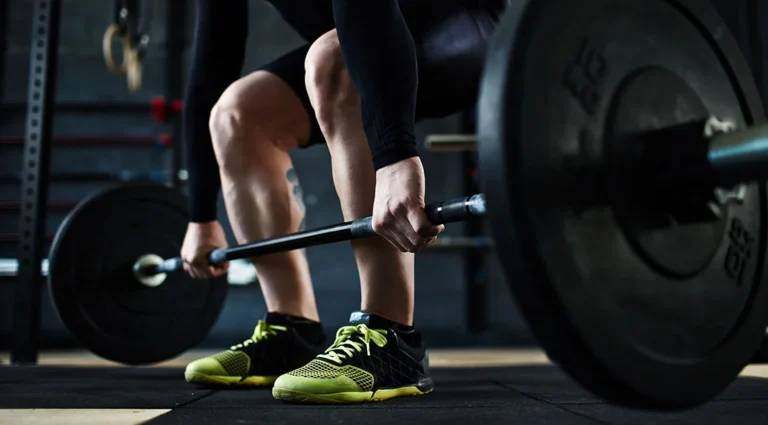












For most lifters, the forearms are an afterthought—a secondary muscle group relegated to the final five minutes of an arm day, usually consisting of a few half-hearted wrist curls performed while checking the gym clock. This systemic neglect is a profound oversight. Your forearms are not merely aesthetic ornaments; they are the primary conduits of force between your upper body and the iron. When they fail, your entire kinetic chain collapses.
Whether you are pulling a heavy deadlift, stabilizing a barbell overhead, or attempting a grueling set of chin-ups, your forearms are the literal link between success and failure. To achieve a powerful physique and injury-proof your joints, you must stop treating forearm training as an accessory and start treating it as a foundational pillar of your programming.
The Anatomy of Power: Understanding the Kinetic Chain
To train the forearms effectively, one must move beyond the vague notion of "grip strength." The forearm is a complex, high-density machine consisting of over 20 distinct muscles. From a training perspective, we categorize these into three primary functional groups:
1. The Flexors (The Palm Side)
Located on the anterior aspect of the forearm, these muscles are responsible for curling the fingers and flexing the wrist. They are the engines of your "crush" grip. When you clench a dumbbell, these are the muscles firing to ensure the weight stays in your hand.
2. The Extensors (The Back of the Hand)
Often ignored, the extensors reside on the posterior side. They are vital for wrist stability. If you have ever felt a lack of control during a heavy bench press or overhead press, it is likely due to weak extensors failing to keep the wrist in a neutral, load-bearing position.
3. The Brachioradialis (The "Meat" of the Forearm)
Running along the thumb side of the forearm, the brachioradialis is the largest muscle in the region. It is most active during elbow flexion when the palm is in a neutral (hammer) or downward (pronated) position. Building this muscle is the secret to achieving that thick, vascular "V" shape in the lower arm.
Beyond these groups, your forearms are responsible for pronation (turning the palm down), supination (turning the palm up), and radial/ulnar deviation (tilting the wrist side to side). Neglecting any of these functions creates a weak link that will eventually manifest as diminished performance or, worse, chronic injury.
The Chronology of Development: A Lifecycle of Grip
The evolution of forearm strength in an athlete typically follows a predictable timeline, often dictated by the transition from novice to advanced lifter.
- The Novice Phase (Indirect Development): Beginners often see rapid forearm growth simply through compound lifts. The sheer novelty of gripping a heavy barbell for rows and deadlifts forces the forearms to adapt. During this stage, the body is learning to recruit the forearm musculature to stabilize the entire arm.
- The Intermediate Plateau: As a lifter reaches their intermediate stage, compound lifts alone are no longer sufficient. Because the forearm muscles are composed largely of slow-twitch, endurance-oriented fibers, they become highly efficient at low-level work. They stop growing because they are no longer being "challenged"—they are merely "enduring."
- The Advanced Specialization: At this level, elite lifters recognize that the forearms require the same periodization as the chest or back. They incorporate specific grip-strength variations, rotational work, and high-intensity isometric holds to break through the plateau.
Supporting Data: Why "More" Isn’t Always "Better"
Research into musculoskeletal health indicates that the forearms are prone to repetitive strain injuries (RSI) when there is an imbalance between the flexors and extensors.
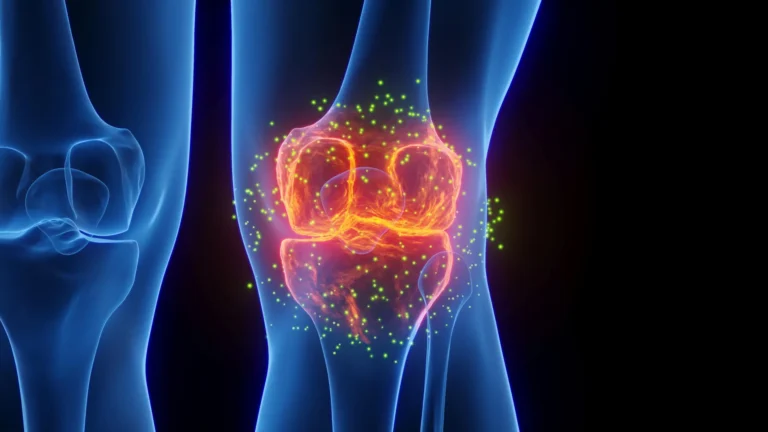
The Imbalance Problem: Most lifters possess disproportionately strong flexors compared to their extensors. This creates an inward-pulling tension on the elbow joint. Clinical data suggests that "Tennis Elbow" (lateral epicondylitis) and "Golfer’s Elbow" (medial epicondylitis) are frequently linked to this specific muscular imbalance.
The Efficiency Metric: Studies on muscular endurance demonstrate that while forearm muscles are fatigue-resistant, they require a higher volume of time-under-tension to induce hypertrophy. This is why a 15-second set of heavy carries is more effective for growth than 50 mindless wrist curls. The forearm thrives on intensity-based isometric tension combined with controlled, high-rep hypertrophy work.
Official Perspectives: The Experts Weigh In
In the professional strength and conditioning community, there is a unified consensus: Grip is the governor of strength.
"If you cannot hold it, you cannot grow it," says Dr. Marcus Thorne, a specialist in sports biomechanics. "We see athletes with massive back development who are limited in their deadlift performance solely because their grip fails at 75% of their true potential. By integrating direct forearm work—specifically pronation and supination—we don’t just increase their lifting numbers; we significantly lower their incidence of distal radius fractures and ligamentous wrist strains."
Top-tier powerlifting coaches often argue that "grip is a skill." They emphasize that athletes should view the hand as the final point of the kinetic chain. If the hand is "leaky," energy is lost. By bracing the wrist and maximizing forearm contraction, an athlete can transfer up to 10-15% more force into the bar.
Implications for Your Training: Building the Blueprint
The implications for the everyday lifter are clear: you must pivot from "accidental" training to "intentional" training.
1. The Hierarchy of Needs
Prioritize your forearm training based on your specific goals. If you are a powerlifter, prioritize support grip (carries). If you are a bodybuilder, prioritize hypertrophy through wrist curls and brachioradialis work.
2. Managing the Volume
Do not train forearms to failure every single day. The forearms recover quickly, but the connective tissues—the tendons and ligaments—do not. Aim for 2–4 targeted sessions per week, integrated into your leg or chest days, rather than adding them to a high-volume back day where your forearms are already exhausted.
3. The "No-Straps" Policy
Use lifting straps sparingly. They are a tool, not a crutch. If you use them for every set of rows and shrugs, your forearms will atrophy. Use straps only on your heaviest top sets to protect the target muscle, but perform your warm-up and secondary sets without them to keep your grip engaged.
4. The Injury-Prevention Protocol
If you suffer from recurring wrist or elbow pain, shift your focus to the extensors. Reverse curls and radial/ulnar deviation exercises are often the "missing medicine" for lifters who have spent years only focusing on heavy pulling.
The Final Verdict: Building a Grip for Life
Building elite forearms is a marathon, not a sprint. It requires an understanding that your grip is not just a muscle—it is a system. By addressing the flexors, the extensors, and the rotational muscles, you transform your arms from weak links into iron cables.
When you commit to this level of training, the benefits extend far beyond the gym. You gain longevity in your joints, a higher ceiling for your compound lifts, and the unmistakable, rugged aesthetic of a lifter who understands that true strength starts at the fingertips.
Stop waiting for your forearms to catch up to the rest of your body. Give them the focused, high-intensity work they deserve, and you will find that as your grip tightens, your performance on every other lift follows suit. Whether it is a heavy trap-bar carry or a simple plate pinch, train with purpose, respect the anatomy, and watch your foundation become unbreakable.