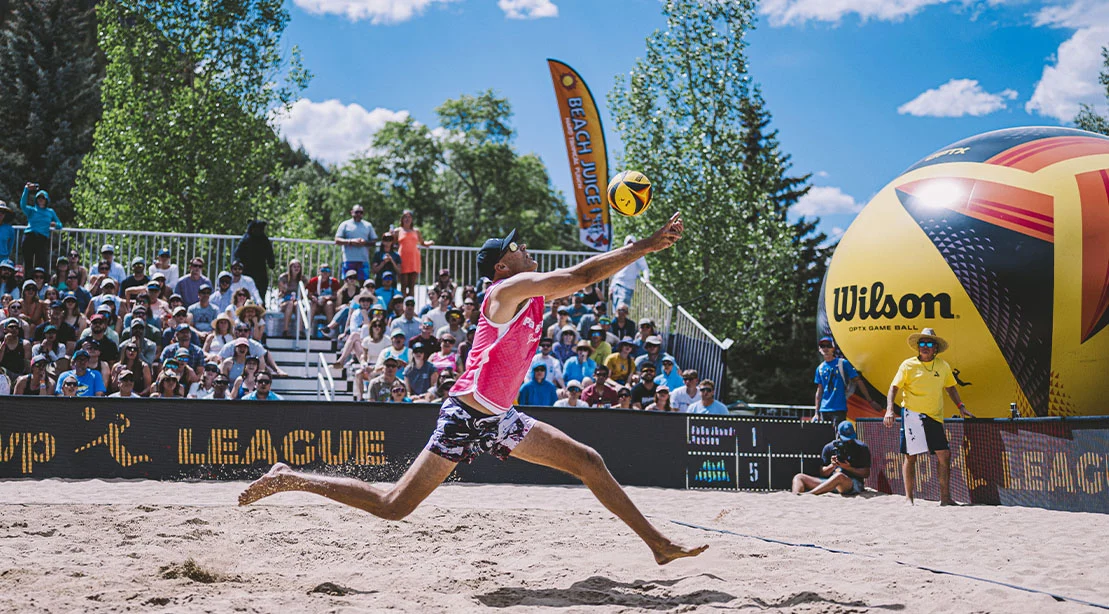
After nearly 25 years of standing atop the world of professional beach volleyball, Olympic gold medalist Phil Dalhausser has arrived at a conclusion that defies the conventional wisdom of modern sports science: longevity is not found in the relentless accumulation of work, but in the radical curation of it.
At 6’9", the towering icon remains a rare anomaly in a sport that typically chews up and spits out athletes before their fourth decade. While generations of competitors have risen and receded, Dalhausser continues to compete at an elite level well into his 40s. His career trajectory serves as a masterclass in shifting the focus from building the body to preserving it, proving that in the twilight of an athletic career, wisdom, recovery, and a recalibrated mindset are far more potent than raw, unrefined physical output.
The Chronology of a Career: From Rookie to Elder Statesman
Phil Dalhausser’s journey is not merely a timeline of matches won; it is a two-decade-long case study in adaptation. Entering the professional circuit in the early 2000s, he operated under the traditional paradigm: more reps, heavier weights, and maximum intensity. However, as the seasons accumulated, the toll on his 6’9" frame became impossible to ignore.
In his early years, Dalhausser was the quintessential "workhorse," chasing personal records in the weight room and pushing through the pain of constant travel and high-impact training. Yet, as he transitioned through the 2010s—a period marked by his historic gold medal run—he began to notice that the diminishing returns of high-volume training were beginning to outweigh the benefits.
The turning point was not a single catastrophic injury, but a series of "educational" hurdles: a nagging right elbow issue, a persistent calf strain that haunted an entire season, and recurring lower back flare-ups. Each ailment forced a pivot. Instead of viewing these setbacks as failures of his training regimen, he began to treat them as data points. By tracing his calf strain back to flawed serving mechanics and his back pain to specific mobility deficits, he moved from a reactionary state of training to one of constant, proactive recalibration.
The Philosophy: Training for Explosion, Not Exhaustion
For the average athlete, the gym is a place of attrition. For Dalhausser, it has become a laboratory of efficiency. He has abandoned the pursuit of personal records in favor of maintaining the explosive "fast-twitch" capabilities that allow him to dominate at the net.
The "Less is More" Methodology
Dalhausser’s training schedule would shock a college athlete. He practices on the sand roughly once a week, focusing his remaining energy on maintaining his base fitness through a specialized, low-volume gym routine. "I’m definitely training way different than everyone else," Dalhausser explains. "I’ve put in the time and the reps. I stay in shape in the gym, but the goal is no longer to train harder; it’s to train smarter."
His training environment is intentionally humble: a garage gym at his Orlando home. In the sweltering Florida humidity, he eschews climate-controlled, state-of-the-art facilities for a space that demands mental grit. He argues that this environment is a perfect metaphor for his career: no frills, no distractions, just the work required to stay functional.
Mechanical Intent
When he does lift, his focus is on Olympic-style movements—specifically clean pulls. These exercises prioritize triple extension (ankles, knees, and hips), which is the mechanical foundation of a high vertical jump. By keeping the load moderate but the intent high, he preserves his explosive power without accumulating the systemic fatigue that accompanies heavy-load hypertrophy training. Every movement is filtered through a single, brutal question: Will this help me perform this weekend? If the answer is no, it is discarded.
Supporting Data: The Recovery Revolution
If training is the foundation, recovery is the structural integrity of Dalhausser’s longevity. His approach here is perhaps his most controversial departure from modern trends.
The Rejection of the "Quantified Self"
In an era where elite athletes are tethered to wearable technology—tracking HRV, sleep cycles, and "readiness scores"—Dalhausser remains a staunch skeptic. He believes that relying on biometric data can actually trigger a psychological feedback loop that inhibits performance.
"I don’t need some device to tell me if I slept well," he says. "I know when I wake up if I’m tired or not." His concern is that if an athlete feels refreshed, but an app tells them they are "under-recovered," that information creates an artificial mental barrier. By prioritizing internal cues over external metrics, he maintains a psychological autonomy that many of his peers have surrendered to algorithms.
The Role of Yoga and Meditation
His physical recovery is centered around a 45-minute vinyasa yoga flow performed immediately after tournament weekends. This ritual, combined with traditional manual therapy, serves as his primary defense against injury. However, his most significant tool is mental: meditation.
Practiced consistently for over a decade, his meditative training allows him to separate his identity from his performance. When he is on the court, he is the "observer." This detachment allows him to manage the stress of high-stakes matches and extreme physical conditions—like the punishing heat of a Las Vegas tournament—without allowing his emotional state to degrade his physical output.
Official Perspectives: The Psychology of "Suffering"
Dalhausser’s approach to adversity is best illustrated by his concept of "setting the suffering bar." Before stepping into a match under grueling conditions, he mentally prepares for the worst possible scenario. By anticipating extreme discomfort, he renders the reality of the match—no matter how difficult—a relative relief.
He applies this same logic to his team dynamics. He has evolved from a player who once let the moods of a difficult partner affect his focus to one who views those challenges as "spiritual teachers." He has realized that the mental friction caused by teammates or tough losses is not a byproduct of the game, but an essential part of the developmental process.
Coaching as the Final Frontier
This wisdom has transitioned into his post-professional aspirations. Along with his wife, he operates a junior beach volleyball club in Orlando. Here, he is not just teaching technique; he is teaching the "mental game." When he sees a young player struggling with the frustration of not mastering a skill instantly, he steps in to reframe the struggle. He encourages them to treat the frustration as an object of curiosity rather than a wall.
"Every mistake, every error, is getting you one step closer," he tells his students. It is a philosophy he has lived for 24 years, proving that the gap between a good player and a legendary one is often found in the ability to regulate one’s internal response to external failure.
Implications for the Future of Athletics
The implications of Phil Dalhausser’s career are profound for the next generation of professional athletes. As the sports world moves toward increasingly complex data sets and recovery modalities, Dalhausser provides a compelling counter-narrative: the most advanced recovery tool is a calm, focused, and intuitive mind.
Key Takeaways for Longevity:
- Iterative Adjustment: Injuries are not just setbacks; they are specific diagnostic tools that require mechanical or behavioral changes.
- Psychological Sovereignty: Trust your own body’s feedback over the data provided by wearable technology.
- The Principle of Specificity: As an athlete ages, the volume of training must decrease as the specificity and intent of the work must increase.
- Mental Reframing: Use meditation to manage the "suffering" inherent in elite competition.
Ultimately, Phil Dalhausser’s legacy will not be defined by the gold medals he brought home from the Olympics or the AVP titles on his mantle. It will be defined by his ability to endure—to remain not just present, but dominant, long after the world expected him to walk away. He has successfully demonstrated that the secret to a long career is not about holding on tightly to the glory of the past, but about having the courage to evolve, the wisdom to let go of what no longer serves the body, and the curiosity to keep learning from every single point played.
As he continues to give back to the sport through coaching, he remains a living testament to the idea that success is not a destination, but a state of perpetual refinement. For Dalhausser, the game is still on, and he is, as ever, perfectly prepared for the ride.