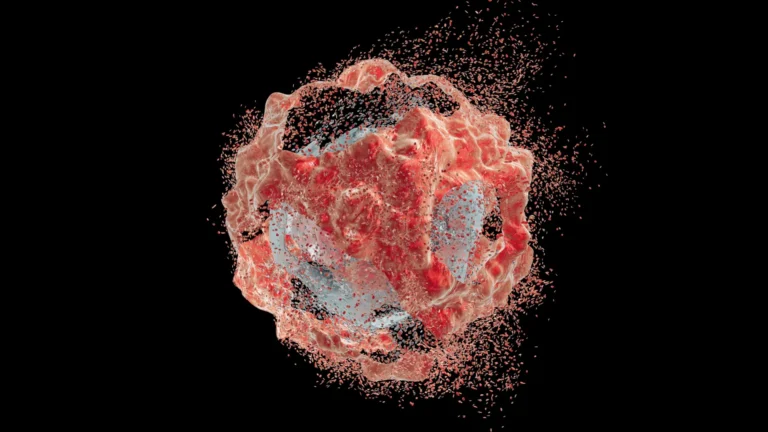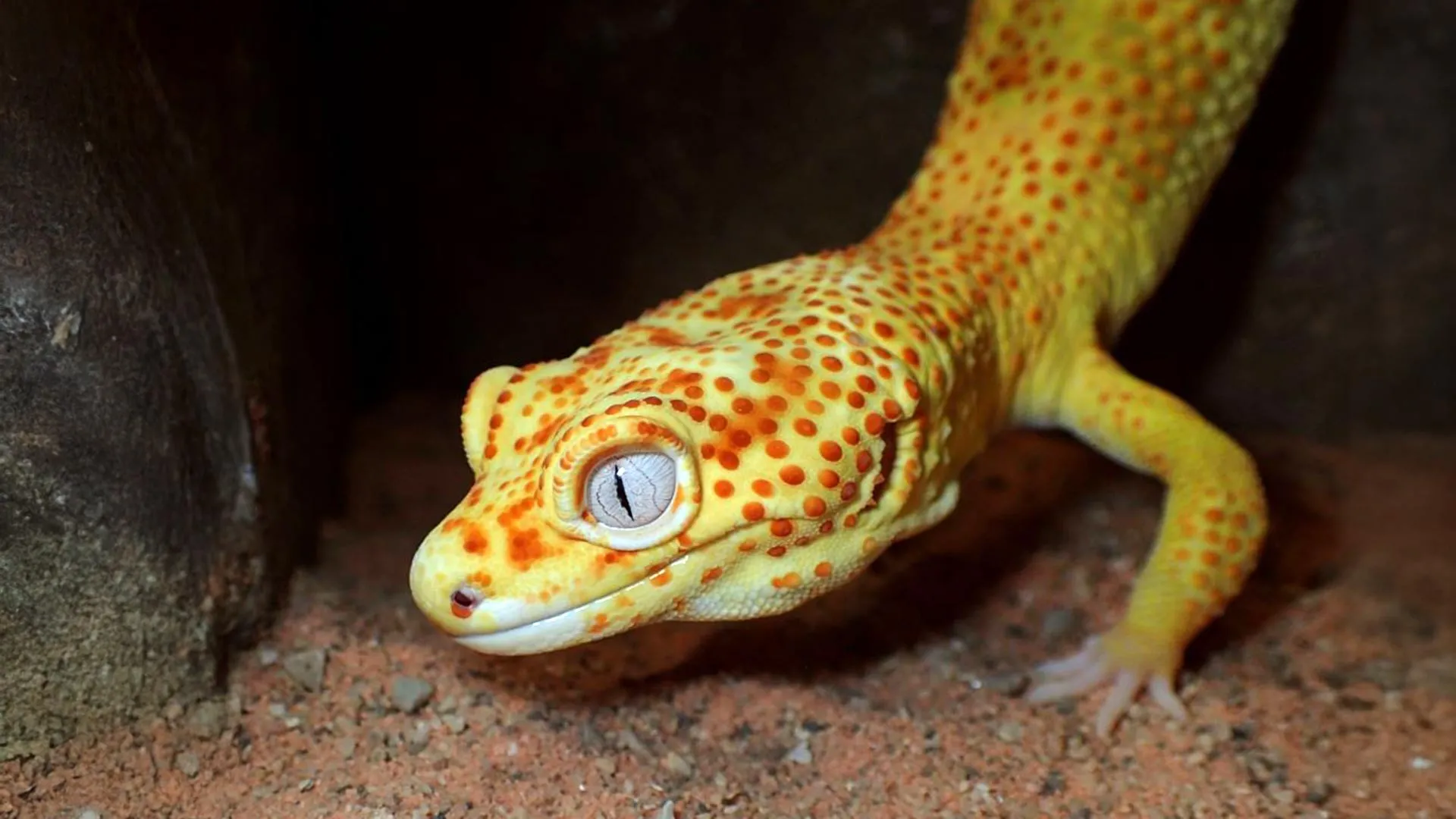
In the vast, intricate tapestry of the natural world, some species exhibit a baffling resistance to cancer, while others are seemingly destined for it. Now, a vibrant, yellow-and-white pet reptile—the "Lemon Frost" leopard gecko—has emerged as an unlikely scientific pioneer. Scientists believe this specific morph, which suffers from a high incidence of aggressive tumors, could become a cornerstone in the global effort to decode how cancer forms, evolves, and metastasizes.
A groundbreaking study led by the University of Nottingham and published in the journal BMC Biology suggests that the genetic vulnerabilities of these geckos mirror the biological pathways found in human oncology. By studying these reptiles, researchers hope to move beyond the limitations of traditional laboratory models, potentially unlocking new diagnostic and therapeutic strategies for human patients.
The Genesis of a Scientific Model: Chronology of the Lemon Frost
The story of the Lemon Frost gecko is a cautionary tale of selective breeding. The morph first appeared as a spontaneous genetic mutation within a large commercial breeding colony. Breeders were instantly captivated by its striking, luminous coloration—a bright, crystalline white-and-yellow hue that commanded high prices in the international exotic pet trade.
However, the allure of the aesthetic masked a devastating biological reality. As the morph proliferated through selective breeding, it became evident that the very genes responsible for the stunning pigmentation were linked to a lethal byproduct.
- Initial Discovery: Breeders noted that a significant percentage of Lemon Frost geckos began developing skin lesions and internal masses at an early age.
- The 80% Threshold: Over time, field observations and veterinary data revealed a staggering statistic: approximately 80% of individuals carrying the Lemon Frost trait develop aggressive tumors.
- The Research Pivot: Recognizing the significance of a species that develops cancer naturally rather than through artificial induction, an international team of scientists—led by Dr. Ylenia Chiari of the University of Nottingham—began a formal investigation into the genomic landscape of these reptiles.
Genetic Mapping: The Common Thread Between Reptile and Human
To understand why these geckos are so susceptible, the research team employed whole-genome sequencing, comparing the DNA of tumor tissues with that of healthy cells taken from the same individuals. The results were both clarifying and deeply significant.
Shared Pathways
The study identified a recurring set of genetic mutations across all tumor samples. Crucially, many of these altered genes and biological processes are already well-documented in human cancer research. By identifying these conserved pathways—the "blueprints" of cell division and mutation—researchers found that the Lemon Frost gecko acts as a natural laboratory.
While laboratory mice often require researchers to artificially introduce carcinogens or genetically engineer them to develop tumors, the Lemon Frost gecko provides a "natural" setting. This allows scientists to observe the disease’s entire life cycle: from the initial genetic "trigger" to the moment the cancer metastasizes, or spreads, to distant organs.
Supporting Data: Why Biodiversity Matters in Oncology
The field of comparative oncology has historically relied heavily on rodents. While these models have provided the foundation for modern medicine, they do not always accurately replicate the complexity of human cancer, particularly in terms of tumor evolution and environmental interaction.
The Spectrum of Risk
The Lemon Frost study is part of a growing movement to look at the "tree of life" to solve human health crises. The risk of cancer varies wildly across the animal kingdom:
- The Resistant: Turtles and tortoises, for example, rarely develop cancer, possessing unique evolutionary mechanisms that suppress tumor growth.
- The Vulnerable: The Lemon Frost gecko serves as the extreme opposite, offering a "high-resolution" look at what happens when these suppression mechanisms fail.
By studying both ends of this spectrum, researchers believe they can isolate the specific genes that grant resilience. Dr. Scott Glaberman, co-author from the University of Birmingham, emphasizes that the key to future medical breakthroughs may lie in the genetic makeup of species we have yet to thoroughly analyze.
Official Responses and Expert Insights
The international nature of the team underscores the global importance of these findings. The research involved experts from the University of Nottingham, the University of Birmingham, Marquette University, the University of Florida, and the University of Trieste.
Dr. Ylenia Chiari: A New Paradigm
Dr. Chiari, lead researcher on the project, believes the implications for human health are profound. "By studying why some animals are so susceptible to cancer while others are remarkably resistant, we hope to uncover the different ways species have evolved to deal with cancer," she stated. "Specifically, this gecko could become an incredible model because tumors appear naturally at a relatively early age. Together, these natural strategies could inspire new ways of preventing, detecting, and treating cancer in humans."
Brandon Hastings: Innovation through Adaptation
PhD researcher Brandon Hastings noted the technical innovation involved in the study. "Overall, our paper demonstrates the importance of looking across the tree of life in search of answers that are needed to better understand diseases that can have a profound impact on human life," Hastings explained. "Methodologically, it also highlights that the variety of genomic software programs developed to analyze human cancers can be adapted to provide meaningful insights in diverse organisms."
Dr. Scott Glaberman: The Ethical Imperative of Biodiversity
Dr. Glaberman’s perspective extends beyond the lab, touching on the conservation of species. "We often look inward to solve human problems, but every species has something to teach us," he noted. "By studying both animals that are vulnerable to cancer and those that resist it, we have far greater power to understand the disease itself. This is one of the many reasons why protecting biodiversity is so important."
Implications for Future Medical Research
The identification of the Lemon Frost gecko as a viable cancer model opens several doors for future clinical and academic research.
1. Advanced Metastasis Modeling
Because Lemon Frost tumors are prone to metastasizing, they provide a unique opportunity to study the "metastatic cascade"—the process by which cancer cells break away from a primary tumor and establish secondary colonies. Understanding this in a natural model could lead to drugs designed to "lock" cancer cells in place, preventing them from spreading.
2. Genomic Software Calibration
The study proved that bioinformatics tools designed for human DNA can be successfully "re-tasked" for reptile genomics. This validation encourages other researchers to apply human-centric software to a wider variety of animal models, effectively democratizing the data and accelerating discovery.
3. Early Detection Protocols
Because the geckos develop cancer at a young, predictable age, they are ideal candidates for testing early-detection markers. If researchers can identify the "pre-cancerous" genetic signatures in the gecko, it may lead to the development of new, highly sensitive blood or genetic tests for human oncology that can detect disease long before a tumor becomes palpable.
Conclusion: A Small Creature with a Giant Legacy
The Lemon Frost leopard gecko is more than just a colorful pet; it is a sentinel. Its existence serves as a reminder that the solutions to our most persistent medical challenges—including the war against cancer—may not be found in a test tube, but in the intricate genetic architecture of the natural world.
As researchers continue to decode the "Lemon Frost" genome, they are not merely learning about a lizard. They are participating in a multidisciplinary effort to protect both animal and human life. By embracing the full scope of biodiversity, science is moving toward a more holistic understanding of disease—one where every species, from the humble gecko to the human, plays a vital role in the shared pursuit of a cure.
The findings published in BMC Biology are a clarion call for continued investment in comparative oncology. As we face a future of complex health challenges, the answers may be hiding in plain sight, waiting for the right researcher to ask the right question of the right species. The Lemon Frost gecko has provided the question; now, the scientific community is racing to find the answer.