





For many individuals over the age of 60, the day begins with a familiar, unwelcome ritual: the "morning creak." The stiffness that accumulates throughout the day is often carried into the night, only to greet the body again upon waking. While the wellness industry frequently champions the benefits of monthly deep-tissue massages to alleviate this discomfort, a veteran fitness expert suggests that the secret to lasting mobility doesn’t lie in a professional studio, but in the comfort of your own bed.
With nearly four decades of experience in the fitness industry, including 20 years as the co-founder and director of TRAINFITNESS—a premier provider of personal training education in the UK—I have observed a recurring pattern in the aging body. The truth is that while a professional massage offers immediate, short-term relief by manipulating tired tissues, it fails to address the underlying habits that cause stiffness in the first place. By shifting the focus to a brief, consistent nightly routine, individuals can achieve a level of sustained flexibility that no monthly appointment can replicate.
Understanding the Anatomy of Stiffness
To combat the limitations of aging, one must first understand where tension actually hides. In my work with clients over 60, three primary trouble spots consistently emerge: the lower back, the hips/glutes, and the upper back/shoulders.
The Misunderstood Lower Back
Lower back pain is perhaps the most misunderstood ailment in this age group. While many focus their attention directly on the spine, the root cause is frequently a tightness in the hip flexors at the front of the pelvis. These muscles, when chronically shortened from prolonged sitting, act like a drawstring, pulling the lower back into a constant state of tension. Stretching the back directly can often exacerbate the issue; true relief comes from lengthening the front of the hips.
The Grumpy Gluteal Complex
The hip and buttock region, particularly the piriformis muscle, acts as a primary storage site for deep-seated tension. Because these muscles are compressed against chairs for hours on end, they lose their ability to lengthen, leading to the "grumpy" sensation that makes walking and movement uncomfortable by evening.
The "Tech-Neck" and Rounded Shoulders
Modern life—dominated by desk work, long periods behind the wheel, and time spent looking down at tablets and smartphones—has left many with chronically rounded shoulders. This posture shortens the chest muscles and weakens the upper back, creating a background level of tension around the neck and traps that most people do not notice until it is finally released.
Why Stretching Outperforms the Massage Table
A professional massage is a fantastic luxury, providing a one-hour window of deep tissue release. However, its effects are inherently temporary. Once the massage concludes, the body often reverts to its habitual, daily posture within 24 hours. Because the massage does not alter the underlying muscle memory or the daily behavioral patterns, the stiffness inevitably returns.
The Neurology of Nightly Maintenance
Nightly stretching acts as a "reset" button. By performing gentle, targeted movements just before sleep, you signal to your nervous system that it is safe to transition into a parasympathetic state—the "rest and digest" branch of the nervous system.
When you stretch in bed, you aren’t just lengthening muscle fibers; you are effectively lowering your cortisol levels and calming the nervous system. This ensures that the body recovers more efficiently overnight. While a massage acts on the muscle externally, a nightly routine changes the way the nervous system manages muscle tension for the subsequent eight hours of sleep.
The Economics of Consistency
Beyond the physiological benefits, there is the matter of sustainability. A monthly massage session requires scheduling, travel, and significant financial investment. In contrast, an 8-to-10-minute nightly routine is free, requires no travel, and integrates seamlessly into your pre-sleep hygiene. Over the course of a year, this cumulative effect is far more transformative than twelve disjointed hours of professional bodywork.

The Essential Four-Step Routine
This sequence should be performed in the order listed, ideally after you have settled into bed and are preparing to turn off the lights.
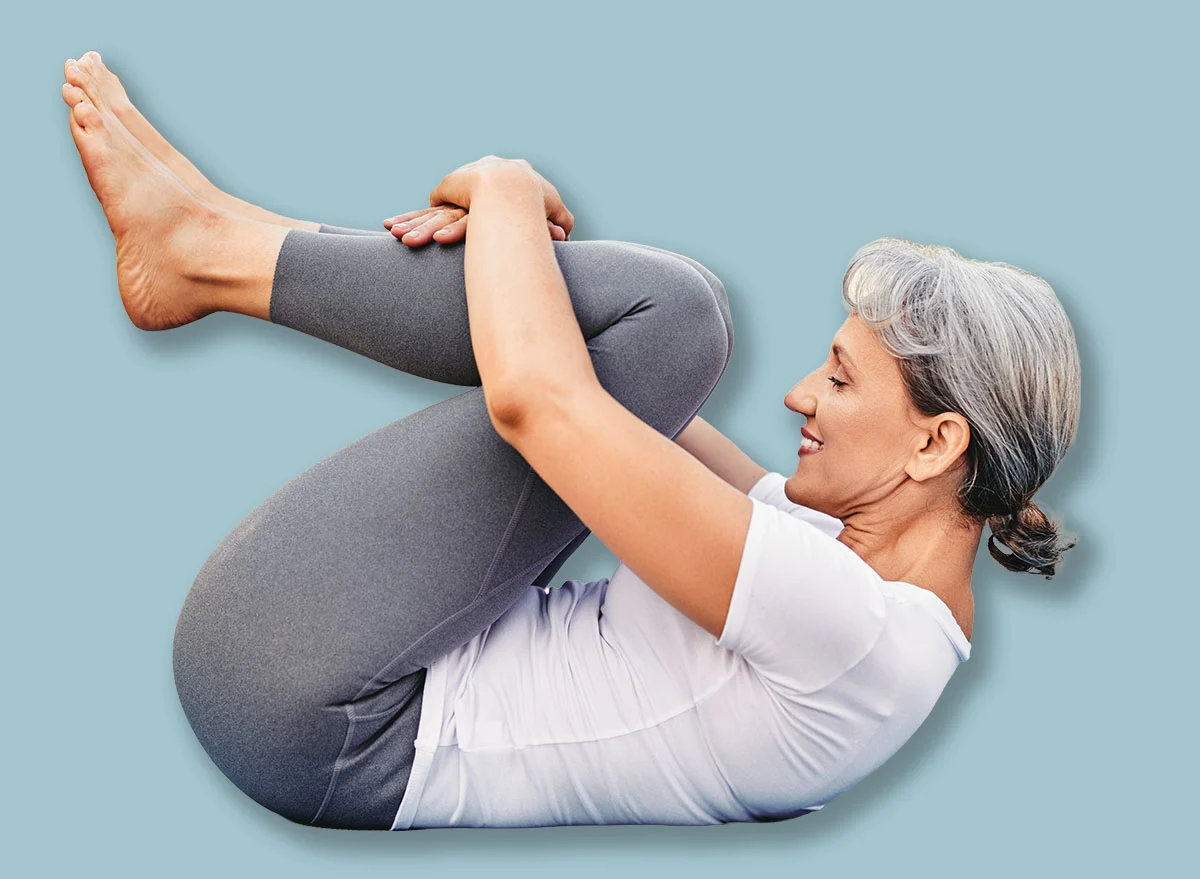
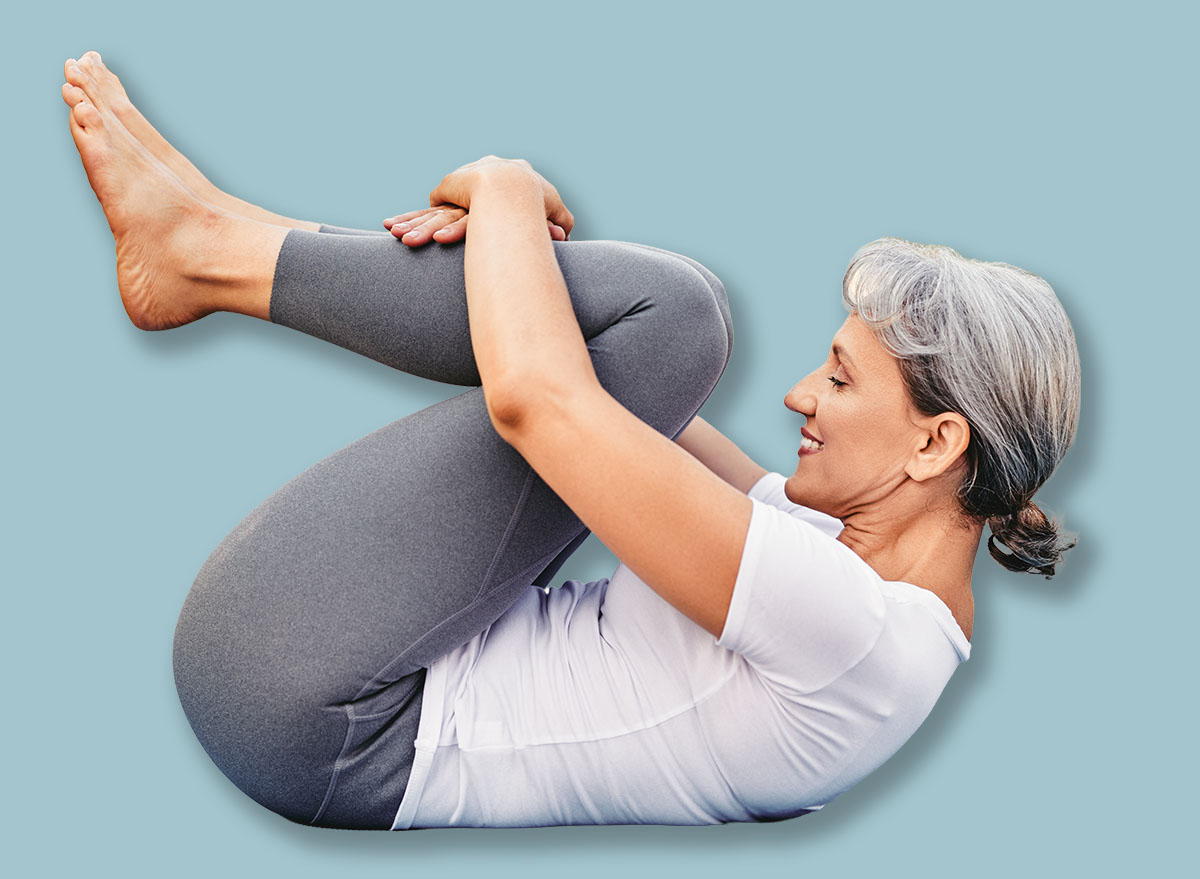
1. The Knees-to-Chest Hug
This move targets the lower back and the gluteal muscles simultaneously. By performing this while lying flat, gravity works in your favor, allowing the spine to decompress without the strain of standing.
- The Technique: Gently pull both knees toward your chest, clasping your hands around your shins or behind your thighs. Hold for 60 seconds while breathing deeply.
- Avoid: Tensing your shoulders or lifting your head off the pillow. Keep your spine neutral.
2. The Reclining Figure-4
This is the gold standard for addressing piriformis tension and hip discomfort.
- The Technique: Lie on your back, cross your right ankle over your left knee, and gently pull your left thigh toward your chest. You will feel a deep release in the right hip. Repeat on the other side.
- Avoid: Forcing the movement. If you feel pain in the knee joint, ease off the pressure.
3. The Supine Spinal Twist
Rotation is the movement most missing from the modern, sedentary lifestyle. This move facilitates a release from the tailbone to the neck.
- The Technique: While lying on your back, drop both knees to one side while keeping your shoulders pressed firmly into the mattress. Extend your arms wide.
- Avoid: Moving too quickly. The key is to breathe into the twist, allowing gravity to slowly deepen the stretch.
4. The Towel Chest Opener
To reverse the effects of rounded shoulders, we must open the anterior chain.

- The Technique: Lie flat on your back with your arms out to the sides (forming a ‘T’ shape). You can hold a small towel or just let your arms hang off the edge of the mattress if space permits, allowing the chest to stretch open.
- Avoid: Arching your lower back to compensate. Keep your core gently engaged.
Implementation and Timeline of Results
Consistency is the only "secret" to this program. Like brushing your teeth, this routine is not an optional workout—it is essential hygiene for the musculoskeletal system.
Week 1: The Sleep Benefit
Within the first seven days, most practitioners report an immediate improvement in sleep quality. This is the direct result of the parasympathetic shift induced by the routine.
Weeks 2 to 3: The Morning Creak Fades
As you enter the second and third weeks, the morning "maneuver" of getting out of bed becomes significantly smoother. The joint stiffness that usually requires a "warm-up" period begins to vanish.
Weeks 4 to 6: Structural Adaptation
By the six-week mark, genuine structural changes occur. Shoulders begin to sit in a more natural, retracted position, and the lower back feels more resilient during daily activities like walking or driving. Family members often remark on a noticeable change in posture and a more relaxed demeanor.
The Three-Month Milestone
After 90 days, the body has learned to adopt a looser resting state. At this stage, a massage moves from being a necessity for pain management to an optional treat. You have effectively taught your muscles how to relax, reducing the chronic, background tension that previously necessitated professional intervention.

Final Reflections: The Power of Persistence
The most reliable indicator of progress is the reduction in intensity of the stretches themselves. When a move that once felt like a deep, difficult pull begins to feel mild, it is a clear signal that the tissue has lengthened and adapted. Do not stop there; continue the practice and, if desired, slightly increase the range of motion.
In a world obsessed with quick fixes and expensive wellness trends, the most effective tool for aging well remains the simplest: the intentional, daily use of the body. By dedicating just under ten minutes before sleep, you can reclaim your mobility, enhance your recovery, and move through your 60s and beyond with the fluidity of a much younger person. Consistency is not just the key to progress—it is the medicine for a lifetime of movement.