











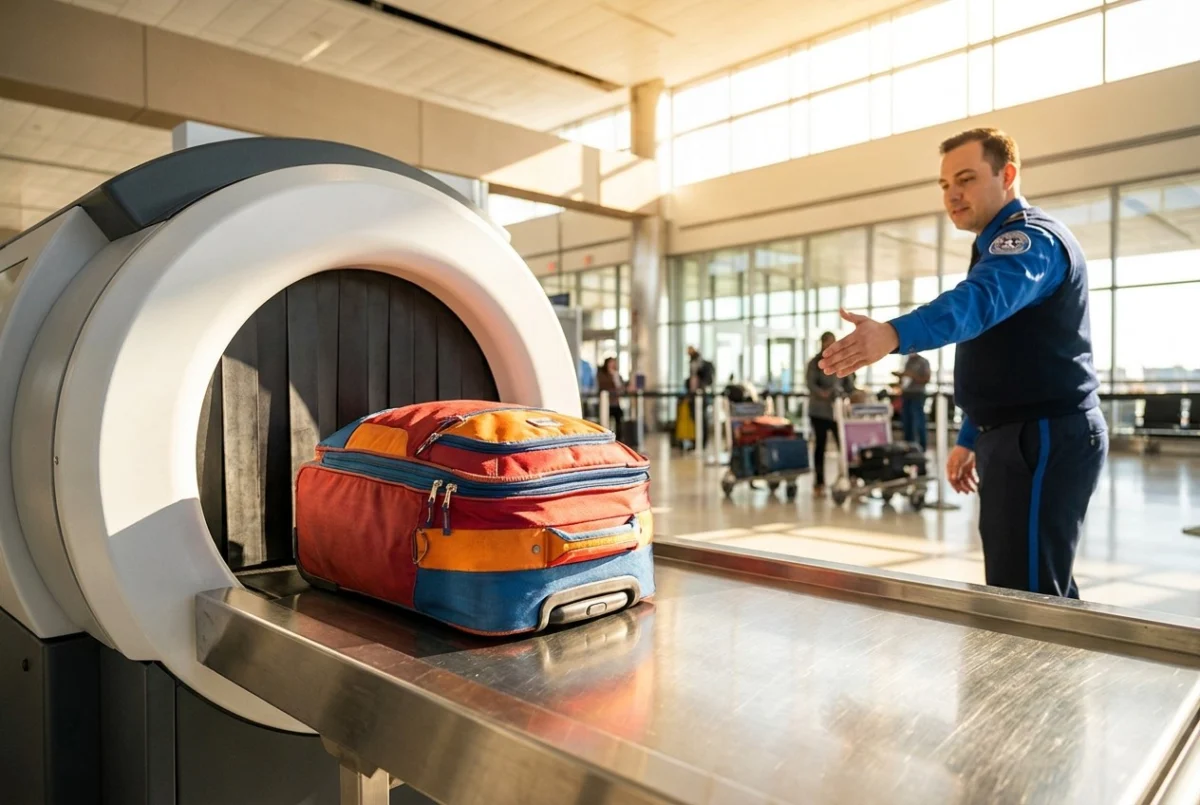
The Transportation Security Administration (TSA) has initiated a nationwide transition to advanced computed tomography (CT) scanners at airport security checkpoints. While the agency maintains that these technological upgrades represent a significant leap forward in aviation security, the deployment has introduced new logistical constraints for travelers, particularly those carrying larger pieces of luggage. As the rollout continues across U.S. airports, the friction between modernized security requirements and traditional passenger travel habits has moved to the forefront of airport operations.
The Technological Shift: Why the Change?
The core of the agency’s modernization effort lies in the replacement of legacy X-ray machines with state-of-the-art CT scanning technology. Unlike traditional 2D X-ray systems, which provide a flat, singular image of bag contents, CT scanners utilize sophisticated algorithms to generate high-resolution, 3-D images.
These 3-D renderings allow TSA officers to rotate and inspect the contents of a carry-on bag from multiple angles without the need to physically open the luggage. According to agency documentation, this capability is designed to drastically reduce the number of manual inspections required. Furthermore, the technology is sophisticated enough to detect explosives and other prohibited items with higher precision than previous iterations.
For the average passenger, the most immediate benefit of this upgrade is the potential elimination of the "unpacking" ritual. Under the new system, travelers are often no longer required to remove laptops, tablets, or liquids from their carry-on bags, as the scanner can differentiate between electronic components and organic materials with greater clarity.
The Bottleneck: Aperture Constraints and Carry-On Dimensions
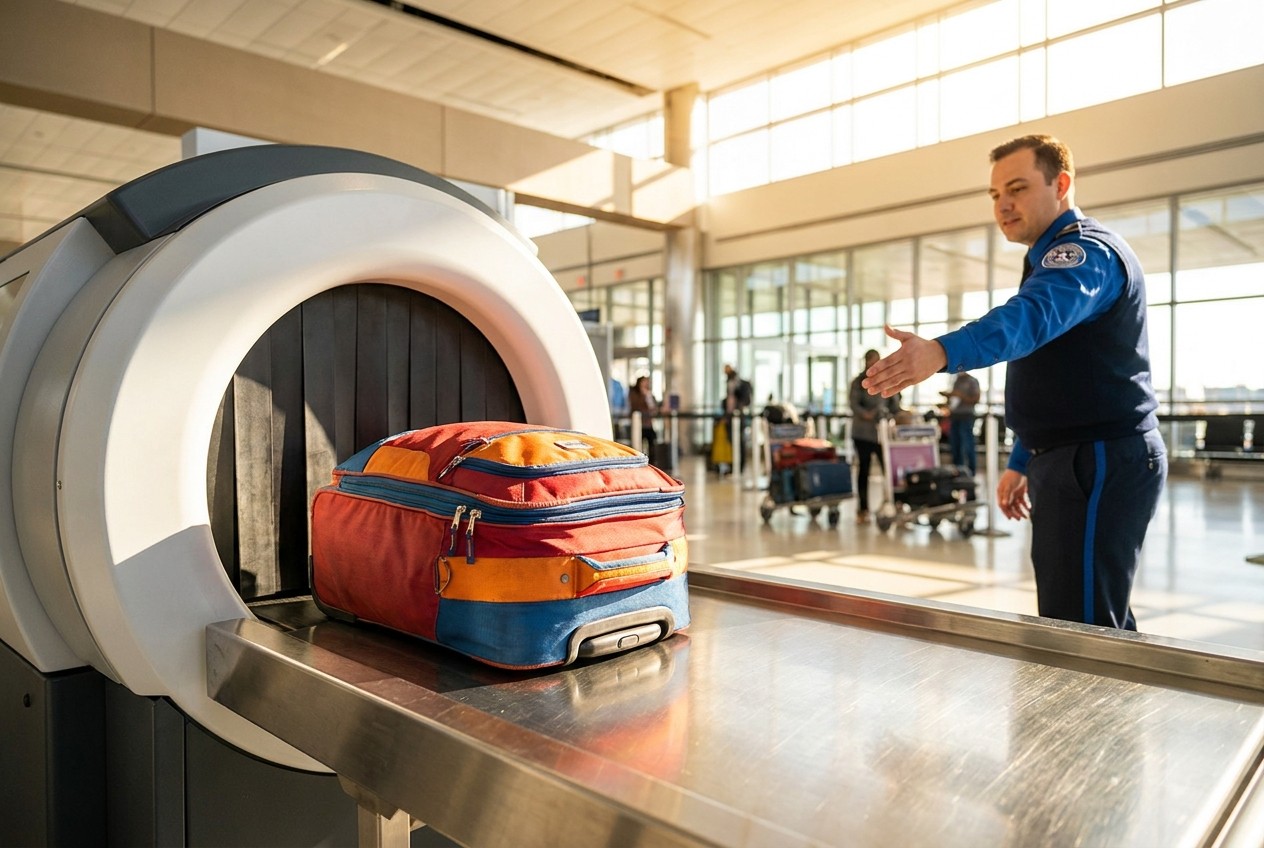
Despite the security advantages, the transition has introduced a new hurdle: physical size limitations. TSA spokesperson Velez, speaking to FOX 13, clarified that the engineering requirements of the advanced imaging equipment necessitate a smaller aperture—the "mouth" of the scanner—compared to the older models.
"This design is necessary to accommodate the advanced imaging technology and ensure optimal performance," Velez stated.
The immediate implication for travelers is that bags exceeding standard airline carry-on dimensions may no longer fit onto the conveyor belt. Most major U.S. carriers adhere to a standard carry-on size limit of 22 inches by 14 inches by 9 inches. While these dimensions have been industry-standard for years, many travelers have historically pushed these limits with "expandable" bags or soft-sided luggage that, when overpacked, exceeds the aperture’s clearance.
Under the new system, if a bag cannot pass through the scanner, the passenger may be forced to gate-check the item or, in some cases, return to the ticket counter to check it as baggage. This change effectively enforces airline size policies with a level of mechanical rigidity that has not existed at the checkpoint in the past.
Chronology: A Multi-Year Modernization Effort
The deployment of these scanners is not an overnight occurrence but part of a multi-year, multi-billion-dollar initiative to update aging infrastructure.
- Early Development: The TSA began testing 3-D CT technology in pilot programs at select major hubs as early as 2018. The goal was to prove that the machines could maintain high throughput speeds while increasing detection rates.
- Expansion Phase (2023–2025): The agency accelerated the procurement of CT scanners, citing an increasing volume of travelers and the need to mitigate emerging threats. By late 2025, the scanners were appearing with increased frequency at secondary and regional airports.
- Current Status (2026): The rollout is ongoing. While the TSA has not provided a definitive timeline for total nationwide coverage, the agency continues to install units as part of regular checkpoint maintenance cycles.
The Broader Context: Political and Public Scrutiny
The rollout of the CT scanners occurs against a backdrop of intensifying public and political criticism regarding the TSA’s efficiency and operational philosophy. The agency, which has long faced scrutiny over its mandate and methods, has found itself at the center of several high-profile controversies during the 2025–2026 period.
The "Extortion" Narrative
In December 2025, the Ron Paul Institute released a report characterizing the TSA’s PreCheck program as an "extortion racket-style scheme." The report argued that by charging travelers for expedited screening, the agency essentially creates a two-tiered system where those who do not pay are subjected to more intrusive security measures. The report further criticized the introduction of "Confirm.ID" requirements, which were set to be implemented in early 2026, as an overreach of surveillance.
Legislative Deadlock and Airport Congestion
The operational challenges of the TSA were further highlighted in March 2026, when Just the News reported that Senate Democrats had blocked Republican attempts to fund the Department of Homeland Security (DHS). As the government shutdown entered its fourth week, the physical reality of the funding lapse became visible at airports nationwide. Reports of "out-of-control" wait lines surged, with many travelers blaming the lack of staffing and the friction caused by the new scanner requirements for the resulting chaos.
High-Profile Backlash
Public frustration has occasionally manifested in high-profile incidents. In December 2025, the daughter of Transportation Secretary Sean Duffy, Evita Duffy-Alfonso, became a focal point of public discourse after she was delayed for 15 minutes for a pat-down. Duffy-Alfonso, who was pregnant at the time, declined to pass through a body scanner due to concerns over radiation. The subsequent interaction led her to publicly call for the abolition of the TSA, echoing sentiments held by a segment of the traveling public that feels the agency’s security measures are often disproportionate to the actual threats faced.
Official Responses and Traveler Guidance
Despite the challenges, the TSA maintains that the transition is necessary for long-term security and that officers are trained to assist travelers with the adjustment.
"TSA officers are available to assist travelers with larger items or special needs to help ensure a smooth screening process," Velez noted.
The agency’s official guidance to the public remains consistent:
- Check Dimensions: Travelers should measure their carry-on bags against their specific airline’s requirements before heading to the airport.
- Seek Guidance: If a passenger is unsure whether their bag will fit, they are encouraged to ask a TSA officer for guidance before placing the item on the conveyor belt. This can prevent a backlog and save the traveler from the frustration of having to re-check a bag at the last minute.
- Prepare for Potential Delays: As the agency continues to calibrate these machines and train personnel, travelers are advised to arrive at the airport earlier than usual, particularly during peak holiday travel periods.
Implications for the Future of Air Travel
The integration of CT scanners is a microcosm of the wider tension in modern aviation: the demand for absolute security versus the demand for a frictionless travel experience.
For the aviation industry, the move toward CT scanning is likely inevitable. As global security standards evolve, the ability to process bags with 3-D imaging is becoming a baseline expectation. However, the agency’s inability to provide a concrete timeline for the rollout—and the lack of clarity regarding which airports are equipped with which scanners—continues to create anxiety for passengers.
Furthermore, the "size-enforcement" aspect of the new scanners may inadvertently trigger a shift in consumer behavior. Luggage manufacturers may see an uptick in demand for bags specifically marketed as "CT-scanner compatible," while airlines may see an increase in gate-checked bag fees if passengers continue to arrive with oversized luggage.
Conclusion
The TSA’s push for CT technology is a calculated risk. By prioritizing sophisticated imaging, the agency aims to stay ahead of sophisticated threats, yet it simultaneously risks alienating a traveling public already sensitive to the agency’s operational footprint. As the rollout proceeds, the success of this initiative will likely be measured not just by the accuracy of the scans, but by the agency’s ability to communicate these changes effectively and manage the resulting logistical challenges at the checkpoint. Until the transition is complete, travelers are best advised to adhere strictly to airline dimensions, remain aware of the evolving technology, and maintain patience as the infrastructure of American aviation undergoes this significant technological shift.