










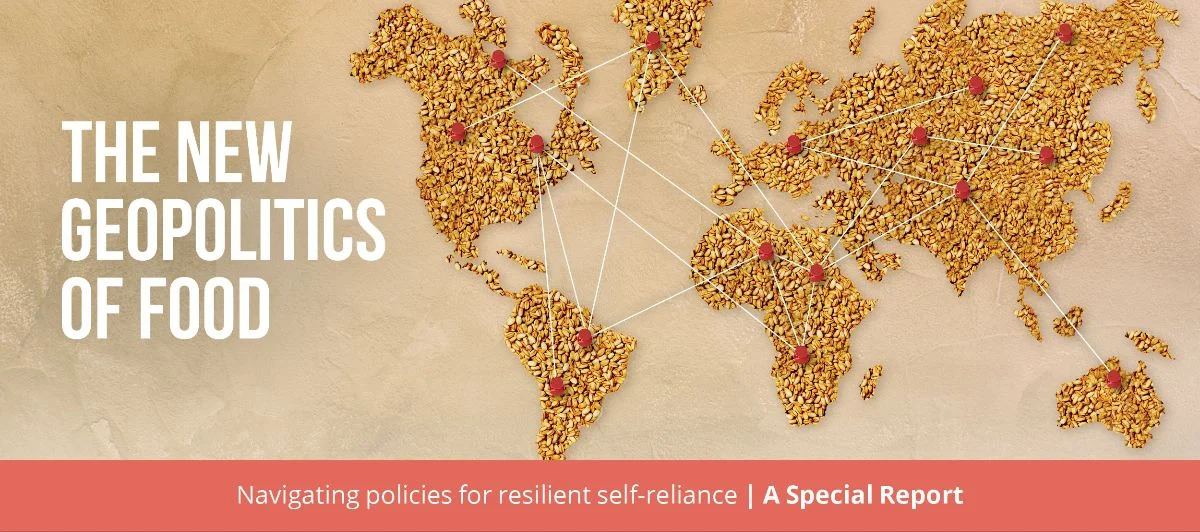
In an era defined by overlapping crises, the global food system is undergoing a profound and potentially permanent transformation. A landmark report released by the International Panel of Experts on Sustainable Food Systems (IPES-Food), titled The New Geopolitics of Food, argues that the era of unfettered, globalized food trade—once heralded as the ultimate guarantor of food security—is faltering under the weight of geopolitical instability, climate volatility, and economic protectionism.
As food prices remain stubbornly high and hunger levels rise across the Global South, the report serves as a stark warning: the existing model of global food distribution is no longer fit for purpose. To survive the coming decades of uncertainty, governments must pivot from a dependency on long, fragile supply chains toward a paradigm of "resilient self-reliance."
Main Facts: The Anatomy of a Global Crisis
The global food system is currently caught in a "polycrisis." According to the IPES-Food analysis, the primary drivers pushing up prices and deepening hunger are no longer merely cyclical market fluctuations. Instead, they are structural, systemic issues that demand a fundamental change in how nations view their agricultural sovereignty.
The Five Pillars of Instability:
- Geopolitical Conflict: Wars—most notably in Ukraine, the "breadbasket of Europe"—have weaponized grain exports and disrupted the flow of essential fertilizers, sending shockwaves through global markets.
- Trade Disputes and Protectionism: As nations scramble to secure their own food supplies, export bans and protectionist policies have created a domino effect, exacerbating shortages and price volatility for importing nations.
- Climate Shocks: Increasingly frequent extreme weather events, from prolonged droughts in the Horn of Africa to flooding in South Asia, are devastating yields and undermining the stability of production regions that the world previously relied upon.
- Aid Cuts: In the face of domestic budgetary pressures, wealthy nations are reducing foreign aid, leaving the most vulnerable populations in low-income countries without a safety net during periods of acute scarcity.
- Weakening International Cooperation: The erosion of multilateral agreements and the decline of global governance mechanisms have made it increasingly difficult to coordinate a unified response to localized food emergencies.
The report contends that these factors are not merely causing temporary spikes; they are "reshaping global food security," making the reliance on hyper-globalized, just-in-time supply chains a strategic liability rather than an economic asset.
Chronology: The Erosion of Global Food Stability
To understand how the world arrived at this tipping point, one must look at the timeline of global agricultural shifts over the last decade.
- 2015–2019: The Illusion of Stability. Global food prices remained relatively stable, and international trade was viewed as the ultimate remedy for regional shortages. Investment was heavily skewed toward industrial-scale export crops.
- 2020: The COVID-19 Pandemic. The pandemic acted as a stress test, revealing the fragility of global supply chains. Border closures and labor shortages disrupted logistics, providing the first major warning that reliance on distant suppliers was dangerous.
- 2022: The Ukraine Conflict. The Russian invasion of Ukraine sent global fertilizer and grain prices to record highs. This event marked the definitive end of the "low-cost, reliable import" model for many nations.
- 2023–2024: The Era of Protectionism. As food insecurity soared, a wave of "food nationalism" spread. Numerous countries implemented export restrictions on rice, wheat, and sugar, effectively prioritizing domestic stability at the expense of global market fluidity.
- 2025 and Beyond: The current period is defined by a realization that the systemic shocks are not aberrations but the "new normal." The focus has shifted from expanding global trade to hardening national food systems against external shocks.
Supporting Data: The Case for Self-Reliance
The IPES-Food report is supported by a wealth of data demonstrating the volatility inherent in current market structures. For instance, the report highlights that countries that have diversified their production and focused on regional integration have consistently fared better than those tethered exclusively to global commodity markets.
Key Economic Indicators:
- Price Volatility: Since 2020, the volatility of the FAO Food Price Index has hit levels unseen since the 2008 financial crisis.
- Import Dependency: Low-income, food-deficit countries (LIFDCs) spend a disproportionate percentage of their GDP on food imports, leaving them vulnerable to currency fluctuations and global price hikes.
- The Fertilizer Paradox: Global dependence on a handful of fertilizer-exporting nations has meant that a single geopolitical dispute can paralyze agricultural productivity across entire continents.
The report suggests that by investing in regional "food hubs" and domestic agroecology, nations can mitigate the risks associated with price shocks. The data shows that localized, diversified food systems are not only more resilient to climate change but are also more capable of providing consistent nutrition to local populations, regardless of what happens in the Chicago Board of Trade.
Official Responses and Policy Shifts
The call for "resilient self-reliance" is beginning to echo in the halls of government, though implementation remains uneven.
The Shift in Strategy:
Governments are increasingly looking at "strategic food reserves"—not just as emergency stocks, but as market-stabilization tools. By purchasing domestic crops during harvest surpluses and releasing them during periods of scarcity, states are regaining a measure of control over price stability.
Furthermore, there is a growing movement toward "regional trade blocs." By fostering intra-regional trade in Africa, Latin America, and Southeast Asia, countries are creating a buffer against the volatility of the global market. This "neighborhood" approach to food security reduces the carbon footprint of transport and keeps economic value within the region, supporting local farmers rather than multinational commodity traders.
The Resistance:
However, this transition is not without opposition. Large-scale agro-industrial exporters and certain international financial institutions continue to advocate for the status quo, arguing that protectionism and regionalism will lead to inefficiency and higher long-term costs. The IPES-Food report counters this by noting that "efficiency" is a hollow metric if it results in systemic collapse and famine when a supply chain breaks.
Implications: Building a Resilient Future
The implications of the New Geopolitics of Food are clear: the world is moving toward a more fragmented, multipolar food system. This is not necessarily a negative outcome, provided that governments act with foresight and equity.
1. Strengthening Domestic Systems
The priority must be to support small-scale farmers, who currently produce the majority of the world’s food but receive a fraction of the subsidies. Strengthening local infrastructure—such as storage facilities, processing plants, and cold chains—is vital to reducing post-harvest losses, which currently claim up to 30% of global food production.
2. Diversifying Agricultural Biodiversity
The over-reliance on a handful of staple crops (maize, wheat, and rice) makes the global system incredibly susceptible to pests and climate shifts. Resilience requires a return to diverse, locally adapted crops that can thrive in a changing climate.
3. Redefining "Food Security"
Food security must be rebranded as a matter of national sovereignty rather than just a balance-of-payments issue. When a country relies on a global market for its caloric needs, it effectively outsources its stability to forces beyond its control. By prioritizing domestic and regional supply chains, governments can reclaim their agency.
4. A Call for Global Coordination
While the report calls for self-reliance, it does not advocate for total isolationism. International cooperation is still required to manage global commons—such as water resources and climate mitigation—and to provide humanitarian support to nations that, due to geography or climate, cannot achieve self-reliance.
Conclusion
The findings of the IPES-Food report serve as a definitive wake-up call for policymakers. The "old" world of globalized food trade, while efficient in times of peace and climate stability, has proven dangerously brittle in the face of today’s realities.
Moving toward resilient self-reliance is not a retreat from the world; it is a necessary evolution to ensure that the most basic human need—the right to food—is protected from the whims of a volatile, shifting, and increasingly fractious global order. The tools for this transition are available, but they require the political will to challenge the interests of global commodity markets and prioritize the stability and well-being of local communities. The cost of inaction is too high; the cost of transformation is the only path forward.