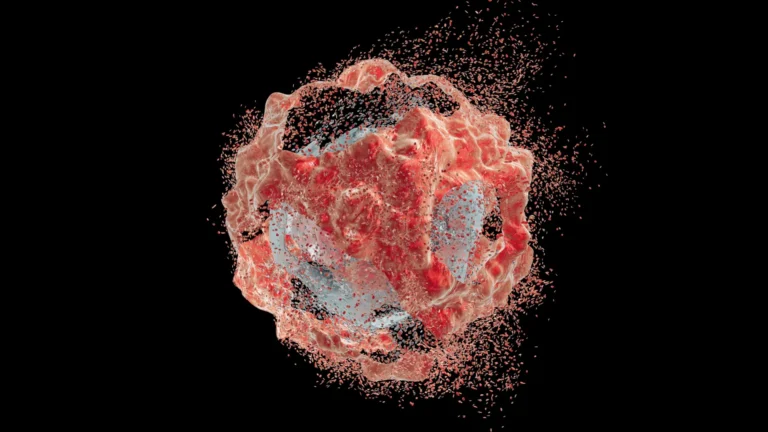





In the relentless pursuit of survival and expansion, cancer cells operate like an engine running at a redline. To fuel their rapid, uncontrolled division, these cells force their genetic machinery to work at extreme, often pathological, levels. However, a groundbreaking study published in the journal Science Advances has revealed a hidden cost to this biological acceleration: cancer may be systematically dismantling its own genetic integrity.
New research conducted at the Hebrew University of Jerusalem suggests that the very regions of the genome responsible for driving tumor growth—known as "super-enhancers"—are also the primary sites of catastrophic DNA damage. By forcing critical genes to operate at maximum capacity, tumors place their own DNA under such immense physical strain that the strands snap, forcing the cell into a perpetual, error-prone cycle of damage and repair. This discovery not only provides a clearer picture of how cancers evolve but also unveils a potential "Achilles’ heel" that could reshape the future of oncology.
The Mechanism of Self-Destruction: Understanding Super-Enhancers
To understand the severity of these findings, one must first understand the role of super-enhancers. In a healthy cell, gene expression is tightly regulated; DNA "control panels" dictate which genes are turned on and off to maintain tissue function. Super-enhancers are massive clusters of these control elements that act as powerful amplifiers, driving the expression of genes essential for cell identity and growth.
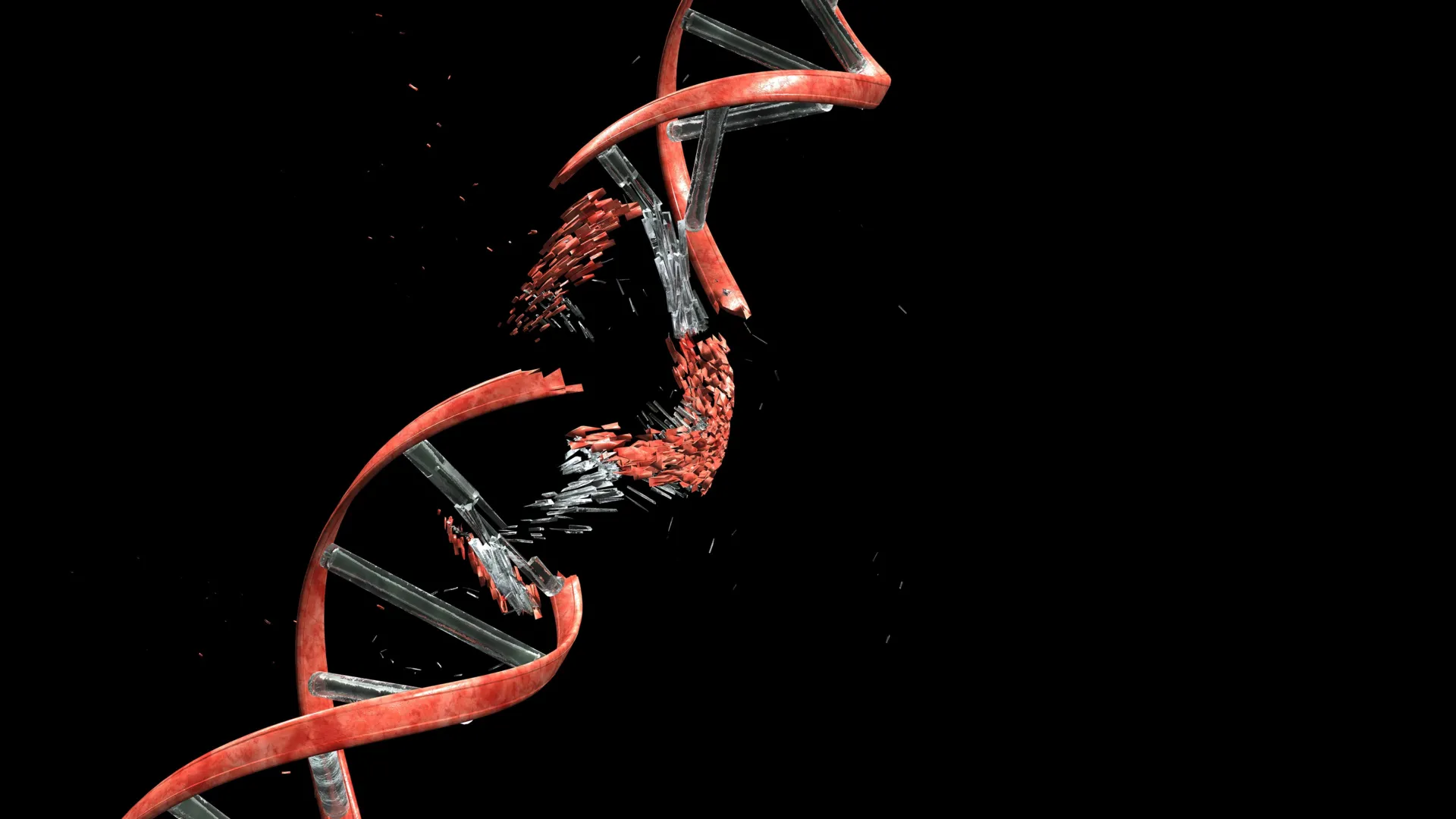
In cancer cells, these super-enhancers are hijacked. They are repurposed to maintain the "oncogenic programs" that allow tumors to multiply, evade immune detection, and thrive in nutrient-poor environments. According to the research led by PhD student Osama Hidmi and Professor Rami Aqeilan, this hyper-activation creates a physical crisis. As the cellular machinery transcribes these growth-promoting genes at a frantic pace, the physical structure of the DNA becomes compromised, leading to double-strand breaks—the most severe form of DNA damage, where the double helix is severed entirely.
A Chronology of Discovery: Mapping the Genome’s "Danger Zones"
The research team’s investigation was a multi-stage process that involved mapping the physical geography of DNA damage within the cancer genome.
Phase 1: Identifying the Hotspots
Using advanced, high-resolution genome-mapping techniques, the researchers analyzed the location of double-strand breaks across the entire cancer genome. They discovered that these breaks were not randomly distributed, as might be expected if they were merely the result of environmental stressors or random mutations. Instead, they were heavily clustered within the regions governed by super-enhancers.
Phase 2: Monitoring the "Alarm" Signals
To confirm that these breaks were a direct consequence of the cells’ high-speed growth programs, the team monitored the natural "alarm" signals that cells deploy when DNA is damaged. These markers, which recruit repair proteins to the site of the break, illuminated a constant, flickering cycle: the super-enhancer regions were being damaged, repaired, and then damaged again.
Phase 3: Analyzing the Mutation Accumulation
Finally, the researchers hypothesized that this recurring cycle of "break-and-repair" is the engine of tumor evolution. Every time a cell repairs a double-strand break, there is a statistical probability of an error. Over time, these small errors accumulate, leading to mutations. This explains why aggressive cancers often become more genetically diverse and resistant to chemotherapy over time; their own growth strategy is literally writing new, potentially adaptive mutations into their genetic code.
Supporting Data: Why Hyper-Activity Equals Instability
The data provided by the Hebrew University team challenges the long-held assumption that genetic instability in cancer is a byproduct of random, external damage. Instead, the study suggests that instability is an intrinsic, programmed consequence of the cancer state itself.
- Correlation with Growth: The intensity of gene expression in super-enhancer-driven regions directly correlates with the frequency of DNA breaks. The higher the "output" of the tumor-promoting genes, the more frequent the structural failure of the DNA.
- The Repair Burden: Cancer cells exhibit an over-reliance on DNA repair pathways to survive the damage caused by their own gene-expression levels. Without these pathways, the cells would succumb to "mitotic catastrophe" and die.
- Genome Architecture: The study demonstrates that the physical organization of the DNA molecule becomes a liability. When the machinery of life is pushed to the limit, the structural integrity of the genome is sacrificed.
Official Perspectives: Insights from the Researchers
The implications of this study are significant, as they reframe the relationship between cancer growth and its genetic instability. Professor Rami Aqeilan, who oversaw the study, emphasized the dual-edged nature of these super-enhancers.
"Cancer cells rely on super-enhancers to keep growth genes running at high speed," Prof. Aqeilan explained. "What we found is that this same high-output activity can put real strain on the DNA, creating break hotspots that the cell has to repair again and again. That cycle may help tumors survive in the short term, but it also increases the risk of mutations that can fuel cancer’s evolution."
Osama Hidmi, the study’s lead author, highlighted the clinical potential of these findings. "What is especially exciting," Hidmi noted, "is that because cancer cells depend on these high-stress DNA regions to keep growing, they may also be more vulnerable there. This opens the door to treatments that target the very processes tumors rely on to survive."
Implications for Future Cancer Treatment
The realization that cancer’s growth engine creates its own genetic vulnerabilities could fundamentally shift the therapeutic landscape. Current cancer treatments, such as chemotherapy and radiation, often work by damaging DNA—a "sledgehammer" approach that affects healthy and cancerous cells alike. However, the findings from this study suggest a more precise, "scalpel-like" approach.
1. Targeting the Repair Machinery
If cancer cells are trapped in a perpetual loop of repairing DNA breaks within super-enhancer regions, then inhibiting the proteins responsible for that repair could be devastating to the tumor. By preventing the cancer from fixing its own self-inflicted damage, researchers could force the tumor to reach a point of "catastrophic failure," where the accumulated DNA breaks become so numerous that the cell can no longer function.
2. Suppressing the "Hyper-Activity"
Another strategy involves targeting the super-enhancers themselves. By utilizing novel molecular inhibitors to dampen the activity of these "control panels," doctors might be able to slow down the gene expression that leads to DNA breakage. While this would reduce the tumor’s growth rate, it would also prevent the cell from evolving further, effectively locking the tumor in a static, less aggressive state.
3. Exploiting Genomic Fragility
The research suggests that the most aggressive, fast-growing tumors might be the ones most susceptible to these new strategies. Because these tumors are pushing their super-enhancers to the absolute limit, they are also, by definition, the most "genetically unstable." This creates a paradox where the more aggressive the cancer is, the more fragile it becomes at its genetic core.
Conclusion: Turning a Strength Into a Vulnerability
The study from the Hebrew University of Jerusalem represents a vital step forward in our understanding of the life cycle of a tumor. By identifying the direct link between hyper-active gene expression and structural DNA damage, the researchers have moved beyond merely observing the symptoms of cancer to identifying a foundational mechanism of its pathology.
For decades, the field of oncology has grappled with the "moving target" of cancer—the ability of tumors to mutate, adapt, and outmaneuver drug treatments. This research suggests that this adaptation is not merely a matter of chance, but a predictable, albeit chaotic, outcome of the tumor’s own biology.
As scientists continue to map these "break hotspots" across the human genome, the prospect of personalized cancer medicine becomes more tangible. By identifying which super-enhancers are driving a specific patient’s tumor, clinicians may soon be able to design treatments that exploit these specific zones of instability. In doing so, they may finally be able to turn the tumor’s greatest strength—its relentless, high-speed drive for growth—into the very mechanism that brings about its destruction. This discovery offers a glimmer of hope that, by understanding the dark mechanics of cancer’s evolution, we can finally begin to outpace it.