








In the landscape of higher education, the "college experience" has long been romanticized as a period of unbridled growth and social discovery. However, beneath the surface of orientation weeks and academic milestones lies a burgeoning mental health crisis. According to recent data, nearly three-quarters of college students report moderate to severe psychological distress. In response to this systemic challenge, Active Minds, a premier nonprofit organization dedicated to mental health advocacy for young adults, has pioneered a peer-led movement designed to shift the culture from one of silence to one of proactive support.
By analyzing the narratives of students, survivors, and organizational leaders, it becomes clear that the modern approach to campus wellness is no longer just about clinical intervention— it is about community, boundary-setting, and the power of lived experience.
Main Facts: A Multi-Faceted Approach to Wellness
Active Minds operates on the fundamental premise that students are the best-positioned individuals to change the mental health culture on their own campuses. The organization’s impact is felt through a multi-tiered strategy that addresses various stages of the student journey, from the initial transition into university life to the management of chronic conditions and the unique pressures of student leadership.
The organization’s core initiatives focus on:
- Stigma Reduction: Changing the perception of mental illness from a "failure" to a manageable health condition.
- Resource Navigation: Bridging the gap between students and university counseling services.
- Peer Advocacy: Training students to recognize signs of distress in their classmates and providing a framework for "soft landings" into professional care.
- Leadership Development: Equipping student executives with the tools to manage large-scale advocacy efforts without sacrificing their own well-being.
Through these channels, Active Minds serves as a vital intermediary, ensuring that the burden of mental health does not fall solely on overburdened clinical staff or on isolated students.
Chronology: From Personal Tragedy to Global Movement
The genesis of Active Minds is rooted in a singular, transformative loss. In the early 2000s, Alison Malmon was a student at the University of Pennsylvania when her older brother, Brian, died by suicide. Brian, a high-achieving student at Columbia University, had suffered in silence for years, masking his struggle with mental illness until it was too late.
2003: The Founding
Following Brian’s death, Malmon recognized a glaring void on college campuses. While there were resources for physical health and academic tutoring, there was no student-led infrastructure for mental health. In 2003, she founded Active Minds to ensure that no other student would have to suffer in the isolation that claimed her brother’s life.
The Growth of the Chapter Network
What began as a single chapter has expanded into a network of over 600 chapters across high schools and college campuses internationally. Over the last two decades, the organization has evolved from a grassroots awareness group into a sophisticated advocacy powerhouse that influences national policy and campus legislation.
Present Day: Sustaining the Legacy
Today, the organization marks milestones such as International Survivors of Suicide Loss Day not just as a time for mourning, but as a day of mobilization. Malmon’s journey from a grieving sister to a national leader reflects a broader chronological shift in society: the transition from "hiding" mental health issues to "owning" them as part of the human experience.
Supporting Data: Navigating the Student Life Cycle
The effectiveness of mental health advocacy can be seen through the specific challenges faced by students at different stages of their academic careers.
The Freshman Transition
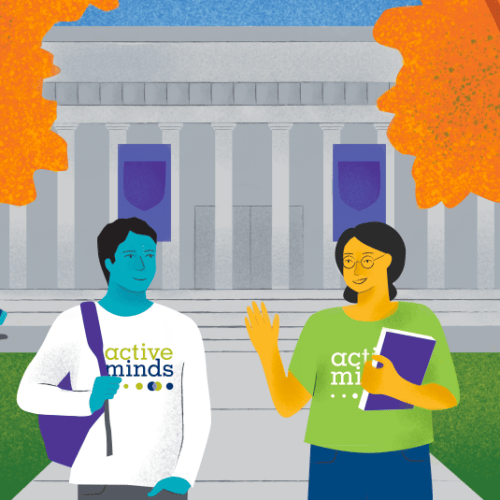
The transition from high school to college is one of the most volatile periods for mental health. For many, it is the first time they are living away from home, managing their own schedules, and facing increased academic rigor. Advice from upperclassmen within the Active Minds network emphasizes "mental health prep" as being just as critical as academic prep.
Key data points and recommendations for freshmen include:
- Proactive Resource Mapping: Students are encouraged to locate university counseling centers before a crisis occurs. Knowing the physical location and the appointment process reduces the "barrier to entry" when stress levels peak.
- The "Slow Transition" Model: Advocacy leaders suggest that freshmen limit their involvement in student organizations initially, focusing on one or two communities to avoid the "ambition trap" that leads to early burnout.
- Crisis Readiness: Beyond campus resources, students are advised to keep national and local crisis hotlines (such as the 988 Suicide & Crisis Lifeline) readily available for after-hours support.
Living with Chronic Diagnoses: The Case of Bipolar Disorder
For students like Sarah Berendt, a social work student at Lourdes University, the college experience is complicated by serious clinical diagnoses. Berendt’s journey with Bipolar Disorder highlights the shift in perspective that Active Minds encourages. Initially viewing her diagnosis as a "death sentence" for her future at age 16, Berendt transformed her struggle into a leadership platform.
Her experience underscores a vital supporting fact: mental illness does not preclude success. By integrating her "intellect and emotion," Berendt found that her passion for advocacy became a tool for her own recovery. Her story serves as a data point for the "recovery-oriented" model of mental health, where the goal is not the absence of illness, but the presence of a meaningful, self-directed life.
The Leadership Burden
Student leaders often face a unique risk: compassion fatigue. As an e-board member at East Stroudsburg University noted, the desire to "change the conversation" can lead to neglecting one’s own needs. Supporting data from chapter leaders suggests that the most successful chapters are those that implement strict boundaries, such as "no-contact" times after 10:00 PM and the delegation of tasks via shared digital platforms to prevent any one individual from carrying the organizational weight.
Official Responses: A Mission of Peer Mobilization
Active Minds’ official stance is that the "expert" in the room is often the peer. This philosophy is reflected in their various programs and the statements from their leadership.
Alison Malmon, in her reflections on the 20-year anniversary of the organization, emphasizes that "peers, fellow youth, and young adults" are the ones who will ultimately change the narrative. The official response to the suicide crisis is not merely "more therapists," but "more community."
The organization’s official frameworks promote:
- Active Listening: Training students to be "active" rather than "passive" listeners.
- Validation: Ensuring that students feel their emotions are valid, regardless of whether they meet a clinical threshold for a disorder.
- Identity-Based Support: Recognizing that cultural organizations and shared identities are often the first line of defense for marginalized students.
This "official" peer-to-peer model has been adopted by various universities as a cost-effective and highly impactful supplement to traditional clinical services.
Implications: Changing the Cultural DNA of Higher Education
The work of Active Minds and its thousands of student advocates has profound implications for the future of the workforce and society at large.
1. The Normalization of Boundaries
By teaching 19-year-olds how to set professional and personal boundaries, the organization is preparing a generation of workers who are less susceptible to burnout. The "self-care" techniques practiced in Active Minds chapters—such as regular exercise, sleep hygiene, and social outings—are becoming the new standard for professional sustainability.
2. Reducing the Suicide Rate
The long-term implication of reducing stigma is, quite literally, the saving of lives. When students feel comfortable saying "I’m not okay" without fear of academic or social repercussions, they are significantly more likely to seek help before reaching a point of crisis. Alison Malmon’s brother, Brian, suffered because the culture of 2000 did not allow for that vulnerability. The culture of 2024, influenced by Active Minds, increasingly does.
3. The Power of "Lived Experience"
There is a growing recognition that individuals with mental health conditions—like Sarah Berendt—bring a unique and valuable perspective to the field of social work and healthcare. The implication is a shift in the labor market where "lived experience" is viewed as a credential rather than a liability.
4. A New Definition of Belonging
Ultimately, the work of these chapters suggests that "belonging" on a campus is not just about grades or sports; it is about being part of a community that cares for the whole person. As students move from being "freshman selves" to "graduating leaders," they carry with them a toolkit for emotional intelligence that will define their roles as parents, employees, and citizens.
In conclusion, Active Minds has transformed the tragedy of one family into a global safeguard for millions. By focusing on the practicalities of campus life—resource mapping, boundary setting, and peer support—the organization is proving that while mental health challenges are an inevitable part of the human condition, suffering in silence no longer has to be. Through the voices of students across the country, the message is clear: "You are not alone, you are capable, and you belong."