










In March 2026, a 76-year-old man walked out of U.S. Immigration and Customs Enforcement (ICE) custody in Florida, once again navigating the thin line between legal protection and international accountability. Armando Fernandez Larios, a former Chilean intelligence operative whose resume includes the infamous 1976 car bombing in Washington, D.C., had been detained by federal authorities just four months earlier. At the time of his October 2025 arrest, the Department of Homeland Security (DHS) had categorized him among the “worst of the worst” criminal aliens in the United States.
His sudden release, following a successful legal challenge based on a 1987 plea agreement, serves as a jarring coda to a half-century of geopolitical maneuvering. The case of Fernandez Larios is more than a legal curiosity; it is a profound testament to how Cold War foreign policy priorities can ossify into decades-long impunity, effectively shielding individuals accused of atrocities from the reach of domestic and international justice.
The 1976 Letelier Assassination: A Terrorist Act on American Soil
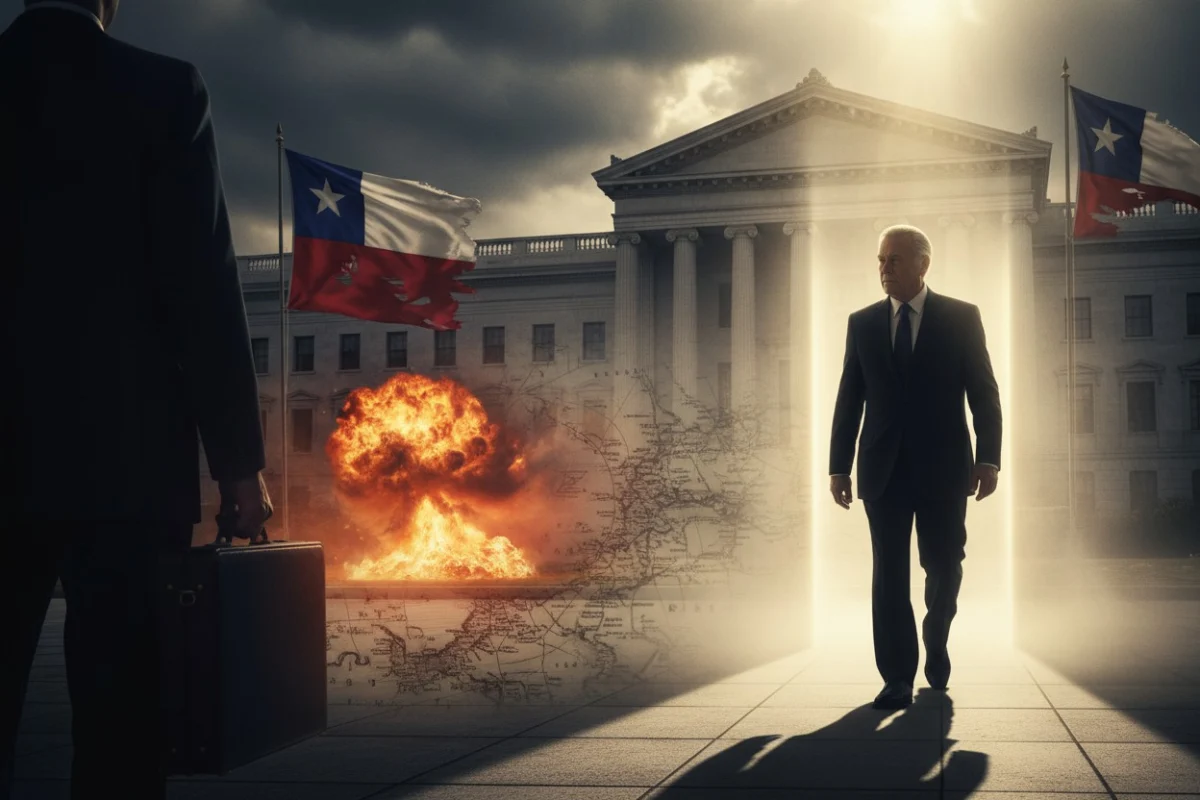
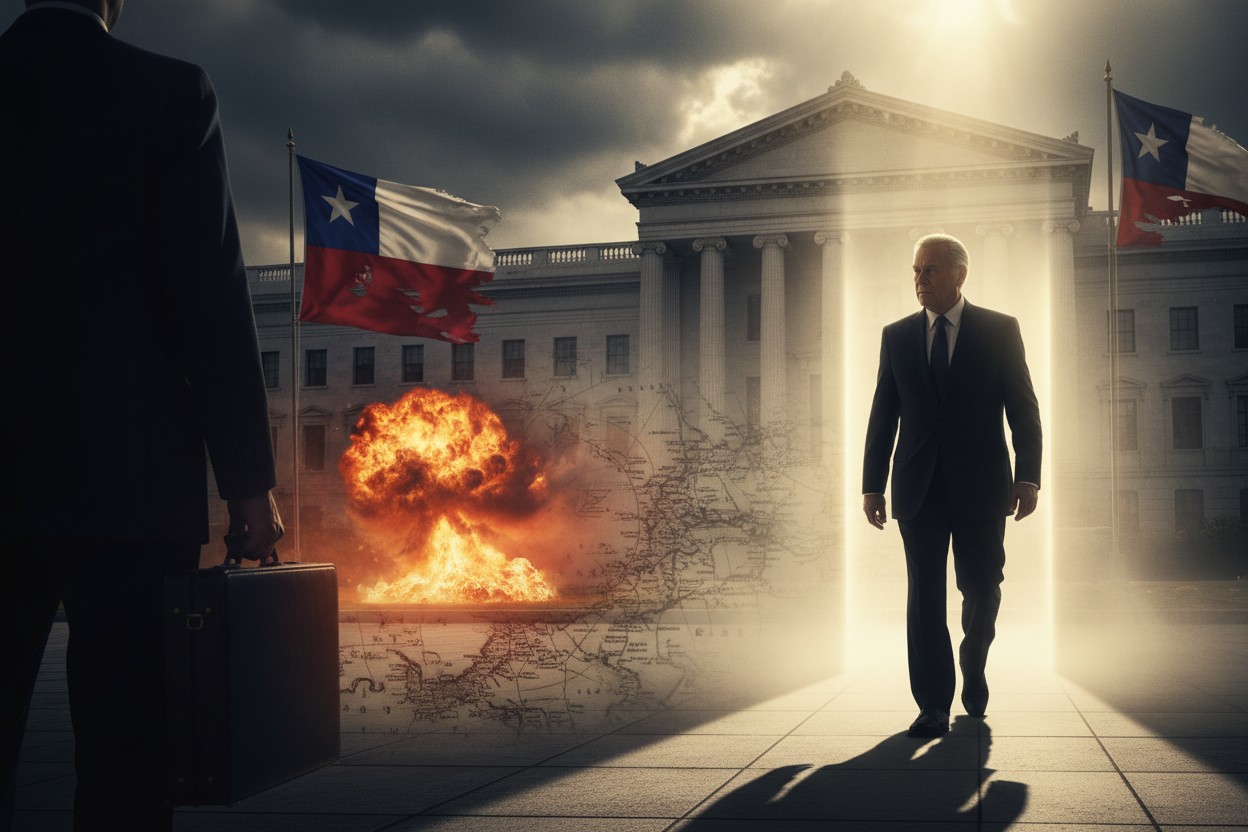
The cornerstone of the U.S. government’s involvement with Fernandez Larios is the September 21, 1976, assassination of Orlando Letelier, the former Chilean Defense Minister under socialist President Salvador Allende. Letelier, who had become a vocal critic of the military dictatorship of Augusto Pinochet, was driving to his office in downtown Washington, D.C., when a remote-controlled car bomb detonated. The blast killed Letelier and his American colleague, Ronni Karpen Moffitt, leaving her husband, Michael, as the sole survivor.
Declassified documents analyzed by the National Security Archive reveal that Fernandez Larios was far from a peripheral figure. He provided the essential intelligence—surveillance maps, home and office addresses, and operational cash—that allowed lead hitman Michael Townley to execute the attack. Townley, in turn, coordinated with members of the Cuban National Movement, a militant anti-Castro group, to build and plant the device.
The assassination was not merely a Chilean operation; it was an act of state-sponsored terrorism carried out in the heart of the American capital. Disturbingly, evidence suggests the tragedy might have been preventable. In April 2010, revelations emerged that a State Department warning to the Pinochet regime—specifically advising against the assassination of political dissidents—was rescinded at the direct request of Secretary of State Henry Kissinger. Despite urgent internal memos from his aides warning of the damage these murders would inflict on international relations, Kissinger remained unmoved, a decision that has haunted the diplomatic legacy of the era for decades.
Chronology of Accountability and Evasion
To understand how a man linked to a Washington bombing remains free in Florida today, one must examine the timeline of his interactions with the U.S. justice system:
- 1973: Fernandez Larios participates in the "Caravan of Death," a military death squad that executed or "disappeared" approximately 72 dissidents following the coup against Allende. Witness testimony places him at the center of the torture and murder of Chilean economist Winston Cabello.
- 1976: He facilitates the Letelier assassination in Washington, D.C.
- 1985: Facing mounting pressure and potential extradition, Fernandez Larios initiates secret back-channel discussions with U.S. officials.
- 1987: After failing polygraph tests regarding his level of involvement in the Letelier murder, Fernandez Larios is granted a plea deal. The State Department, prioritizing foreign policy goals over strict justice, classifies him as an "accessory after the fact."
- 2003: A U.S. civil court finds him liable for extrajudicial killings and torture. He is ordered to pay $4 million to the family of Winston Cabello—a sum that remains uncollected to this day.
- 2025: ICE arrests Fernandez Larios in Fort Myers, Florida, attempting to initiate deportation proceedings based on his past criminal acts.
- 2026: A federal court rules that the 1987 plea deal, which explicitly promised he would not be deported or extradited to Chile, remains binding. ICE releases him.
The 1987 Plea Deal: Diplomacy Over Justice
The 1987 plea agreement is the pivot point upon which the entire case rests. When Fernandez Larios began cooperating with U.S. investigators in the mid-1980s, his polygraph results were unequivocal: he was lying about his knowledge of the assassination plot. Yet, the State Department, under the administration of Ronald Reagan, deemed him a man of "limited value" whose cooperation nonetheless offered "substantial foreign policy benefits."
Internal cables from the period show a blatant disregard for the truth. Despite his admission that his surveillance directly contributed to the deaths of Letelier and Moffitt, State Department officials officially described him as "not a murderer or party to a conspiracy to murder." This linguistic gymnastics allowed the government to provide him with a light sentence and, crucially, a guarantee against future deportation. The U.S. Parole Commission even received letters from the State Department praising his "character"—a chilling endorsement for a man who had been a key operative in a regime characterized by state-sponsored torture.
The "Caravan of Death" and Unresolved Crimes
While the Letelier case drew the most attention due to its location, Fernandez Larios’s record in Chile is arguably more horrific. As a member of the "Caravan of Death," he was not merely an intelligence gatherer; he was an active participant in the systematic slaughter of political opponents.
Witnesses have testified that on October 17, 1973, in the city of Copiapo, Fernandez Larios personally participated in the torture of Winston Cabello. One witness described in harrowing detail how the operative used a knife to slash Cabello to death. These accounts were validated in a 2003 U.S. civil trial, where he was found liable for crimes against humanity. The fact that the Cabello family has never seen a cent of the $4 million judgment is a stinging reminder of the limitations of civil litigation when pitted against the protective umbrella of past government deals.
Official Responses and the Impotence of Enforcement
The current release of Fernandez Larios has left many in the legal and human rights communities baffled. When questioned about the decision, federal authorities have noted that there are no pending deportation proceedings and that the subject has not been granted a special "snitch visa" for foreign informants.
The irony is not lost on observers. While ICE has been aggressively pursuing "criminal aliens" across the country—most notably detaining roughly 3,600 individuals in Houston during a 2025 government shutdown—it found itself legally paralyzed by the very agreements the U.S. government signed decades ago. The "worst of the worst" classification, once intended to expedite his removal, became a liability when the government realized it could not legally bypass the 1987 agreement.
The National Security Archive, which has painstakingly documented these events through declassified records, argues that this case highlights a recurring pattern. Whenever the U.S. government has had to choose between the moral imperative of punishing a foreign agent involved in a high-profile crime and the strategic desire to maintain diplomatic leverage, the moral imperative has been consistently sacrificed.
Implications: A Legacy of Impunity
The implications of the Fernandez Larios case extend far beyond the individual. It raises fundamental questions about the accountability of state actors for crimes committed during the Cold War. If the U.S. government can enter into secret, lenient agreements with human rights abusers to serve short-term diplomatic interests, the message sent to the world is one of selective justice.
The failure to hold Fernandez Larios accountable for his role in the "Caravan of Death" or to ensure the collection of the 2003 civil judgment undermines the credibility of the U.S. justice system in human rights matters. As he continues to live in Florida, free from the threat of deportation, his case remains a symbol of an unresolved past.
For the families of Orlando Letelier, Ronni Karpen Moffitt, and Winston Cabello, the justice they sought has been systematically eroded by the very institutions meant to uphold the rule of law. The 2026 release of Armando Fernandez Larios serves as a stark reminder that in the realm of international power, the promise of justice is often the first casualty of the machinery of statecraft. The files may be declassified, the documents may be public, and the truth may be known, but for the man who helped carry out a car bomb attack on American soil, the promise of immunity—forged in 1987—has proven more durable than the pursuit of justice itself.