In the modern grocery aisle, protein is the undisputed king of nutritional marketing. From morning cereals infused with soy isolates to hydration waters fortified with collagen peptides and coffee blends spiked with whey, the message is clear: more protein is the gateway to health. However, a groundbreaking meta-analysis published on July 31 in the Cell Press Blue journal suggests that this "more is better" mantra may be misguided for a significant portion of the population.
After reviewing more than 350 scientific studies, researchers from the University of Wisconsin-Madison have unveiled a compelling, albeit controversial, finding: for the average sedentary adult, restricting protein intake may be a key to unlocking improved metabolic health and, potentially, a longer life.
The Core Findings: A Shift in Nutritional Perspective
The review, spearheaded by corresponding author Dudley Lamming, explores the biological intersection between protein consumption, aging, and metabolic efficiency. While protein is undeniably the "building block of life"—essential for muscle repair, hormonal balance, and immune function—the researchers argue that the current societal obsession with protein supplementation may be ignoring the biological costs of excess.
The team identified several recurring biological mechanisms that suggest protein restriction triggers "survival mode" at the cellular level. When protein intake is limited, the body appears to shift from a growth-oriented state to a repair-oriented state. This includes:
- Optimized Metabolic Function: Lower protein intake has been shown to improve fasting blood sugar levels and insulin sensitivity.
- Altered Nutrient Signaling: Cells become more efficient at processing nutrients, potentially reducing the wear and tear associated with constant growth signals.
- Enhanced Cellular Maintenance: Restriction limits cellular damage and promotes "autophagy"—the process by which cells clean out damaged components.
- Hormonal Modulation: Reduced protein intake spikes the production of fibroblast growth factor 21 (FGF21), a longevity-associated hormone.
"It’s absolutely crystal clear that there are benefits of protein to muscle growth and exercise response of active individuals," says Lamming. "But because most people are relatively sedentary, many people are likely consuming more protein than they actually need, which probably has negative health consequences."
A Historical Context: From Calorie Restriction to Protein Precision
To understand the weight of these findings, one must look at the chronology of longevity research. For decades, the gold standard for extending lifespan in model organisms—such as yeast, flies, and rodents—has been calorie restriction. Scientists have long observed that by significantly reducing total caloric intake, they could effectively slow the biological clock and mitigate the risk of age-related diseases like cancer and diabetes.
However, the "calorie restriction" model has a major flaw: it is notoriously difficult for humans to sustain. Most individuals find long-term, extreme calorie reduction psychologically taxing and physically depleting.
The Rise of Protein-Specific Research
Over the last fifteen years, the focus of the scientific community has shifted from total calories to macronutrient composition. Studies on flies and rodents consistently showed that life-extension benefits could be achieved through protein restriction without necessarily reducing total calories. This was a paradigm shift. If the benefits of a "starvation diet" could be mimicked by simply adjusting the ratio of protein to carbohydrates and fats, it would provide a much more palatable and sustainable path for public health intervention.
Recent human clinical trials have bolstered this hypothesis. Participants who lowered their protein intake while maintaining their total calorie count saw significant improvements in body composition, specifically in the reduction of visceral fat and the improvement of metabolic markers.
Supporting Data: The Science of Amino Acids and FGF21
Why does protein restriction work? The answer lies deep within our biochemistry, specifically in how we process individual amino acids and hormones.
The Role of Amino Acids
Not all protein is created equal. The review highlights that specific amino acids—namely methionine, isoleucine, and valine—are the primary drivers of growth-related pathways. When these pathways are chronically "on" due to high protein intake, they can contribute to systemic inflammation, obesity, and the metabolic decline associated with aging. Essentially, by constantly signaling the body to "grow" and "build," we may be inadvertently suppressing the body’s innate ability to "repair" and "maintain."
The FGF21 Connection
The hormone FGF21 serves as a critical biomarker in this equation. Often referred to as a "longevity hormone," FGF21 levels rise naturally when protein intake is restricted. In mouse models, elevated FGF21 has been linked to increased energy expenditure and reduced inflammation. Human data confirms that this mechanism is conserved; when humans reduce their protein intake, their FGF21 levels increase, suggesting that our bodies are hardwired to respond to lower protein availability with a metabolic "tune-up."
Official Responses and the Dietary Tug-of-War
The scientific community is currently navigating a complex tension between two sets of data. On one hand, there is the emerging evidence for protein restriction in sedentary populations. On the other, there is a well-established body of research advocating for higher protein intake to combat sarcopenia (muscle loss) in older adults.
The Case for More Protein
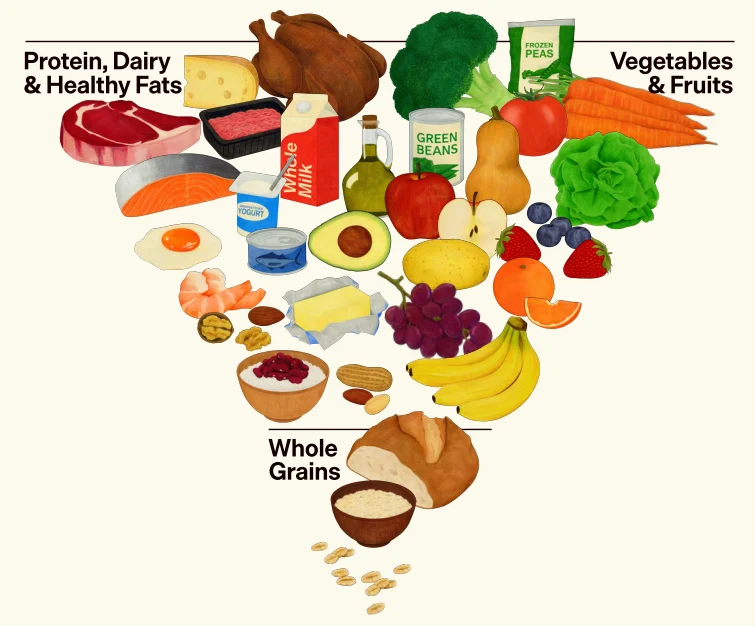
The U.S. government’s most recent dietary guidelines reflect the latter school of thought. New recommendations suggest a daily protein intake of 1.2–1.6 grams per kilogram of body weight—nearly double the previous guidelines. This increase is largely driven by the goal of protecting the aging population from frailty. Muscle mass is one of the strongest predictors of longevity and independence in later life. Therefore, the argument is that for older adults, the risk of muscle wasting far outweighs the potential metabolic benefits of protein restriction.
The Reconciliation
Lamming and his colleagues acknowledge this tension. Their work does not suggest that protein is inherently "bad." Instead, it suggests that current dietary guidance is too monolithic. "Recent recommendations have encouraged people to eat more protein, but they’ve also encouraged people to exercise more," Lamming notes.
The disconnect, he argues, is that the population is not actually exercising more. We have a society that is increasingly sedentary but simultaneously being told to consume "athlete-level" amounts of protein. This leads to a metabolic mismatch: the body is being flooded with the building blocks for muscle growth, but without the mechanical stress of exercise to signal that those blocks are needed, the protein is diverted into pathways that may promote inflammation and metabolic disease.
Implications: A New Era of Personalized Nutrition
The implications of this research are profound for both the food industry and individual health management. We are moving toward a future where "one-size-fits-all" dietary guidelines are increasingly viewed as obsolete.
1. The Need for Personalization
The researchers argue that protein recommendations must be stratified by activity level, not just age. An active 70-year-old weightlifter has fundamentally different nutritional requirements than a sedentary 70-year-old. The former needs high protein to maintain muscle mass; the latter might be better served by a moderate-to-low protein intake to preserve metabolic health.
2. Redefining "Fortified"
The proliferation of protein-enriched products—from "protein water" to fortified breakfast bars—should be viewed with more skepticism. For many consumers, these products are not functional necessities but rather "empty" additions that may be contributing to the very metabolic issues they hope to avoid. Consumers are advised to look at their total daily intake and activity levels before opting for extra protein supplements.
3. Future Research Directions
While the animal and preliminary human studies are promising, the next step is large-scale, long-term human trials. Scientists need to determine the "Goldilocks zone"—the exact amount of protein that provides enough support for muscle maintenance without triggering the accelerated aging pathways associated with excess.
Conclusion
The "Protein Paradox" identified by the UW-Madison researchers serves as a vital reminder that nutrition is not a game of "more is better." Just as we have learned that excessive sugar and refined carbohydrates are harmful, we are now learning that even healthy nutrients like protein have an optimal threshold.
As we continue to age in an environment filled with hyper-processed, protein-fortified foods, the evidence suggests that the most effective longevity intervention might be the simplest: matching our intake to our output. By prioritizing movement and being mindful of protein excess, individuals may find that eating a little less is the key to living a little longer.
This research was supported by the National Institute on Aging, the Wisconsin Partnership Program, and the University of Wisconsin-Madison.