









For millennia, human beings navigated the landscape of health and performance by listening to the internal hum of their own biology. We relied on the thumping of our hearts, the heaviness of our limbs, and the clarity of our minds to tell us if we were overdoing it or under-training. Today, that internal monologue has been largely replaced—or at least augmented—by the buzzing, glowing, and chirping of wearable technology.
If you are curious enough, a single device on your wrist can now track your heart rate, step count, exercise intensity, and sleep architecture with clinical-grade aspiration. While this transition from intuition to objective measurement represents a technological triumph, it has introduced a complex tension: how do we balance the "cold precision" of data with the nuanced, subjective wisdom of the human experience?
The Rise of the Data-Driven Athlete
The shift toward the "quantified self" began in earnest with the advent of accessible pedometers and has exploded into a multi-billion-dollar industry of smartwatches, chest straps, and continuous glucose monitors (CGMs). At its best, this technology serves as a vital bridge between what we feel and what is actually happening within our physiological systems.
Consider the "Barbecue Sauce Effect." A colleague of mine once insisted he was maintaining a strict caloric deficit, only to discover through diligent tracking that he was consuming an additional 500 calories daily—hidden entirely within his generous portions of barbecue sauce. In this instance, data served as a corrective mirror, highlighting a blind spot his intuition had failed to detect.
However, we are not all created equal when it comes to self-assessment. While the average person struggles to gauge their effort accurately, outliers exist. Legendary sprinter Ben Johnson was famously able to call out his 100-meter sprint times within a tenth of a second of the official stopwatch. This level of internal calibration is the gold standard of human performance, but for the rest of us, technology offers a shortcut to that same mastery.
The Accuracy Hierarchy: Not All Data is Equal
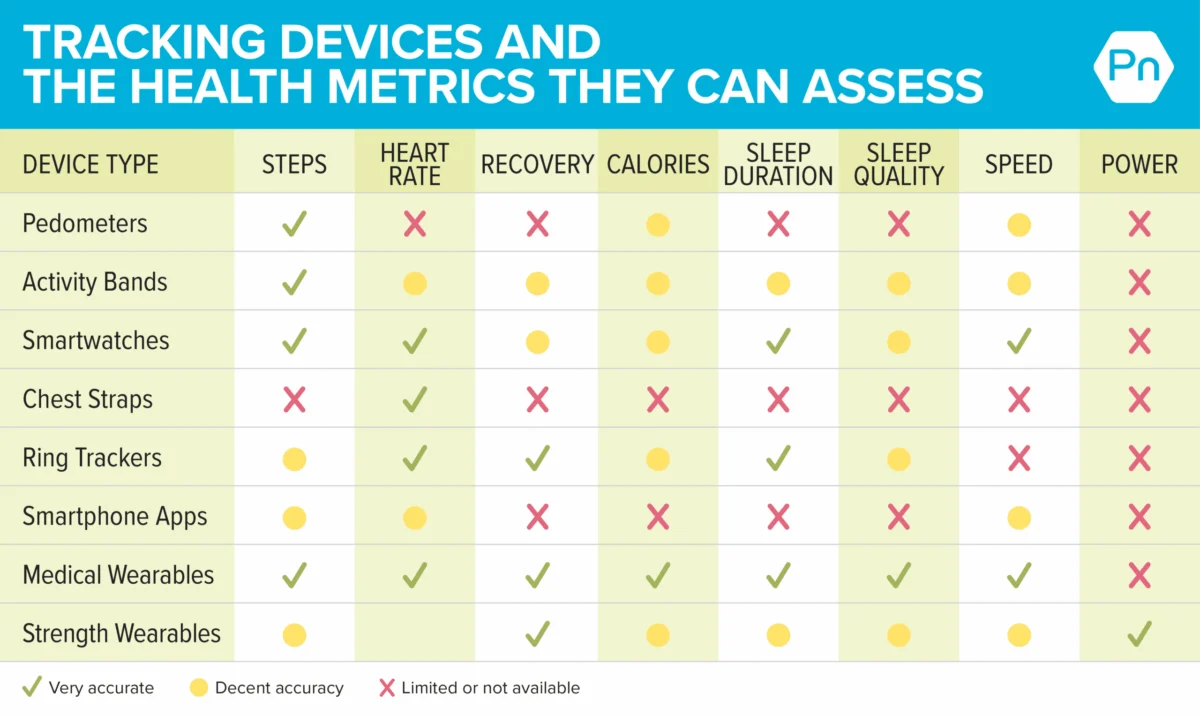
Before surrendering your decision-making power to a device, it is essential to understand that not all data is created equal. The reliability of your wearable depends on the hardware quality, the sophistication of the proprietary algorithms, and the inherent difficulty of measuring the metric in question.

A Hierarchy of Reliability
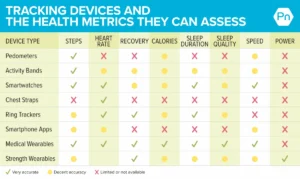
- High Fidelity: Heart rate and step counts are generally considered highly reliable across most mid-to-high-tier devices.
- The Margin of Error: Metrics like "calories burned" and "movement velocity" are notoriously prone to significant error. These are often estimates derived from complex mathematical models that may not account for your unique metabolic profile or biomechanical efficiency.
- The "Black Box" Problem: Users often treat these numbers as gospel, forgetting that a software update can fundamentally change how a device interprets your movement, leading to sudden shifts in your "fitness score" that have nothing to do with your actual health.
The Paradox of Information: Why More Isn’t Always Better
There is a psychological trap in the world of fitness tracking: the "Sweet Spot" of decision-making. Research by computer scientist Samantha Kleinberg suggests that even a tiny amount of surplus information can have a detrimental effect on our ability to make sound choices.
This creates an inverted-U curve of effectiveness. With too little information, we are flying blind. With too much, we suffer from "analysis paralysis." Think of the frustration of standing in a grocery store aisle, unable to choose between ten types of protein powder because you’ve read contradictory reviews for hours. When we receive constant notifications about our sleep quality, readiness scores, and strain levels, we often stop listening to our bodies entirely, waiting for the app to tell us whether we are "allowed" to push hard in the gym today.
When Tracking is Actually Helpful: Three Key Signs
To determine if your relationship with tech is symbiotic or parasitic, look for these three indicators.
1. Validation and Stress Reduction
For many, the data is a source of calm. Take the case of "Zak," a high-performance athlete who struggled to trust that low-intensity "Zone 2" cardio was effective. His instinct was to go hard every single day. By tracking his resting heart rate and seeing the objective decline in his recovery times, he found the evidence necessary to trust the process. In this case, technology validated his effort and reduced his anxiety.
2. The Power of the "Prompt"
Behavior change requires three things: motivation, ability, and a prompt. Trackers excel at providing the prompt. When a client sees that their sleep quality plummeted on nights they consumed alcohol, the data provides a clear, undeniable link between behavior and consequence. It transforms a vague feeling into a concrete reality, making the right choice easier to identify.
3. Understanding Potential
Sometimes, we don’t push hard enough because we underestimate our capacity. Heart rate variability (HRV) and output data can help individuals identify when they have more in the tank, effectively pushing them past self-imposed plateaus.

The Downside: When Tech Becomes a Crutch
The "Bad Omen" of tracking occurs when the numbers begin to supersede your own senses. This is often exemplified by "The Great MyFitnessPal Blackout" of 2019, where millions of users were left in a state of panic because their tracking app went offline. When you lose the ability to eat without an app telling you the caloric value, you have lost touch with your own biological signals of hunger and satiety.
Furthermore, obsessive tracking can lead to burnout. If you are a cyclist who focuses more on "demolishing" segments on a social fitness app than on the joy of the ride, you have shifted from sport to a grind that offers no restorative benefit.
Integrating Tech with Human Intuition
To bridge the gap between wearable data and lived experience, we recommend a three-step protocol for mindful tracking:
- The Pre-Check: Before you sync your device, ask yourself: How do I feel? Did I sleep well? Does my body feel energized or sluggish? Make your guess, then check the data. Over time, this trains your brain to become as accurate as the sensor on your wrist.
- Develop Mental Shortcuts: Use Rate of Perceived Exertion (RPE) alongside your watch. If your watch says you are in "Peak Zone" but you feel like you could hold a conversation, prioritize your feeling. Your internal nervous system is a more complex processor than any accelerometer.
- Hone Your Senses: Remember that you possess an incredible array of internal sensors: proprioception (awareness of your body in space), interoception (awareness of internal states like hunger and heart rate), and kinesthesia (the feeling of movement). Never let these atrophy in favor of a screen.
Conclusion: The Mirror and the Monitor
In the final analysis, technology is a tool, not a master. Whether it is a heart rate strap or a simple mirror, the objective is the same: to provide feedback that helps you live a more vibrant, capable, and healthy life.
The goal of fitness is not to become a perfect data point on a graph; it is to master the art of being human. Use your trackers to calibrate your intuition, not to replace it. By maintaining this balance, you ensure that even if the battery dies or the app crashes, you still know exactly how you are doing—because you’ve taken the time to listen.
References
- The Science of Perception in Elite Athletics, Journal of Applied Sports Physiology.
- Validity of Consumer-Grade Wearable Devices, International Journal of Exercise Science.
- The Paradox of Choice in Digital Health, Kleinberg et al.
- The Fogg Behavior Model, Stanford University.
- The Role of Mindfulness in Physical Training, Journal of Strength and Conditioning Research.
- Intrinsic vs. Extrinsic Motivation in Long-Term Adherence, Psychological Bulletin.
- The Psychology of Mastery, Journal of Behavioral Medicine.