






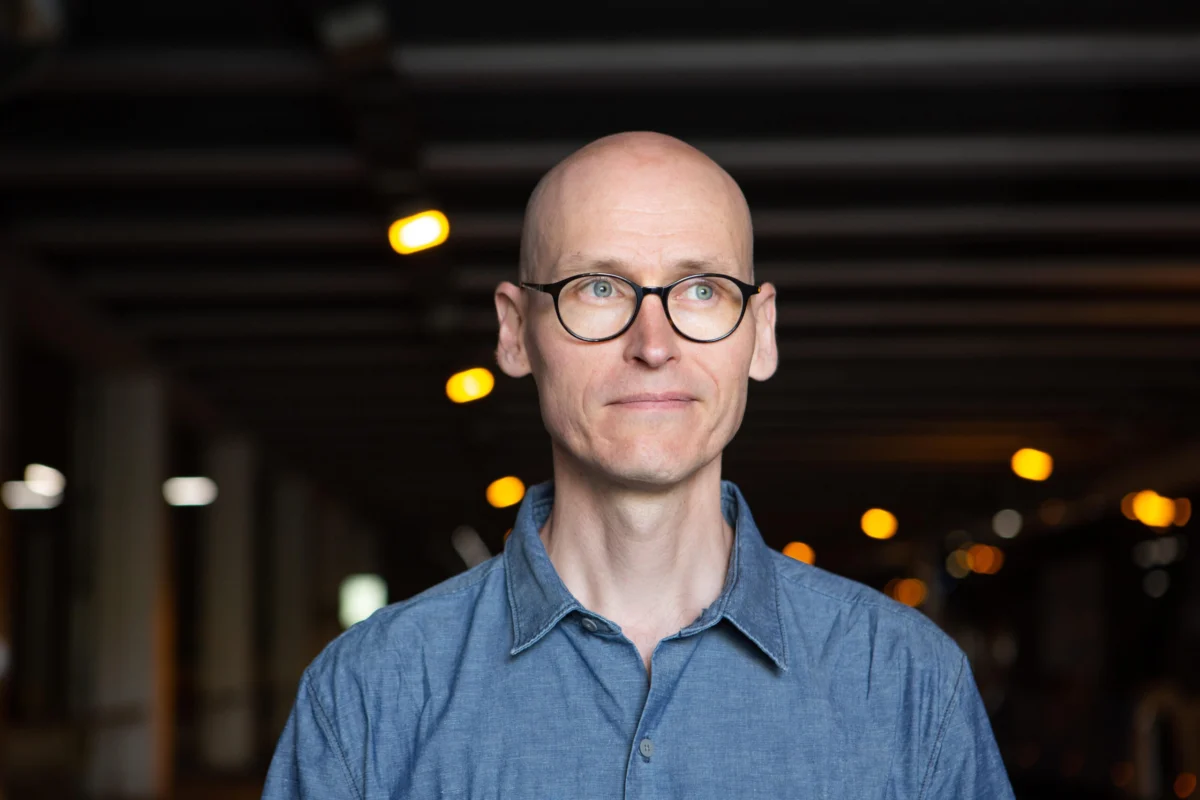
In the sterile, high-pressure corridors of modern hospitals, the human story is often the first casualty of efficiency. As diagnostic algorithms and bureaucratic documentation take center stage, both clinicians and patients find themselves trapped in a system that prioritizes "the biological machine" over the lived experience. However, a pioneering initiative in Finland, led by neuropsychologist and award-winning novelist Jussi Valtonen, is attempting to bridge this chasm through the practice of narrative medicine.
By integrating the literary arts into clinical training, Valtonen and his colleagues at the University of the Arts Helsinki (Uniarts) and the Finnish Centre for Evidence-Based Orthopedics (FICEBO) are helping medical professionals recover the "moral imagination" necessary to truly see their patients—and themselves—as whole human beings.
Main Facts: The Intersection of Art and Anatomy
Narrative medicine is a clinical discipline that seeks to fortify healthcare with the "narrative competence" to recognize, absorb, interpret, and be moved by the stories of illness. While traditional medical training focuses on the objective collection of data, narrative medicine emphasizes the subjective nuances of communication.
The Finnish initiative, "Health, Narrative, and the Arts," operates on a deceptively simple premise: reading poetry and short stories together, followed by creative writing exercises, can fundamentally alter how a clinician listens to a patient. According to Jussi Valtonen, the core of this work is a reminder that life is broader and more complex than diagnostic categories allow.
The workshops typically involve groups of approximately ten participants who engage in a three-step process:
- Close Reading: Analyzing a literary work to identify tone, structure, and implicit meanings.
- Creative Writing: Responding to a prompt linked to the text, often exploring personal or professional "crossroads."
- Sharing: Reading these personal reflections aloud to the group, a process that fosters vulnerability and mutual witnessing.
The goal is not to turn doctors into novelists, but to refine their "perspective-taking" abilities—the cognitive and emotional effort required to imagine life through the eyes of another.
Chronology: From Columbia to Helsinki
The journey of narrative medicine in Finland is a story of international collaboration and institutional adaptation.
The movement was pioneered at Columbia University by Dr. Rita Charon and her colleagues. During a postdoctoral fellowship in New York, Jussi Valtonen—already an established neuropsychologist and the author of the acclaimed novel They Know Not What They Do—encountered the Columbia team. Inspired by their results, he sought to bring these humanistic methods to the Finnish healthcare system.
Upon returning to Finland, Valtonen assumed a role as a professor of writing at the University of the Arts Helsinki. In collaboration with colleagues like Bradley Lewis, a proponent of narrative psychiatry, Valtonen secured a grant from a Finnish foundation to pilot the program.
The first phase of the project targeted clinicians within the Helsinki City healthcare and social services sector. Despite initial concerns that stoic Finnish medical professionals might resist reading poetry, the pilot program saw "ceiling-level" positive feedback. Participants reported that the sessions offered a rare "breathing space" from the frantic pace of the hospital.
The project’s second phase saw a transition from clinician-only groups to those involving neurological patients. Most recently, the initiative has expanded to study how these methods help patients with life-altering neurological conditions process their diagnoses and find peer support through shared storytelling.
Supporting Data: The "Clear Spring Water" of Qualitative Research
To move beyond anecdotal success, the team hired social psychologist Dr. Elina Renko to conduct rigorous qualitative research on the workshops. Her findings, published in various medical education journals, highlight a significant disconnect between how clinicians think they listen and how they actually listen.
The Difficulty of Perspective-Taking
One of the most revealing aspects of the research involved a writing exercise where clinicians were asked to describe a clinical encounter from the first-person perspective of the patient. Participants reported this as the most difficult task. Many realized that while they believed they were being empathetic, they lacked the language to truly inhabit the patient’s subjective reality.
The "Mercy" Finding
A recurring theme in the research was the concept of "mercy." In a perfectionistic field like medicine, clinicians often carry the weight of past mistakes or difficult interactions for years. Dr. Renko’s interviews revealed that the workshops allowed clinicians to view these encounters through a "hermeneutic" lens—realizing there are multiple ways to interpret a single event. This led to a sense of self-compassion, which one participant described as "like clear spring water in the murky pond of working life."
Feedback Metrics
Feedback from the clinician groups remained consistently high, with participants noting that the sessions helped them move out of the "clinical boxes" that dehumanize care. The research suggests that narrative training acts as an antidote to "biomedical reductionism"—the tendency to view a person merely as a collection of symptoms.
Official Responses and Philosophical Foundations
Jussi Valtonen’s work is deeply informed by his critique of what he calls "neuro-dualism." In his scholarly work and columns for the Finnish Medical Journal, Valtonen argues that modern society has adopted a lopsided view of the mind-brain relationship.
The Neuro-Dualistic Trap
Valtonen’s research into "neuro-dualistic habits of thought" shows that while people intuitively feel that the mind and brain are separate, they believe the brain is the "more powerful" partner. This leads to a hierarchy where neuroscience is seen as "objective truth" while human experience is viewed as "subjective noise."
"If you really want to understand life and what it is about," Valtonen notes, "I would always go to Tolstoy instead of the latest neuropsychological findings." His work through Uniarts Helsinki is an official effort to re-balance this equation, insisting that the "singular human being" must remain the primary driver of clinical decisions.
Institutional Support
The initiative is supported by the University of the Arts Helsinki and FICEBO, reflecting a growing recognition within Finnish academia that the "health humanities" are not an optional elective but a core requirement for competent care. By placing these workshops within an art school setting, the program forces clinicians to step out of their professional comfort zones, effectively stripping away the "power of the white coat" to facilitate more honest human connection.
Implications: The Human Wall Against AI
The rise of Artificial Intelligence in healthcare adds a new layer of urgency to the narrative medicine movement. As AI begins to automate diagnostic reports and clinical notes, there is a risk that healthcare language will become even more standardized, reductive, and dehumanized.
The Limits of Large Language Models
Valtonen argues that while AI can "average" human experience by processing millions of texts, it can never "witness" another person’s pain. The "membership in the human club" is something an algorithm cannot attain. The skills practiced in narrative medicine—tolerance for ambiguity, moral imagination, and the ability to feel "wonder"—are precisely the skills that AI cannot replicate.
Future Outlook
The expansion of these groups to neurological patients suggests a future where "narrative therapy" is integrated into standard recovery protocols. For a patient with a brain injury or a degenerative disease, the ability to rewrite their life story is as crucial as physical rehabilitation.
The long-term implication for the healthcare system is a shift toward "narrative-based medicine." This does not mean abandoning scientific evidence, but rather ensuring that evidence is applied within the context of a patient’s specific values and life story.
As Valtonen concludes, the ultimate job of the clinician in the age of automation is to provide what no robot can: a "clear spring" of human attention. By reclaiming the arts, Finnish healthcare is not just training better doctors; it is attempting to save the human soul of medicine from the "murky pond" of the machine.
This report was enriched with insights from the Mad in America podcast and research conducted by Uniarts Helsinki. MIA Reports are supported by grants from Open Excellence and donations from readers.