










For decades, the standard corporate approach to employee health was binary: provide a gym membership, subsidize a local fitness club, or host an annual "wellness challenge." However, as research into human physiology and workplace behavior has matured, a paradigm shift is underway. Employers, health professionals, and public health authorities are increasingly acknowledging that the "exercise hour"—that singular block of time spent in the gym—is insufficient to mitigate the systemic damage caused by eight or more hours of uninterrupted sitting.
The modern workplace is being reimagined not as a static office, but as a dynamic environment designed to combat the rising tide of sedentary behavior. This article explores the transition from structured exercise to "movement integration," examining the science, the implementation, and the profound implications for the global workforce.
The Main Facts: Redefining Workplace Health
The core challenge facing the contemporary workforce is the "active couch potato" phenomenon. This term describes individuals who meet the recommended guidelines for weekly exercise—perhaps by running or lifting weights for 30–60 minutes a day—but remain sedentary for the remaining 15 hours of their waking life.
Recent findings, underscored by the 2025 Medicine & Science in Sports & Exercise study by Katzmarzyk et al., indicate that the cumulative health toll of prolonged sitting is independent of exercise habits. Cardiovascular health, metabolic regulation, and musculoskeletal integrity are compromised by extended periods of inactivity. Consequently, workplace wellness programs are pivoting. The new objective is not merely to encourage "fitness," but to foster "movement."
Movement integration involves the intentional breaking up of sedentary time through low-intensity physical activity throughout the workday. This shift represents a transition from high-intensity, episodic exercise to a philosophy of "constant motion," which aligns more closely with human evolutionary biology.
Chronology: From Cubicles to Active Spaces
The trajectory of workplace health has evolved in distinct phases over the last quarter-century:
- 1990s–2000s: The Gym Membership Era. The focus was on incentivizing external activity. Corporations viewed wellness as a private matter for employees to manage outside of office hours, typically through subsidized gym access.
- 2010–2015: The Ergonomic Awakening. As musculoskeletal issues like lower back pain and repetitive strain injuries surged, companies began investing in ergonomic furniture. The "standing desk" gained popularity, though it was often implemented without sufficient education on postural variety.
- 2016–2020: The Gamification Phase. The rise of wearable technology led to the "10,000 steps" movement. Companies introduced leaderboard-style challenges, which, while successful in increasing engagement, often focused on quantity rather than the quality of movement.
- 2021–Present: The Movement Integration Era. Driven by the 2025 WHO guidelines and current physiological research, organizations are now moving toward structural change. This includes redesigning office layouts to encourage walking, fostering cultures that normalize standing meetings, and integrating "movement snacks"—short, frequent bouts of activity—into the daily workflow.
Supporting Data: The Science of Inactivity
The urgency for this change is supported by robust data. According to the World Health Organization’s 2025 report, Promoting Movement in the Workplace, the biological impact of sitting for more than four consecutive hours includes:
- Metabolic Downregulation: Lipoprotein lipase activity—an enzyme responsible for breaking down fat—drops by as much as 90% during prolonged sitting.
- Glucose Dysregulation: Insulin sensitivity declines rapidly after several hours of physical inactivity, contributing to a higher risk of Type 2 diabetes, even in individuals with normal body mass indices.
- Vascular Health: Reduced blood flow to the lower extremities during prolonged sitting can lead to arterial stiffening, a precursor to cardiovascular disease.
Katzmarzyk et al. (2025) found that employees who incorporated a "movement break" every 45 to 60 minutes showed significantly lower markers of systemic inflammation compared to those who remained sedentary for three-hour blocks, even when both groups engaged in identical moderate-to-vigorous exercise outside of work. The data is clear: movement is not a substitute for exercise, but a mandatory prerequisite for health.
Official Responses and Industry Shifts
Public health agencies are no longer keeping their advice relegated to diet and gym habits. The World Health Organization has officially endorsed "activity-friendly environments" as a standard component of corporate health policy.
The Corporate Response
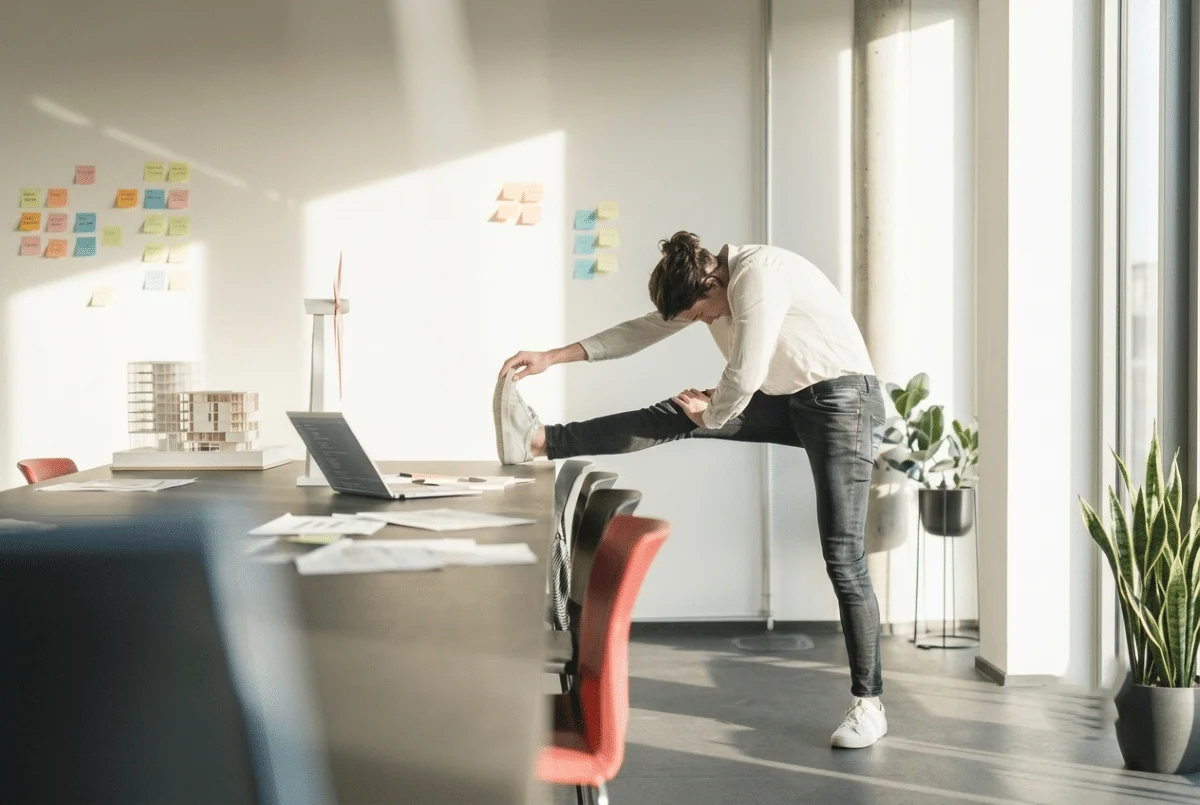
Forward-thinking firms are adopting a "Policy of Permission." Management is being trained to recognize that an employee standing during a meeting or walking while on a conference call is not "distracted" or "unprofessional," but rather actively managing their health.
"The goal," notes one corporate health consultant, "is to remove the friction associated with moving." This includes:
- Walk-and-Talk Meetings: Eliminating the need for a conference room for one-on-one check-ins.
- Environmental Cues: Placing printers, water coolers, and waste bins at a distance from workstations to force incidental movement.
- Active Break Rooms: Transforming traditional lounges into spaces that feature light movement equipment or open floor plans designed for stretching.
Implications: The Future of Work Culture
The implications of this shift are profound, impacting everything from employee productivity to long-term health care costs.
1. Productivity and Cognitive Function
Contrary to the belief that movement disrupts workflow, evidence suggests it enhances cognitive function. Physical movement increases blood flow to the brain, which can improve focus, creativity, and problem-solving abilities. "Movement snacks"—short, 2-to-3-minute bursts of movement—have been shown to improve mental clarity following the midday energy slump.
2. Talent Acquisition and Retention
In the post-pandemic era, employees are increasingly discerning about the culture of their workplace. A company that prioritizes physical well-being through active infrastructure demonstrates a commitment to the employee as a whole person, rather than a resource to be depleted. This has become a significant differentiator in recruiting top talent.
3. Economic Impact
By reducing the incidence of chronic diseases associated with sedentary behavior, companies stand to see a significant reduction in long-term health insurance premiums and absenteeism. The cost of installing adjustable-height desks or creating walking paths is statistically outweighed by the long-term savings in healthcare and the increase in "presenteeism"—the state of being physically and mentally engaged at work.
4. Cultural Change
Perhaps the most difficult aspect of this transition is the cultural barrier. For decades, the "hustle culture" equated sitting still with working hard. Dismantling this association requires leadership buy-in. When CEOs and department heads adopt walking meetings, it sends a powerful signal to the rest of the organization that moving is not only allowed but encouraged.
Conclusion: A Holistic Approach
The integration of movement into the workday is not a rejection of the gym or the structured workout. Rather, it is an acknowledgment that the human body was designed for locomotion, not for the static postures required by the industrial and information ages.
By viewing the workday through the lens of movement, organizations can bridge the gap between sedentary desk work and the physiological requirements for long-term health. The shift toward activity-friendly environments is more than a wellness trend; it is a fundamental redesign of the relationship between the human body and the modern workplace. As we look toward 2026 and beyond, the most successful companies will be those that create an environment where the "healthy choice" is also the "easiest choice."
References
- Katzmarzyk, P. T., Powell, K. E., Jakicic, J. M., Troiano, R. P., Piercy, K., & Tennant, B. (2025). Sedentary behavior, movement throughout the day and workplace health outcomes. Medicine & Science in Sports & Exercise, 57(2), 345–353.
- World Health Organization. (2025). Promoting movement in the workplace: Evidence-based strategies for reducing sedentary behavior. Geneva, Switzerland: World Health Organization.
- Fitness Journal – 2026, Issue 7. Analysis of contemporary workplace health trends and implementation strategies for human resources professionals.