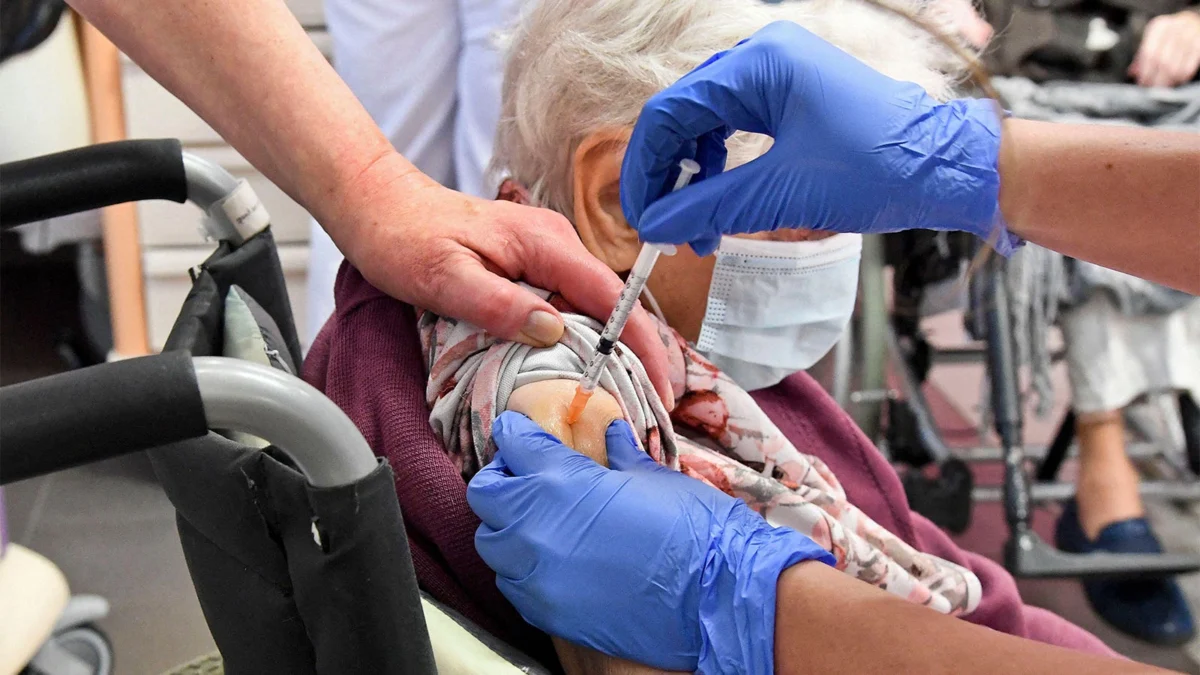
In an era where medical science is increasingly looking at the intersections of infectious disease and neurodegeneration, a significant new study has provided compelling evidence that the recombinant zoster vaccine—widely known as Shingrix—may offer a dual benefit: preventing the painful shingles virus and potentially lowering the risk of dementia.
A cohort study involving over half a million older adults, published in the Annals of Internal Medicine, indicates that individuals who received the Shingrix vaccine demonstrated a 24% lower risk of being diagnosed with dementia over a four-year period compared to their unvaccinated peers. This finding adds weight to a growing body of research suggesting that shielding the aging brain from chronic viral infections or stimulating the immune system in specific ways may preserve cognitive function.
The Core Findings: A Significant Reduction in Risk
The study, led by Dr. Kaleen Hayes of the Brown University School of Public Health, utilized a rigorous "target trial emulation" approach. By analyzing data from more than 500,000 Medicare fee-for-service beneficiaries residing in skilled-nursing facilities between 2017 and 2022, the researchers were able to compare the dementia outcomes of those who received at least one dose of the Shingrix vaccine against those who remained unvaccinated.
The results were striking. Over the four-year follow-up period, the cumulative risk of a dementia diagnosis was 18.8% for the vaccinated group, compared to 24.6% for those who did not receive the vaccine. This represents an absolute risk reduction of 5.81 percentage points. The risk ratio (RR) of 0.76 (95% CI 0.69–0.84) suggests a statistically significant protective association that remained robust even after adjusting for various confounding factors.
A Brief Chronology of Research: From Zostavax to Shingrix
The relationship between viral vaccines and cognitive health is a relatively new, yet rapidly expanding, field of study. To understand the significance of the Brown University findings, one must look at the historical context of shingles vaccination.
- Pre-2017 (The Zostavax Era): Earlier investigations focused on the live-attenuated zoster vaccine, Zostavax. For instance, a notable "natural experiment" conducted in Wales observed that individuals who received the older, live-virus vaccine showed a 20% lower risk of dementia. While these studies were foundational, they were limited by the fact that Zostavax was less effective than modern alternatives and is no longer available in the United States.
- 2017 (The Introduction of Shingrix): The FDA’s approval of the recombinant zoster vaccine (Shingrix) marked a shift in preventative medicine. Shingrix is non-live and utilizes an adjuvant (AS01B) to create a more robust immune response.
- 2023–2024 (Expanding Evidence): Recent studies, including research on Medicare beneficiaries, began to suggest that the benefits of the recombinant vaccine extended beyond shingles prevention. Last year, a study linked both the Shingrix vaccine and the respiratory syncytial virus (RSV) vaccine (Arexvy) to lower dementia incidence, leading researchers to hypothesize that the powerful adjuvants used in these vaccines might play a role in systemic neurological protection.
- 2025 (The Brown University Study): The current study is the first of its kind to specifically focus on the recombinant vaccine within the population of older adults entering skilled-nursing facilities—a demographic that is traditionally excluded from clinical trials and bears the highest burden of both shingles and cognitive decline.
Supporting Data and Demographic Nuances
The sheer scale of the study—involving 509,926 participants with a mean age of 79—allows for a granular look at how the vaccine impacts different subgroups. The researchers found that the protective association was not uniform across all demographics.
Gender Disparities
The association between the vaccine and a lower dementia risk appeared more pronounced in women (RR 0.75) than in men (RR 0.82). While the reason for this remains unclear, it aligns with broader trends in immunological research, where sex-based differences in immune response to vaccination are frequently documented.
Prior Vaccination History
The study also noted that the protective effect was attenuated among individuals who had previously received the older, live-attenuated Zostavax vaccine (RR 0.86) compared to those who were "vaccine-naive" regarding shingles (RR 0.75). This suggests that the primary benefit may be derived from the specific immunological stimulation provided by the recombinant vaccine’s adjuvant, rather than simply having "some" protection against the virus.
Data Limitations
Despite the compelling results, the researchers cautioned that this is an observational study. They acknowledged the presence of "healthy vaccinee bias"—the tendency for individuals who are generally more health-conscious to seek out vaccinations, which may skew the results. Furthermore, the study relied on administrative health records, which can have inherent limitations in the precision of dementia diagnoses.
Theoretical Mechanisms: Why Would a Shingles Shot Protect the Brain?
While the link is becoming clearer, the biological mechanism behind the protection remains a subject of intense debate and investigation. Dr. Hayes and her colleagues proposed several working theories:
- Reduction of Neuroinflammation: The most direct theory is that by preventing shingles, the vaccine avoids the systemic inflammation and potential neuroinflammation that occur during a viral outbreak. Shingles is known to increase the risk of stroke and other vascular events, which are themselves major precursors to vascular dementia.
- The "Adjuvant Effect": A more novel hypothesis posits that the vaccine itself, specifically the AS01 adjuvant, may play a protective role. Adjuvants are added to vaccines to boost the body’s immune response. Some researchers believe that this "robust immune activation" may trigger beneficial downstream effects on the central nervous system, potentially clearing cellular debris or reducing the buildup of proteins associated with Alzheimer’s disease.
- The "General Protection" Hypothesis: Another emerging, albeit speculative, theory is that vaccination in general—particularly vaccines that demand a high level of immune engagement—may train the immune system in a way that provides long-term, non-specific cognitive protection.
Implications for Public Health and Clinical Practice
The implications of these findings are profound, particularly regarding how we view preventative care for the elderly.
Addressing Low Vaccine Uptake
Dr. Hayes highlighted that even among those at the highest risk—older adults in skilled-nursing facilities—the uptake of the zoster vaccine remains alarmingly low. In this study, only 1.73% of participants received at least one vaccine dose within 12 months of admission. This "uptake gap" is a major public health concern, as this population is the most vulnerable to the debilitating effects of shingles.
Policy and Clinical Recommendations
The CDC currently recommends the shingles vaccine for all healthy adults aged 50 and older, as well as for those 19 and older with compromised immune systems. The new data provides clinicians with a powerful additional argument for encouraging vaccination. If a simple, two-dose regimen can significantly lower the risk of cognitive decline in the most vulnerable segment of the population, the cost-benefit analysis of universal vaccination changes dramatically.
Future Research Directions
The scientific community is now calling for randomized controlled trials to confirm these observational findings. While the Brown University study uses "target trial emulation" to mimic the rigor of a clinical trial, a direct, prospective, randomized study would be the "gold standard" to establish a causal link between the vaccine and reduced dementia. Researchers are also eager to investigate whether other vaccines—such as the flu or pneumococcal vaccines—demonstrate similar cognitive benefits when analyzed through the same lens.
Conclusion
The study led by Dr. Kaleen Hayes and her team represents a pivotal moment in geriatric neurology. While we are not yet at the point of prescribing shingles vaccines as a "dementia preventative," the weight of the evidence is shifting. As our global population ages, the search for modifiable risk factors for dementia has become a top priority. If preventing a common viral infection like shingles can simultaneously act as a guardrail against cognitive decline, it would constitute one of the most effective and accessible public health interventions in modern history.
For now, the message to clinicians and patients is clear: the recombinant zoster vaccine does more than just prevent a painful rash. It may be a crucial tool in the broader effort to promote healthy aging and preserve the integrity of the mind.