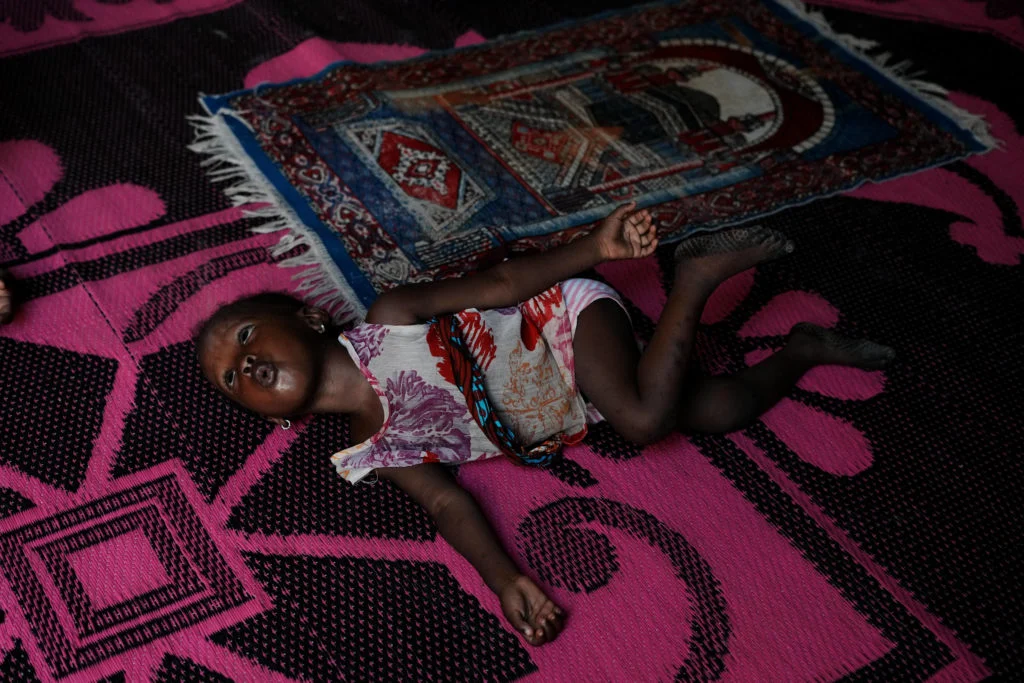
SOKOTO, Nigeria — In the unvarnished, two-bedroom home of Maryam Aminu in Kware, a town on the outskirts of Sokoto, the air is thick with the acrid smoke of a coal stove. For Maryam, this haze is a daily reminder of a reality she can no longer escape: her 18-month-old daughter has been diagnosed with malnutrition for the second time this year. In a region already besieged by insurgency and extreme poverty, the Aminu family represents the frontline of a hidden, global crisis—one where a geopolitical conflict thousands of miles away is stripping the food from the plates of the most vulnerable.
Main Facts: A Convergence of Crises
The malnutrition crisis currently gripping northern Nigeria is the result of a "perfect storm." While the region has long struggled with internal instability, the recent escalation of hostilities in the Middle East—specifically the conflict involving Iran and the subsequent disruption of the Strait of Hormuz—has triggered a global fuel shock.
For households in Sokoto, this shock was immediate. In February, the price of fuel at the pump stood at 800 naira ($0.58) per liter. By April, that figure had ballooned to 1,400 naira ($1.02). Because Nigeria’s food supply chain is heavily dependent on road transport, the price of staples like corn, rice, and beans has surged, forcing families to make impossible choices.
The Aminu family’s descent into this crisis mirrors thousands of others. Shehu Aminu, once a provider as a taxi driver, found his occupation untenable when fuel prices rendered his daily earnings insufficient to cover the cost of petrol. With the primary breadwinner sidelined, the family’s diet was reduced to "pap"—a corn-based gruel that lacks the essential nutrients required for a growing toddler’s development.
Chronology: The Escalation of Hardship
The timeline of this collapse can be traced through a series of interconnected events that transformed a manageable economic struggle into a humanitarian emergency:
- Early 2024: Regional insurgency in northern Nigeria continues to limit agricultural production as farmers are forced to abandon fields due to kidnapping and violence.
- February 2024: The conflict in the Middle East intensifies. As tensions flare between Iran and the U.S., the closure of the Strait of Hormuz—a vital maritime artery—shocks global energy markets.
- February 2024 (Local Impact): Fuel prices in Nigeria begin a sharp, sustained climb. Inflation, already exacerbated by the removal of fuel subsidies and currency devaluation under President Bola Tinubu, enters a period of hyper-acceleration.
- April 2024: The cumulative effect of the price hikes becomes critical. Maryam Aminu’s daughter is diagnosed with malnutrition for the second time in three months. Health facilities in Sokoto report a surge in "relapse cases"—children who were previously treated and discharged, only to return as their families can no longer afford adequate nutrition.
- Mid-2024: International organizations, including UNICEF, issue dire warnings regarding the global impact of the war, highlighting that the economic shockwaves are hitting the world’s most impoverished regions with disproportionate force.
Supporting Data: The Scale of the Emergency
The statistics emerging from northern Nigeria are grim, reflecting a systemic failure of food security that is now being exacerbated by global economic volatility.
According to a technical report released this week by the World Bank, approximately 139 million Nigerians are currently classified as poor or vulnerable to poverty. This demographic is the most sensitive to fluctuations in the cost of living. When the price of fuel rises, the price of transport rises; when transport rises, the cost of food at the market follows.
UNICEF’s latest projections are even more alarming. The agency estimates that if the current Middle Eastern conflict persists, an additional 23.4 million children globally could fall into "monetary poverty"—a state defined by a critical lack of income and the inability to consume basic necessities. Of this number, at least 80% are expected to be in Africa and Asia.
At a single hospital in Sokoto, records shared with the Associated Press confirm that nearly 40 children, all previously treated for malnutrition since February, have returned for secondary treatment. These figures do not account for the countless children in remote areas who never reach a health facility, suggesting that the official data represents only the tip of the iceberg.
Official Responses and Humanitarian Perspectives
The humanitarian community is sounding the alarm, emphasizing that the consequences of this crisis are not merely temporary.
"Children are paying the price for the escalating conflict in the Middle East, including children far beyond the region," said UNICEF Executive Director Catherine Russell during a recent visit to Sokoto. "The longer this continues, the worse the consequences will be."
Russell highlighted that the impact is not just about immediate hunger, but about the long-term stunting of a generation. Children living in households under such extreme financial stress are frequently pulled from school to help the family, or they suffer physical and cognitive development delays due to a lack of protein and micronutrients. "Their development will be compromised," she added. "The long-term implications for children are absolutely terrible."
Geopolitical analysts, such as Ikemesit Effiong of SBM Intelligence, argue that the narrative of a "distant war" masks the reality that the globalized economy leaves no region isolated. "This distant war offers no relief for the north’s vulnerable," Effiong noted. He points out that the war has also disrupted the supply and pricing of fertilizer, effectively crippling the planting season for the very farmers who should be providing the local food supply.
Implications: A Future at Risk
The implications of this crisis are twofold: immediate health emergencies and long-term socioeconomic instability.
The Cycle of Malnutrition
The "relapse" phenomenon—where children return to clinics for malnutrition treatment multiple times—is a damning indictment of current economic conditions. It indicates that while emergency medical intervention can stabilize a child for a few weeks, the environment to which they return is fundamentally incapable of sustaining them. For mothers like Larai Malami, who has ten children and a husband who has migrated to Niger in search of work, the future feels increasingly fragile. "I worry that the child might never be fully well," she says, echoing the fears of parents across the region.
The Erosion of Potential
When a child’s development is compromised by malnutrition, the human capital of an entire nation is diminished. In a region already struggling with education and security, the added weight of physical stunting and missed schooling will likely haunt northern Nigeria for decades. The economic reforms intended to stabilize the nation are currently creating a paradox: as the state strives for long-term fiscal health, the immediate survival of its youth is being eroded.
The Geopolitical Connection
The reliance of the Nigerian economy on global oil prices and imported inputs means that the country is highly susceptible to the geopolitical posturing of world powers. As the United States and other global actors engage in a standoff with Iran, the tactical maneuvers—whether naval blockades or sanctions—are being felt as a localized tragedy in the homes of people like the Aminu family.
For Maryam Aminu, the politics of the Strait of Hormuz are not abstract geopolitical concepts; they are the reason she cannot buy enough food to keep her daughter healthy. As she sits in her living room, watching the ash from her stove settle, her hope is simple and heartbreaking: "I wish she were excited and full of life."
As the conflict in the Middle East continues without a clear path to resolution, the children of northern Nigeria remain the silent, unintended casualties of a struggle they neither understand nor have any power to influence. The path to stability will require not only a resolution to the geopolitical tensions driving the global fuel crisis but also a significant, sustained investment in local food security to insulate the most vulnerable from the next inevitable market shock.