









For most of human history, the rhythmic cooling of the Earth after sunset served as a natural signal for the body to transition into restorative rest. However, as the global climate shifts, that nocturnal signal is being muffled. Across the world, nights are warming faster than days, and this "thermal creep" is creating a silent public health crisis: a widespread, climate-driven erosion of our ability to get a good night’s sleep.
Sleep is not merely a period of inactivity; it is a complex biological process that relies heavily on thermoregulation. When the environment remains stubbornly warm, the body’s internal cooling mechanisms are disrupted, leading to fragmented rest, shorter sleep duration, and a diminished quality of life that compounds with each passing year.
The Science of Thermoregulation and Sleep
To understand why heat disrupts sleep, one must look at the body’s circadian rhythm. A key component of falling asleep—and staying in a deep, restorative state—is the reduction of core body temperature. As we prepare for bed, our internal thermostat naturally drops, shedding heat through our extremities to facilitate the onset of sleep.
When ambient temperatures remain high, this essential heat dissipation process is hindered. Research published in the journal One Earth analyzed over 7 million sleep records alongside local weather data, revealing a direct, causal link between warmer nights and sleep loss. The data suggests that when nighttime temperatures exceed 77°F (25°C), the probability of getting less than seven hours of sleep rises significantly. On extreme nights where the mercury stays above 86°F (30°C), individuals lose, on average, 14 minutes of sleep. While 14 minutes may seem negligible to the casual observer, the cumulative effect of chronic sleep restriction is profound, impacting cognitive function, mood regulation, and long-term physical health.
Chronology of a Warming Night
The trend of sleep deprivation is not a sudden phenomenon but a steady decline that has accelerated over the last half-century.
- The 1970s Baseline: During the early 1970s, the instances of temperature-related sleep loss were significantly lower, reflecting a more stable climate where nighttime cooling was reliable across most latitudes.
- The Turn of the Century: As global carbon emissions rose and the greenhouse effect intensified, urban heat islands began to trap warmth, preventing cities from cooling down at night. The gap between daily highs and nightly lows began to shrink.
- 2020–2025: The Current Crisis: A comprehensive analysis by Climate Central suggests that during this five-year window, high nighttime temperatures caused the average person globally to lose nearly 56 hours of sleep annually.
- June 2026: A series of record-breaking heat waves in the United Kingdom served as a case study for the modern era. A YouGov poll conducted during this period found that 65% of adults struggled with insomnia directly related to the heat, with nearly half of that demographic reporting a loss of three or more hours of sleep per night.
Supporting Data: The Geography of Sleeplessness
The impact of rising temperatures is not distributed equally. Climate Central’s data highlights a stark divide between regions with the infrastructure to mitigate heat and those most vulnerable to it.
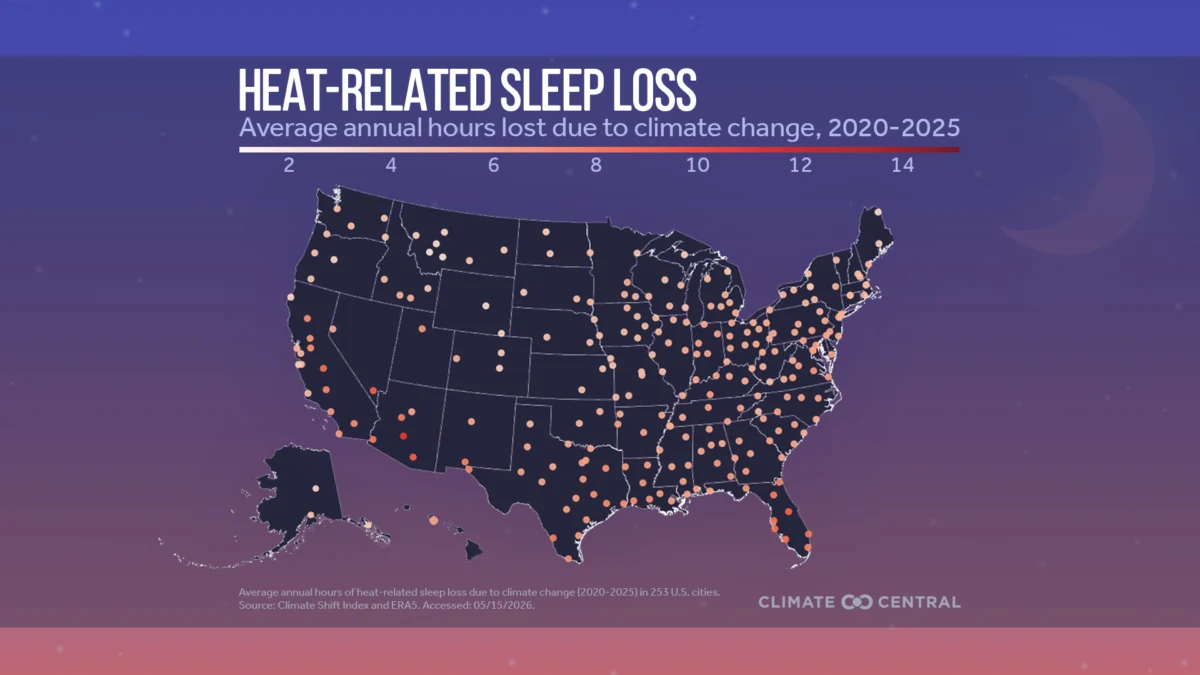
In the United States alone, residents in 253 cities lost an average of 36 hours of sleep annually due to climate-linked heat. The states of Arizona, California, Florida, and Nevada topped the charts, with citizens in these regions losing between seven and nine hours of sleep per year compared to historical averages.
Globally, the situation is even more precarious in regions already characterized by high baseline temperatures. Parts of the Middle East, southern India, Southeast Asia, and West Africa are experiencing a doubling of temperature-related sleep loss since the 1970s. The data indicates that, contrary to popular belief, humans are not "naturally adapting" to these hotter conditions. Instead, the biological requirement for a cool environment remains a fixed, non-negotiable threshold for human physiology.
Implications: The Cognitive Toll of a Hot Night
The consequences of poor sleep extend well beyond simple grogginess. A landmark study published in PLOS Medicine tracked 44 college students in the Boston area during a 2016 heat wave. Students living in non-air-conditioned buildings—where indoor temperatures remained elevated throughout the night—showed measurable deficits in cognitive performance the following day.

When tested, these students exhibited slower processing speeds, decreased attention spans, and impaired working memory compared to their peers who lived in climate-controlled environments. These findings underscore a critical societal risk: if a significant portion of the population is consistently sleep-deprived due to heat, we face a collective decline in productivity, safety, and decision-making capacity.
The Equity Gap: Who is Most Affected?
While heat is a universal stressor, its impact is filtered through the lens of socioeconomic inequality. Access to central air conditioning is the primary buffer against heat-related sleep loss, yet millions remain unable to afford the energy costs or the necessary infrastructure to cool their living spaces.
Even for those with air conditioning, the environmental and economic costs are mounting. Frequent, high-intensity use of cooling systems increases energy demand, contributing to a feedback loop that exacerbates the very climate change driving the heat. For low-income families, the choice often becomes one of financial solvency versus physical health. Furthermore, elderly populations and those with pre-existing cardiovascular conditions are disproportionately vulnerable to the physical stress of high-temperature nights, as their bodies struggle to maintain homeostasis under thermal strain.
Practical Strategies for Better Rest
While we cannot individually reverse global climate trends, there are evidence-based strategies to mitigate the impact of heat on sleep hygiene:
- Optimize the Bedroom Environment: The ideal bedroom should be cool, dark, and quiet. If air conditioning is unavailable, use fans to create cross-ventilation, but be mindful that fans are most effective when the ambient air temperature is below the human body temperature.
- Strategic Cooling: Use breathable, moisture-wicking bedding made from natural fibers like cotton or linen. A cold shower or a damp cloth on the neck before bed can help pull heat away from the body during the initial sleep transition.
- Light Management: Keep blinds or curtains closed during the day to prevent the "greenhouse effect" within the bedroom.
- Hydration and Diet: Avoid heavy meals and excessive caffeine in the hours leading up to bedtime, as these can increase metabolic heat production.
- Professional Consultation: If sleep loss becomes chronic, it is vital to consult a healthcare professional. Ongoing sleep deprivation is a clinical issue that should be addressed before it leads to long-term health consequences.
The Path Forward: When to Seek Help
It is important to distinguish between an occasional bad night and a chronic sleep disorder. If you find yourself perpetually exhausted, unable to concentrate at work or school, or if your sleep habits are compromising your daily safety, it is time to seek expert intervention.
AASM-accredited sleep centers offer comprehensive diagnostic tools to determine if the heat is merely an aggravating factor for an underlying sleep condition. Physicians can assist in developing personalized strategies to improve sleep hygiene, ensuring that even in a warming world, you can prioritize your health.
The Bottom Line
Healthy sleep is a fundamental pillar of overall physical and mental well-being. The correlation between climate change and the rising global incidence of sleep loss is a stark reminder that environmental health and human health are inextricably linked. As nights continue to warm, we must prioritize both personal sleep hygiene and broader public policy initiatives that address urban heat mitigation.
Ignoring the problem will not make the nights cooler. By acknowledging the reality of climate-linked sleep loss and taking proactive steps to manage our environment, we can protect our health, our cognitive function, and our quality of life in an increasingly hot world.
Medical review by Dionne Morgan, MBBS, FCCP. This article is intended for educational purposes and does not replace professional medical advice.