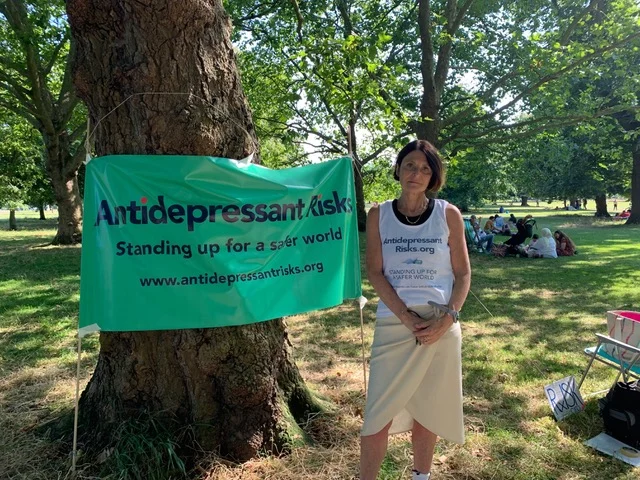
On July 29, a date now recognized by a growing international community as "Prescribed Harm Day," groups of individuals will gather in parks, gardens, and public squares from London to Vancouver. What began three years ago as a modest, informal picnic in Hyde Park has evolved into a sophisticated global movement. Led by the non-profit organization Antidepressant Risks, the "Stolen Lives" initiative seeks to address what advocates describe as a systemic failure in modern psychiatry: the lack of informed consent and the minimization of long-term harms associated with psychiatric medications.
As the movement expands its reach, it highlights a deepening chasm between traditional clinical narratives and the lived experiences of patients grappling with withdrawal, permanent side effects, and the loss of loved ones.
Main Facts: The "Stolen Lives" Initiative and Prescribed Harm Day
The core of the movement centers on the annual "Stolen Lives" event, scheduled for July 29. Founded by the organization Antidepressant Risks, the initiative serves as both a memorial for those who have died due to medication-related complications—including drug-induced suicide and physical health decline—and a support network for survivors.
The term "prescribed harm" refers to the adverse physical and psychological effects resulting from the use of psychiatric drugs, even when taken exactly as directed by a healthcare professional. Key issues championed by the movement include:
- Informed Consent: The demand that patients be fully briefed on the potential for long-term dependency, severe withdrawal symptoms, and "legacy effects" before beginning treatment.
- PSSD (Post-SSRI Sexual Dysfunction): A condition where sexual side effects persist for months or years after the cessation of Selective Serotonin Reuptake Inhibitors (SSRIs).
- Protracted Withdrawal Syndrome: A debilitating state that can follow the discontinuation of antidepressants, benzodiazepines, and antipsychotics, often misdiagnosed by clinicians as a "relapse" of the original condition.
- The Recognition of "Legacy Effects": Permanent or semi-permanent changes to the central nervous system that alter a patient’s quality of life long after the chemical has left their system.
This year, the movement marks a significant transition from informal advocacy to structured education. In collaboration with "A Disorder 4 Everyone" (AD4E), the London event will feature the "Stolen Lives London Talks," a seminar involving clinicians, journalists, and experts with lived experience, preceding the traditional picnic on Hampstead Heath.
Chronology: From Hyde Park to a Global Network
2021: The First Gathering
The movement traces its origins to July 29, 2021. Amidst the tail end of pandemic-era restrictions, a small group gathered in Hyde Park, London. There was no stage or formal agenda; the gathering was defined by its simplicity. Participants brought photos of deceased family members and lit candles. This inaugural "picnic" was born from a necessity for "space"—a physical and emotional environment where the harms of psychiatric drugs could be acknowledged without being dismissed as "anti-science" or "anecdotal."
2022–2023: Consolidation and Growth
Over the following two years, the Hyde Park event saw a steady increase in attendance. It began attracting a broader demographic, including psychiatrists who were beginning to question the "chemical imbalance" model and investigative journalists looking into the pharmaceutical industry’s influence on clinical guidelines. During this period, Antidepressant Risks established itself as a central hub, providing resources for those attempting to taper off medications safely.
2024: The Global Expansion
This year marks the launch of the first "Stolen Lives Global Picnic." The decentralized model has allowed the initiative to spread across borders. Confirmed events are now scheduled in Michigan (USA), Corsica and Lyon (France), Vancouver (Canada), Australia, and the Netherlands. The transition to a global framework reflects the realization that the issues of over-prescribing and medication harm are not limited by national healthcare systems but are inherent to the globalized pharmaceutical market.
Supporting Data: The Clinical and Social Context
The "Stolen Lives" movement does not exist in a vacuum; it is supported by a growing body of data and shifting clinical guidelines that acknowledge the risks of psychiatric drug dependency.
Rising Prescription Rates
In the United Kingdom, data from the NHS Business Services Authority shows that in 2022/23, approximately 8.6 million people were prescribed at least one antidepressant—an increase from previous years. Similar trends are seen in the United States, where the CDC reports that nearly 13% of adults over the age of 18 take antidepressant medication. While proponents argue this represents better access to care, advocates for "Stolen Lives" point to these figures as evidence of "medicalization of normal human distress."
The Withdrawal Controversy
For decades, medical literature often referred to "discontinuation syndrome," a term that many advocates argue was designed to sound less severe than "withdrawal." However, in 2019, following a major campaign by lived-experience activists, the National Institute for Health and Care Excellence (NICE) in the UK updated its guidelines. The new language explicitly acknowledges that withdrawal symptoms can be "severe and prolonged" for some patients, lasting months or even years.
The PSSD Breakthrough
Post-SSRI Sexual Dysfunction (PSSD) was once dismissed as a psychological symptom of depression. However, in 2019, the European Medicines Agency (EMA) officially recognized PSSD as a clinical entity, requiring pharmaceutical companies to add warnings to product labels. This regulatory shift provided a vital piece of evidence for the "Stolen Lives" community, proving that psychiatric drugs could indeed cause permanent physiological changes.
The "Chemical Imbalance" Debunking
A landmark 2022 systematic umbrella review led by Professor Joanna Moncrieff and published in Molecular Psychiatry found no consistent evidence of a link between serotonin levels and depression. This study sent shockwaves through the psychiatric community and provided a theoretical foundation for the "Stolen Lives" movement, which argues that if the underlying "imbalance" theory is flawed, the risk-benefit ratio of the drugs must be entirely re-evaluated.
Official Responses: Regulatory Bodies and the Medical Establishment
The response from the medical establishment to the "Stolen Lives" movement has been a mix of slow-moving reform and defensive caution.
Regulatory Agencies
The UK’s Medicines and Healthcare products Regulatory Agency (MHRA) and the US Food and Drug Administration (FDA) have gradually updated "Black Box" warnings to include risks of suicidal ideation, particularly in young adults. However, critics argue these updates are "too little, too late." In response to the growing pressure, the MHRA recently launched a review into the long-term effects of antidepressants, though the results have yet to significantly alter prescribing habits.
Pharmaceutical Industry
The pharmaceutical industry generally maintains that psychiatric medications are safe and effective when used as directed. They emphasize the "benefit-risk ratio," arguing that for the vast majority of patients, the benefits of mood stabilization outweigh the potential side effects. Industry representatives often point to the high burden of untreated mental illness as the primary public health concern.
Professional Bodies
The Royal College of Psychiatrists (UK) has made strides in acknowledging withdrawal, recently releasing resources for "tapering" medications. However, there remains a significant tension within the profession. Many clinicians worry that the "Stolen Lives" narrative might discourage people with severe mental illness from seeking life-saving treatment, leading to a "chilling effect" on psychiatric care.
Implications: A New Paradigm for Mental Health
The evolution of the "Stolen Lives" picnic into a global day of action carries profound implications for the future of healthcare and patient rights.
The Shift Toward "Deprescribing"
The movement is a catalyst for the emerging field of "deprescribing." As more patients report long-term harm, there is a growing demand for clinical pathways that help people safely reduce or stop their medications. This represents a paradigm shift from a "medicine for life" model to one that views psychiatric drugs as short-term interventions.
The Democratization of Medical Knowledge
By prioritizing "lived experience" alongside clinical data, the "Stolen Lives" movement is part of a broader trend toward the democratization of medical knowledge. The use of social media and global gatherings allows patients to share side-effect profiles that may not have been captured in short-term clinical trials, effectively creating a massive, real-world post-marketing surveillance system.
Human Rights and Bodily Autonomy
At its core, the movement frames prescribed harm as a human rights issue. If a patient is not informed of the risk of permanent sexual dysfunction or years of agonizing withdrawal, advocates argue that the principle of bodily autonomy has been violated. This framing is likely to lead to increased litigation against both manufacturers and prescribing physicians in the coming decade.
Conclusion: The Power of Presence
As July 29 approaches, the "Stolen Lives" picnics will serve as a poignant reminder of the human cost of the current psychiatric model. In a world increasingly dominated by digital interactions, the act of physically gathering to light a candle or share a story remains a potent form of resistance.
The growth of this movement suggests that the "silent epidemic" of prescribed harm is finally finding its voice. Whether in the heart of London or on a beach in Australia, the message remains the same: every statistic represents a life, and every life carries a story that can no longer be ignored. For the organizers at Antidepressant Risks, the goal is not merely to protest, but to build a future where medical "help" never comes at the cost of a stolen life.