





As the mercury climbs on a global scale, the sanctity of the bedroom is under siege. For many, the nocturnal hours—once a reliable sanctuary for restoration—are becoming an increasingly sweltering struggle. Beyond the immediate discomfort of tossing and turning, researchers are sounding an alarm: the climate crisis is actively eroding our ability to achieve deep, restorative sleep, with profound consequences for global public health, cognitive performance, and long-term well-being.
The Physiological Imperative: Why We Need a Cool Sanctuary
To understand why a hot bedroom is more than just a minor inconvenience, one must first look at the biological mechanics of slumber. Sleep is not a passive state; it is a highly regulated physiological process that requires a delicate thermal balance.
Under normal circumstances, the human body undergoes a rhythmic decline in core temperature as it prepares for and enters sleep. This drop, orchestrated by the circadian rhythm, is a signal to the brain that it is time to disengage from the day’s activities and initiate the restorative stages of non-REM and REM sleep. When the ambient air temperature remains stubbornly high, the body’s ability to dissipate heat through the skin is compromised.
If the environment is too warm, the body remains in a state of high physiological alert, struggling to shed heat, which frequently leads to fragmented sleep or an inability to reach the deeper, more regenerative stages of the sleep cycle. This isn’t just about feeling "hot"; it is a fundamental disruption of a biological mechanism that has been honed over millennia.
A Chronology of Rising Temperatures and Diminishing Rest
The trend of "sleep-loss" is not a phenomenon of the distant future; it is a current reality. Since the early 1970s, the intersection of urban development, the urban heat island effect, and broader climate change has drastically altered the nocturnal thermal landscape.
- The 1970s to 1990s: As industrialization and urban expansion accelerated, researchers began to note that cities were retaining more heat throughout the night. Concrete, asphalt, and building materials act as thermal sponges, absorbing solar radiation during the day and releasing it slowly at night, preventing the traditional "cooling off" period that human physiology relies upon.
- The 2000s to 2015: Sleep researchers started identifying a clear correlation between rising nighttime minimum temperatures and reports of chronic fatigue in clinical settings.
- 2020–2025: A landmark analysis by Climate Central confirmed that the impact had reached a critical threshold. Globally, the average person lost nearly 56 hours of sleep annually during this period due to climate-driven temperature increases.
- 2026 and Beyond: Recent heat waves, such as the record-breaking events in the United Kingdom and across the United States, have shifted the conversation from a niche environmental concern to a mainstream public health emergency. Polls, such as the 2026 YouGov study in the UK, revealed that 65% of adults reported significant sleep disruption during extreme heat, with nearly half losing three or more hours of sleep per night.
Supporting Data: The Quantitative Cost of Heat
The data supporting the link between climate change and sleep loss is both vast and alarming. A comprehensive study published in the journal One Earth, which aggregated over 7 million sleep records alongside local weather data, provides the most damning evidence to date.
The findings were stark:
- The 86-Degree Threshold: On nights where the temperature exceeded 86°F (30°C), sleep duration dropped by an average of 14 minutes.
- The 77-Degree Barrier: When nighttime temperatures stayed above 77°F (25°C), the probability of an individual getting less than seven hours of sleep increased significantly.
- Lack of Adaptation: Perhaps most concerning is the study’s conclusion that there is little evidence that humans are naturally adapting to these warmer nights. Unlike other environmental stressors where the body might acclimatize, sleep appears to remain permanently vulnerable to elevated nocturnal temperatures.
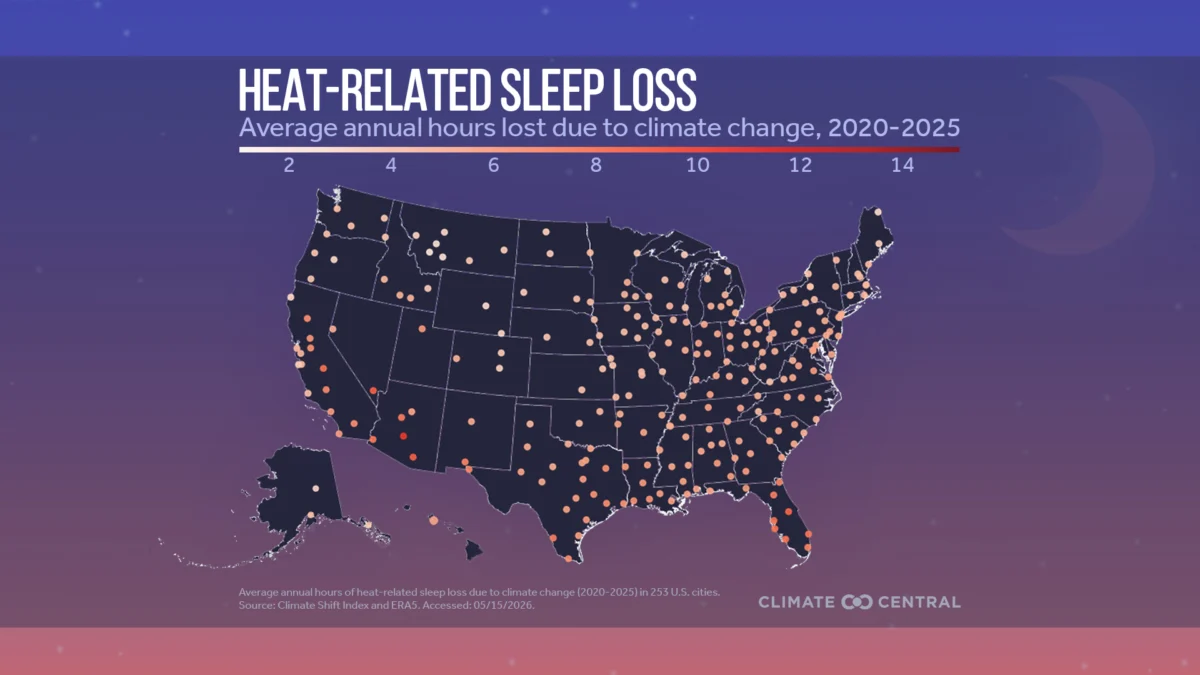
In the United States, the geographic footprint of this loss is widespread. An analysis of 253 cities found that the average resident loses 36 hours of sleep per year. Cities in Arizona, California, Florida, and Nevada topped the charts, with some residents losing up to nine hours of sleep annually—effectively an entire night of rest lost to the climate crisis.
Global Implications and Socioeconomic Disparities
The impact of sleep loss is not distributed equally. Climate change acts as a "threat multiplier," exacerbating existing inequalities.
The Vulnerability Gap
Those with access to modern, efficient air conditioning and well-insulated housing have a buffer against the heat. However, millions of people worldwide lack these resources. Low-income populations, the elderly, and those living in densely packed urban environments are disproportionately affected. In regions such as the Middle East, Southeast Asia, and West Africa, the combination of high humidity and heat creates a "wet-bulb" effect that makes natural cooling almost impossible.

Cognitive and Economic Consequences
The implications for society are immense. A study published in PLOS Medicine focused on young adults during a heat wave in Boston and found that students living in non-air-conditioned buildings demonstrated a measurable decline in cognitive function. This included slower processing speeds, reduced attention spans, and diminished working memory.
When applied to the global workforce, the math is sobering. If a significant portion of the population is functioning with a "sleep debt" caused by heat, we are looking at a widespread decline in productivity, an increase in workplace accidents, and a long-term erosion of mental health.
Official Responses and Public Health Guidance
Medical organizations, including the American Academy of Sleep Medicine (AASM), are beginning to integrate environmental factors into their clinical guidance. Health professionals now emphasize that sleep hygiene is no longer just about screens and caffeine; it is about thermal management.
The consensus among health officials is that while the weather is beyond individual control, environmental modification is essential. "Healthy sleep is a pillar of overall health," says Dr. Dionne Morgan, a medical reviewer for sleep health initiatives. "When the environment works against you, you must be proactive in creating a protective space."
Practical Strategies: Managing Your Sleep Environment
To combat the rising heat, experts recommend a multi-faceted approach to cooling the sleep environment:
- Strategic Ventilation: Utilize cross-ventilation during the coolest hours of the early morning. Close blinds and curtains during the day to prevent solar gain.
- The "Cooling" Bedding Approach: Switch to breathable, natural fabrics like cotton or linen. Consider cooling mattress toppers or moisture-wicking pillows designed to draw heat away from the body.
- Thermal Regulation: A cool shower before bed can help lower core body temperature. For those without AC, a portable fan placed strategically to pull in cooler air—or even a wet towel placed in front of a fan—can create a "swamp cooler" effect.
- Lifestyle Adjustments: Avoid heavy meals or alcohol before bed, both of which can increase the body’s internal metabolic heat production.
The Path Forward: When to Seek Professional Help
It is crucial to distinguish between a few bad nights and a chronic sleep disorder. If heat-related sleep loss persists to the point where it impacts your daily functioning, cognitive performance, or safety, it is time to consult a medical professional.
Ongoing sleep deprivation is linked to a host of long-term health issues, including cardiovascular disease, metabolic syndrome, and impaired immune function. A visit to an AASM-accredited sleep center can help identify if the heat is merely exacerbating an underlying sleep condition, such as insomnia or sleep apnea, that requires targeted treatment.
Conclusion: A Warming World Demands New Habits
The data is clear: the nights are getting hotter, and our sleep is paying the price. While individual actions like using fans or changing bedding can provide temporary relief, the long-term solution lies in a societal recognition that sleep is a critical resource under threat from climate change.
As we move further into an era of warming, prioritizing the cooling of our homes and cities must become a public health priority. We cannot "adapt" our biology to the heat, but we can adapt our environment to protect the most essential human function of all: a good night’s sleep. Protecting our sleep is not just about comfort; it is about preserving our ability to think, act, and thrive in a changing world.