







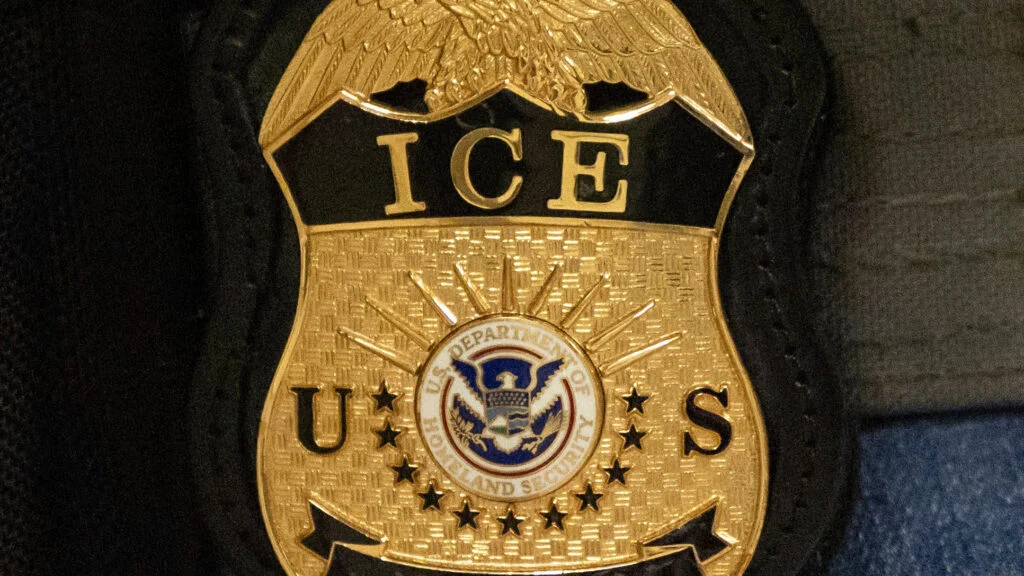
The academic world is reeling following the detention of Eva Yi Xie, a brilliant third-year PhD candidate at Princeton University, who was taken into custody by U.S. Immigration and Customs Enforcement (ICE) late last week. Xie, an emerging star in the multidisciplinary field of neuroscience and artificial intelligence, was apprehended while returning home from the annual Society for Neuroscience conference in Washington, D.C.
Her detention has served as a flashpoint for a growing anxiety within American universities, where international students and researchers now view professional travel—a fundamental pillar of scientific advancement—as a perilous gamble. As the administration continues to signal a restrictive approach toward foreign-born scholars, the incident involving Xie highlights a deepening rift between national security policy and the global nature of modern scientific inquiry.
A Career Interrupted: The Facts of the Case
Eva Yi Xie’s arrest occurred on Thursday, cutting short a journey home from one of the most prestigious events in the neuroscientific calendar. Having resided in the United States since 2016, Xie, a Chinese national, has built an academic trajectory characterized by exceptional rigor. According to legal counsel, while Xie’s original visa has expired, she maintains a pending asylum application, a legal status that should, in theory, permit her continued residence in the country.
Despite this legal standing, the detention has left her colleagues and mentors in a state of shock. The news first surfaced through a post on X (formerly Twitter) by one of her mentors, sparking an immediate and widespread outcry across academic circles. By Friday, the incident had become the primary subject of discussion in faculty lounges and laboratory group chats across the Ivy League and beyond.
Chronology of a Rising Scientific Star
To understand the weight of this detention, one must look at the trajectory of the researcher in question. Xie is not merely a student; she is a bridge-builder in the high-stakes world of AI and biological research.
- 2016: Xie arrives in the United States from China, beginning an academic journey that would lead her to an undergraduate degree at the Massachusetts Institute of Technology (MIT).
- The Graduate Years: Enrolling at Princeton, Xie began focusing her doctoral work on the intersection of neuroscience and machine learning. Her research involves complex experiments on mice paired with massive neural datasets to decode the mechanisms of biological decision-making.
- 2025 (Last Year): Xie cemented her reputation as a leader in her field by convening a workshop at the NeurIPS conference—the premier global gathering for machine learning researchers. Her ability to synthesize neuroscience with AI methods earned her praise from both sides of the aisle in the scientific community.
- November 2026: Xie attends the Society for Neuroscience conference in Washington, D.C., to present her latest findings.
- Thursday, November 2026: Upon attempting to return to Princeton, Xie is detained by ICE agents.
Colleagues describe her work ethic as "exceptional." Benjamin Eysenbach, a Princeton computer scientist and one of Xie’s advisers, noted that her research requires a rare combination of skills: surgical proficiency in mouse models, deep mathematical knowledge of machine learning, and the ability to bridge those worlds. "She’s in the lab doing the surgery, gathering the data, and running the AI experiments," Eysenbach said. "That is the mark of a true researcher."
The "Trump Slump": Supporting Data and Enrollment Trends
The detention of Xie is not an isolated event; it is a manifestation of a broader, documented decline in international participation in American science. A report released just days before Xie’s detention by the Association of American Medical Colleges (AAMC) revealed that enrollment of international graduate students at academic medical centers has plummeted by a staggering 33% over the last year.
This data point confirms what many conference organizers have been whispering for months: attendance at major U.S.-based scientific meetings is down. The phenomenon, often referred to by attendees as the "Trump Slump," has led several prominent professional societies to consider moving their annual meetings to Canada, Europe, or Asia to ensure the participation of their international members.
The fear is not unfounded. Earlier this year, a staff member of Johns Hopkins researcher Caitlin Rivers was detained by ICE, a harrowing experience that Rivers says has created an atmosphere of terror for non-U.S. staff. "There’s an open question about whether or not it’s safe for people who are international students on visas to travel," Rivers stated. "That’s a very scary prospect for our labs."
Official Responses and Administrative Policy
The administration has remained tight-lipped regarding the specifics of Xie’s case. ICE did not respond to multiple requests for comment, maintaining its standard policy of not discussing individual detention cases. However, the administration’s broader ideological stance on international scholars is no longer hidden.
In a science policy blueprint released earlier this year, the White House explicitly stated that "America’s over-reliance on foreign students also creates a security challenge." This rhetoric has trickled down into enforcement priorities, leading to an environment where researchers—who historically moved freely between borders to share findings—now feel targeted.
Princeton University has moved to protect its student. In a statement, Rodney D. Priestley, the dean of the Princeton Graduate School, expressed deep concern: "News of Eva’s detention is distressing for me and many members of the Princeton University community. The university has provided Xie with legal representation. We hope Eva will soon be able to resume her studies at Princeton."
The Human Cost: Implications for the Future of Science
The impact of this policy goes far beyond the walls of the Princeton laboratory. For researchers like Krithik Ramesh, who overlapped with Xie during high school science competitions and looked to her for mentorship when considering his own move to MIT, the detention is a personal and professional blow.
"We academics exist for the benefit of the public," Ramesh said, reacting to the news. "We are very privileged as a country to have people like Eva continue to pursue academia at the highest level. It is appalling to me that she cannot do that with reasonable certainty that she won’t be detained."
The "unmooring" that Ramesh describes is being felt across the country. The scientific method relies on the free exchange of ideas, the collaborative nature of international conferences, and the ability of the best minds to move where the research is strongest. When the most talented graduate students feel they must sacrifice their freedom to advance their studies, the U.S. risks losing its position as the global hub of innovation.
Conclusion: A Precarious Future
The case of Eva Yi Xie remains unresolved, leaving her peers, her mentors, and the wider academic community in limbo. While legal efforts continue, the psychological damage to the academic pipeline may be long-lasting. As international students look at the landscape of American higher education, they are increasingly forced to ask if the cost of admission—in terms of personal liberty—is becoming too high.
For the scientific community, the detention of a rising star is more than a legal or immigration issue; it is a signal that the walls of the ivory tower are being fortified against the very people who help build them. Until there is greater clarity and a restoration of the norms that once protected international scholars, the "silent lab"—a place where research stops because the researchers are afraid to move—may become the new, and permanent, reality of American science.