










18 November, 2026
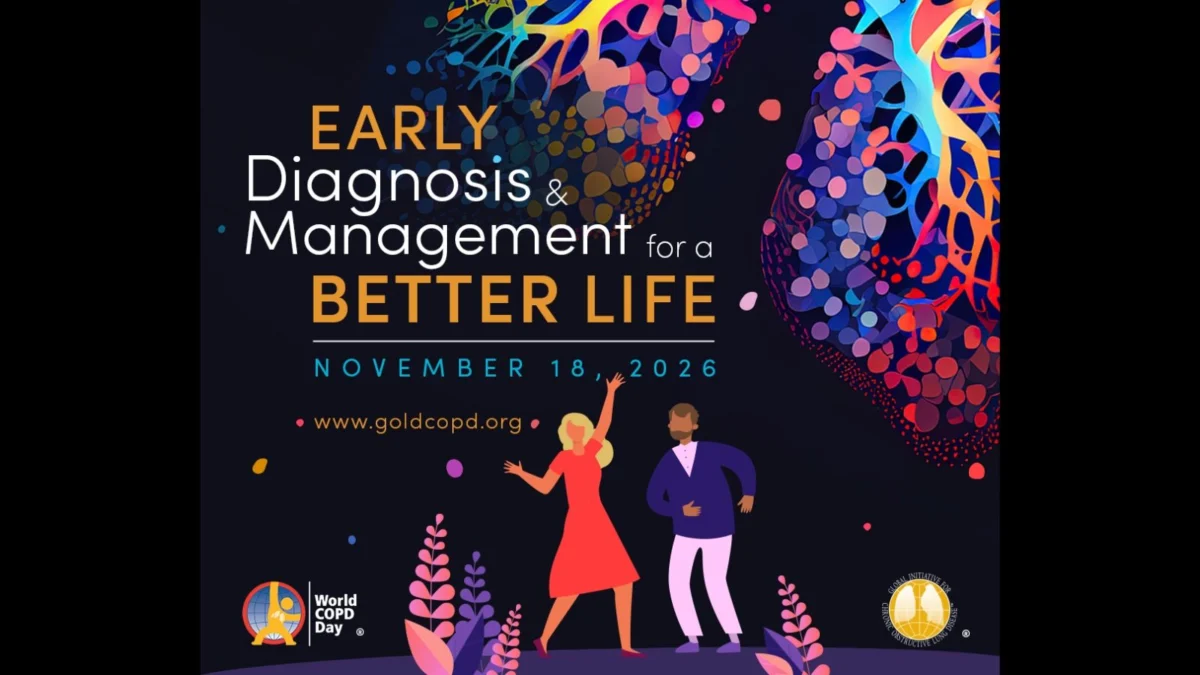
As the global medical community observes the 25th annual World COPD Day, the Forum of International Respiratory Societies (FIRS) and the Global Initiative for Chronic Obstructive Lung Disease (GOLD) have issued a stark warning: the silent epidemic of Chronic Obstructive Pulmonary Disease (COPD) requires an urgent shift in clinical strategy. With three million lives lost annually to this condition, the focus for 2026 is squarely on a theme that could redefine respiratory health outcomes: “Early Diagnosis and Management for a Better Life.”
The State of the Crisis: Main Facts and Global Burden
COPD remains one of the world’s most significant public health challenges. It is a progressive, preventable, and treatable condition characterized by persistent airflow limitation, breathlessness, chronic cough, and sputum production. Despite these clear symptoms, the disease is notoriously underdiagnosed and frequently misdiagnosed, leading to a "lost generation" of patients who only seek clinical support once the disease has reached advanced, irreversible stages.
The scale of the crisis is immense. With approximately three million deaths per year, COPD stands as a leading cause of mortality globally. The burden is disproportionately felt in low-resource settings, where access to basic diagnostic tools—specifically spirometry—is often limited. As the global population ages and exposure to environmental pollutants continues to rise, experts fear these numbers will climb unless systemic changes are implemented immediately.
Chronology of a Shifting Paradigm
The history of COPD management has evolved from a narrow focus on smoking cessation to a sophisticated, multi-factorial understanding of lung health.
- Mid-20th Century: COPD was primarily identified as "smoker’s cough" or chronic bronchitis, with clinical focus centered almost exclusively on heavy tobacco use.
- Early 2000s: The Global Initiative for Chronic Obstructive Lung Disease (GOLD) was formed, providing the first standardized, evidence-based global strategy for diagnosing and managing the disease.
- 2010s: Researchers began to identify that COPD is not merely a disease of the elderly or the heavy smoker. Evidence emerged linking the condition to early-life events, including prenatal development and childhood respiratory infections.
- 2020s: The medical community recognized the significance of "pre-COPD" and "PRISm" (Preserved Ratio Impaired Spirometry), identifying patients who, while not meeting traditional diagnostic thresholds, exhibit early physiological signs of future disease.
- 18 November 2026: On this 25th anniversary of World COPD Day, the mandate has shifted from reactive treatment to active case finding and early intervention.
Supporting Data: Why Early Identification Matters
The current diagnostic gap is driven by a trifecta of barriers: patient-related, provider-related, and systemic. Patients often dismiss early symptoms like breathlessness as a normal sign of aging or a consequence of a busy lifestyle. Simultaneously, primary care providers may lack the specialized training or the immediate access to diagnostic equipment required to distinguish COPD from other respiratory ailments.
Data indicates that the window for intervention is much wider than previously believed. By identifying "at-risk" individuals—those exposed to biomass fuel smoke, occupational dust, or early-life lung growth impairment—clinicians can move from passive observation to active management.
Key Risk Factors Requiring Clinical Vigilance
Health providers are encouraged to look beyond the "heavy smoker" archetype. Essential screening should be considered for patients exhibiting:
- Persistent Cough or Phlegm: Even in the absence of obvious respiratory distress.
- Exertional Dyspnea: Increased shortness of breath during physical activity that exceeds expected fatigue.
- Occupational Exposure: History of working in environments with high concentrations of dust, fumes, or chemical vapors.
- Early-Life Respiratory Issues: A history of asthma, frequent chest infections during childhood, or low birth weight.
- Biomass Exposure: Long-term exposure to indoor cooking or heating smoke, particularly in developing nations.
Official Responses and Strategic Shifts
The 2026 GOLD Report marks a pivotal moment in respiratory medicine. The report emphasizes that the "wait and see" approach is no longer clinically acceptable.
"We are moving toward a future where COPD is managed like hypertension or diabetes—through regular screening and proactive, early intervention," says a spokesperson for the FIRS. "The objective is to catch the airflow limitation while the lung still possesses significant reserve capacity."
The official stance from GOLD is clear: active case finding, specifically the implementation of spirometry for any individual reporting persistent respiratory symptoms, is the gold standard. Furthermore, the 2026 guidelines highlight that early treatment—including the prompt initiation of bronchodilator therapy—can effectively slow the rate of lung function decline, reduce the frequency of acute exacerbations, and drastically improve the patient’s long-term quality of life.
The Path Forward: Implications for Policy and Practice
The implications of this new strategy are profound. Moving from a reactive model to an early-detection model requires significant investment in healthcare infrastructure:
- Training and Education: There is an urgent need to train primary care staff in the accurate use and interpretation of spirometry.
- Access to Diagnostics: Governments must prioritize the availability of lung function testing in community clinics, ensuring that diagnostic tools are not confined to major hospitals.
- Public Awareness: The stigma surrounding COPD, often tied to smoking, must be replaced with an understanding that this is a complex condition with diverse causes, including genetic predisposition and environmental pollutants.
- Integrated Care: Treatment must be holistic. It is not enough to prescribe inhalers; clinicians must provide robust support for smoking cessation, nutritional counseling, and pulmonary rehabilitation programs that start as soon as a diagnosis is made.
Preserving Future Lung Health
While there is currently no cure, the 2026 GOLD report outlines several actionable steps to mitigate the impact of the disease:
- Early Intervention: Addressing airflow limitation at the earliest possible stage to preserve current lung function.
- Symptom Management: Reducing the burden of chronic symptoms to improve physical and psychological well-being.
- Exacerbation Prevention: Implementing comprehensive management plans to minimize the frequency of hospitalizations and severe respiratory events.
- Lifestyle Modification: Tailored smoking cessation support and environmental risk reduction.
Conclusion: A Global Commitment
As we mark World COPD Day 2026, the message is one of optimism tempered by urgency. The science is definitive: early identification changes the trajectory of the disease. By fostering collaboration between governments, public health officials, and medical practitioners, the global community can significantly reduce the three-million-person death toll that has defined the disease for too long.
The 2026 GOLD Report serves as a roadmap for this mission. It challenges healthcare systems to look beyond the surface, to identify those at risk before they become symptomatic, and to treat the patient rather than just the disease.
The battle against COPD is not a lost cause; it is a battle of timing. By prioritizing early diagnosis and management, we are not just adding years to lives; we are adding life to years.
For further information regarding the latest diagnostic criteria, clinical pathways, and global initiatives, professionals and the public are encouraged to consult the 2026 GOLD Report and Pocket Guide. To join the global effort, connect with local health initiatives and participate in the ongoing awareness events coordinated by FIRS and GOLD.